


BROWSE PECO PRODUCTS
Browse through our complete product portfolio.
130 Products Found
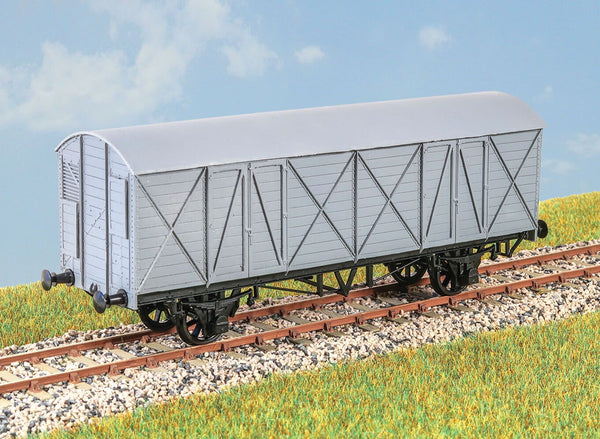
GWR Mink Goods Van
Introduced in 1906, these vans (diagram V11) were used for general goods traffic until during the Second World War. Being fitted with the vacuum brake, they were frequently found on GWR express goods trains. These finely moulded plastic wagon kits come complete with pin point axle wheels and bearings. Glue and paint will be required, along with appropriate transfers. Additional parts to enable the vehicle to be modelled incorporating modifications made to the prototypes during their working life are included where appropriate.
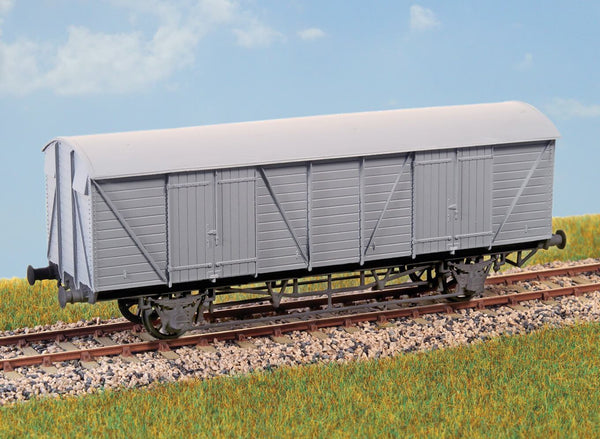
GWR Mink Goods Van
(Diagram V22) Introduced in 1931 to carry express goods traffic between the main stations on the GWR system. One hundred were built and lasted in service until the 1960s.These finely moulded plastic wagon kits come complete with pin point axle wheels and bearings. Glue and paint will be required, along with appropriate transfers. Additional parts to enable the vehicle to be modelled incorporating modifications made to the prototypes during their working life are included where appropriate.
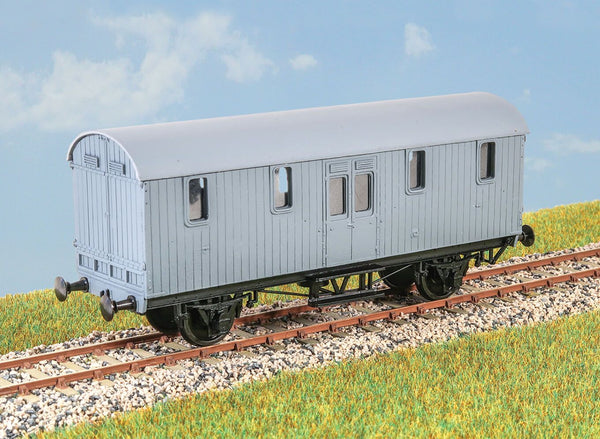
GWR Python Covered Carriage Coach Van
Introduced in 1914, these vehicles carried parcels and motor vehicles until the early days of BR. These finely moulded plastic wagon kits come complete with pin point axle wheels and bearings. Glue and paint will be required, along with appropriate transfers. Additional parts to enable the vehicle to be modelled incorporating modifications made to the prototypes during their working life are included where appropriate.
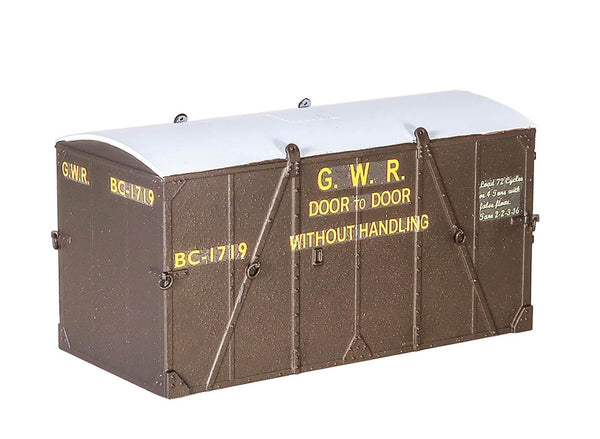
GWR/BR ‘B’ Container
Period Transfers included. A Conflat, road vehicle load, or as a scenic accessory for the Goods Yard.
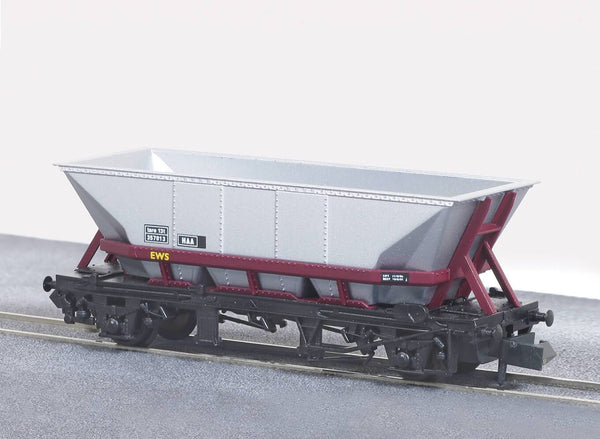
HAA - EWS Coal Hopper Wagon, Maroon
In August 2023 DB Cargo retired the last of the former BR/ECC china clay CDA hoppers after a service life of 35 years. These unique and distinctive wagons will be missed by enthusiasts but thanks to PECO, modellers can keep their legacy going in model form!
Note that the CDA wagons are now fitted with metal-tyred wheels as standard.
The CDA China Clay hopper, and the HAA Coal Hopper, are closely related, sharing the same design and operational principles, with bottom hopper doors opened to empty the contents, in the case of china clay, for loading into ships at Carne Point, near Fowey in Cornwall. As china clay must be kept dry special rolling tarpaulin covers protected the load, as featured on our models.
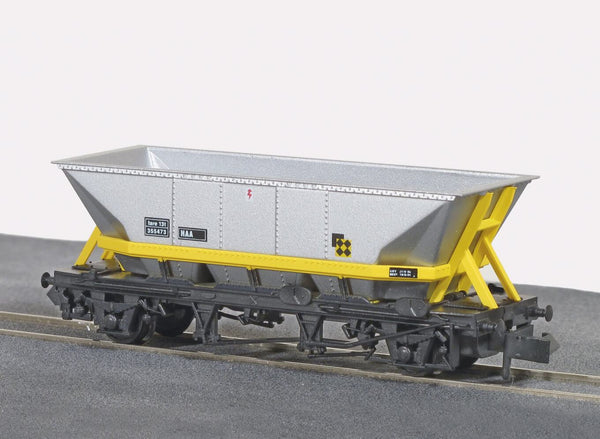
HAA BR Trainload Coal-Sector - Yellow Cradle
In August 2023 DB Cargo retired the last of the former BR/ECC china clay CDA hoppers after a service life of 35 years. These unique and distinctive wagons will be missed by enthusiasts but thanks to PECO, modellers can keep their legacy going in model form!
Note that the CDA wagons are now fitted with metal-tyred wheels as standard.
The CDA China Clay hopper, and the HAA Coal Hopper, are closely related, sharing the same design and operational principles, with bottom hopper doors opened to empty the contents, in the case of china clay, for loading into ships at Carne Point, near Fowey in Cornwall. As china clay must be kept dry special rolling tarpaulin covers protected the load, as featured on our models.
Hudson Steel Dropside Bogie Open Wagon
These finely moulded plastic wagon kits come complete with pin point axle wheels. Glue and paint will be required, along with appropriate transfers.

Hudson Wagon Chassis
These finely moulded plastic wagon kits come complete with pin point axle wheels. Glue and paint will be required, along with appropriate transfers.

Irish Narrow Gauge Open Wagon
These finely moulded plastic wagon kits come complete with pin point axle wheels. Glue and paint will be required, along with appropriate transfers.

Irish Narrow Gauge Open Wagon
A 12mm gauge vehicle; these finely moulded plastic wagon kits come complete with pin point axle wheels. Glue and paint will be required, along with appropriate transfers.

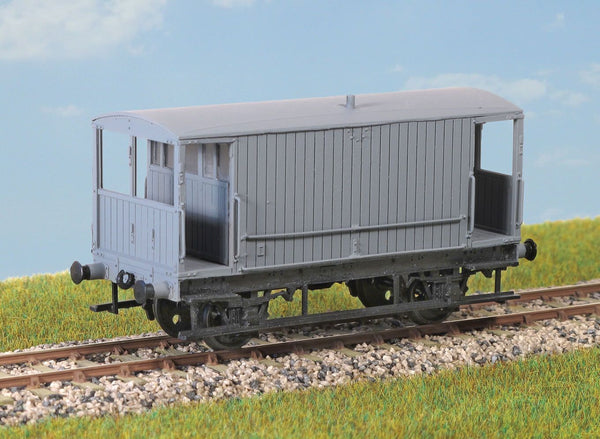
LMS 20ton Goods Brake Van
849 of these vans (diagram 1659) were built between 1924 and 1927. In general traffic they survived into the 1960s, while those in Engineer’s fleet lasted into the 1980s. These finely moulded plastic wagon kits come complete with pin point axle wheels and bearings. Glue and paint will be required, along with appropriate transfers. Additional parts to enable the vehicle to be modelled incorporating modifications made to the prototypes during their working life are included where appropriate.
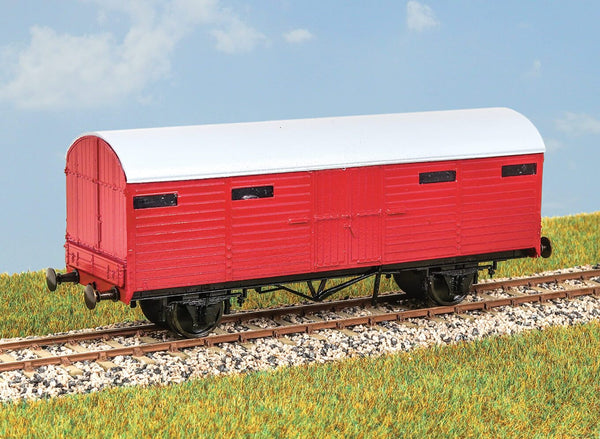
LMS 4 Wheel CCT Van
Built in 1935- 1937, 125 of these useful vans (diagram 1929) carried parcels, mail and motor vehicles in passenger and parcels trains until the early 1970s. These finely moulded plastic wagon kits come complete with pin point axle wheels and bearings. Glue and paint will be required, along with appropriate transfers. Additional parts to enable the vehicle to be modelled incorporating modifications made to the prototypes during their working life are included where appropriate.
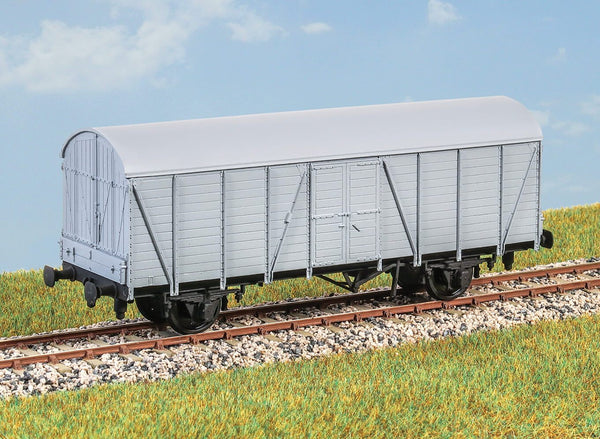
LMS 4 Wheel Motor Car Van
150 of these vans (diagram 2026) were built in 1938, with a further 75 by BR in 1952-1957. Classed as motor car vans, they were also used for parcels and mail.
These finely moulded plastic wagon kits come complete with pin point axle wheels and bearings. Glue and paint will be required, along with appropriate transfers. Additional parts to enable the vehicle to be modelled incorporating modifications made to the prototypes during their working life are included where appropriate.
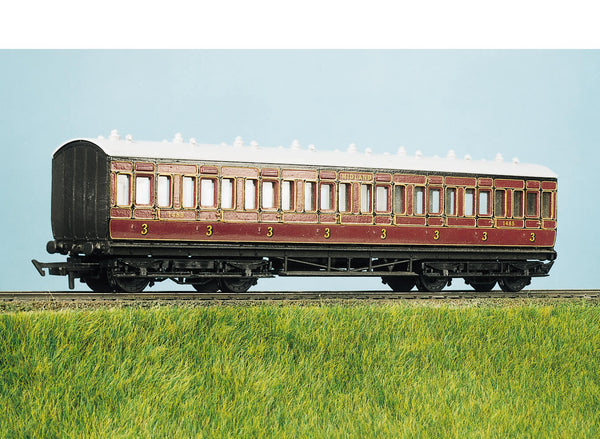
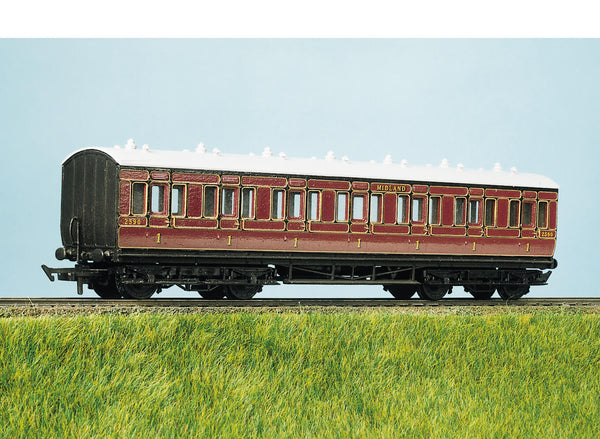
LMS 48 feet Suburban Coach Kit
These non-corridor coaches were built between 1903 and 1910 by the Midland Railway. They were used as close coupled sets for suburban services in the Manchester and Birmingham areas, remaining in service until the early 1950's. Glue, paint and transfers are required to complete this model.
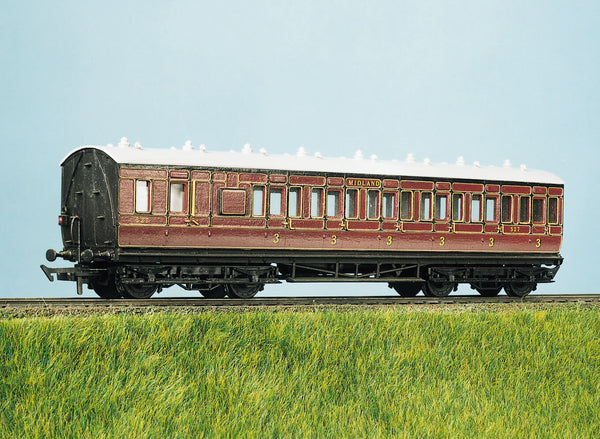
LMS 48 feet Suburban Coach Kit
These non-corridor coaches were built between 1903 and 1910 by the Midland Railway. They were used as close coupled sets for suburban services in the Manchester and Birmingham areas, remaining in service until the early 1950's. Glue, paint and transfers are required to complete this model.
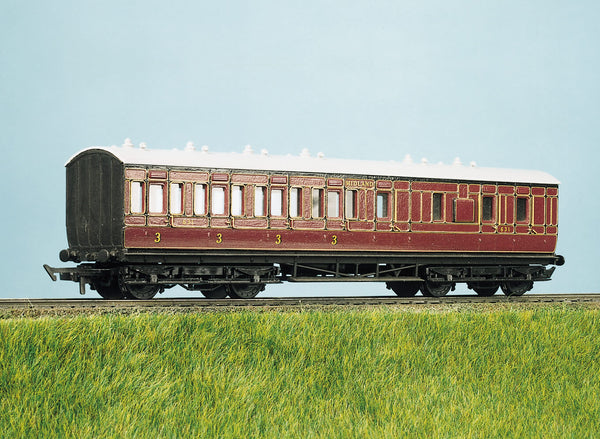
LMS 48 feet Suburban Coach Kit
These non-corridor coaches were built between 1903 and 1910 by the Midland Railway. They were used as close coupled sets for suburban services in the Manchester and Birmingham areas, remaining in service until the early 1950's. Glue, paint and transfers are required to complete this model.
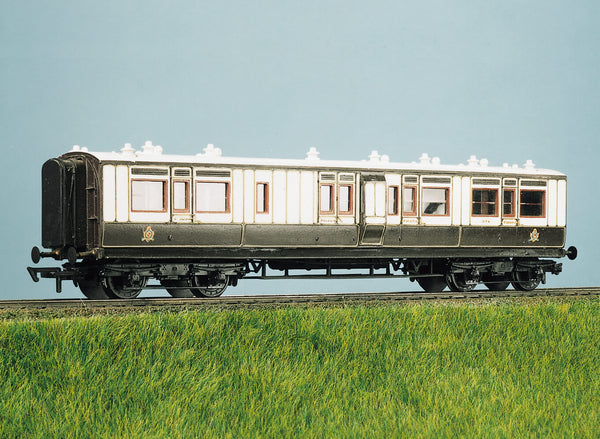
LMS 48 feet Suburban Coach Kit
These non-corridor coaches were built between 1903 and 1910 by the Midland Railway. They were used as close coupled sets for suburban services in the Manchester and Birmingham areas, remaining in service until the early 1950's. Glue, paint and transfers are required to complete this model.
LMS 50ft Arc Roof Corridor Brake Coach Kit
A total of 650 coaches of this type were built at Wolverton between 1891 and 1903 by the London and North Western Railway for main line service and many of them were transferred into the LMS after the 1923 Grouping. Glue, paint and transfers are required to complete this model.
LMS 50ft Arc Roof Corridor Brake Composite Coach Kit
A total of 650 coaches of this type were built at Wolverton between 1891 and 1903 by the London and North Western Railway for main line service and many of them were transferred into the LMS after the 1923 Grouping. Glue, paint and transfers are required to complete this model.
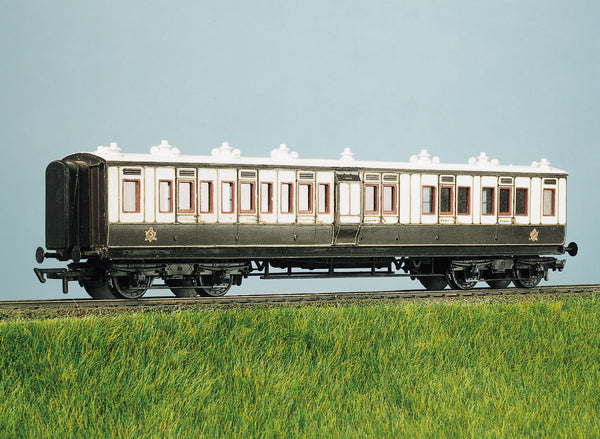
LMS 50ft Arc Roof Corridor Coach Kit
A total of 650 coaches of this type were built at Wolverton between 1891 and 1903 by the London and North Western Railway for main line service and many of them were transferred into the LMS after the 1923 Grouping. Glue, paint and transfers are required to complete this model.
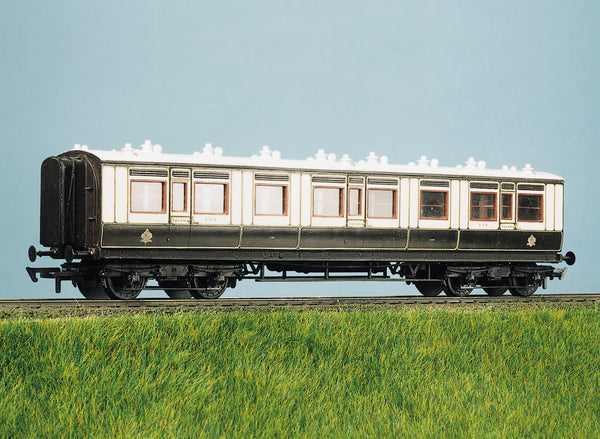
LMS 50ft Arc Roof Corridor Composite Coach Kit
A total of 650 coaches of this type were built at Wolverton between 1891 and 1903 by the London and North Western Railway for main line service and many of them were transferred into the LMS after the 1923 Grouping. Glue, paint and transfers are required to complete this model.
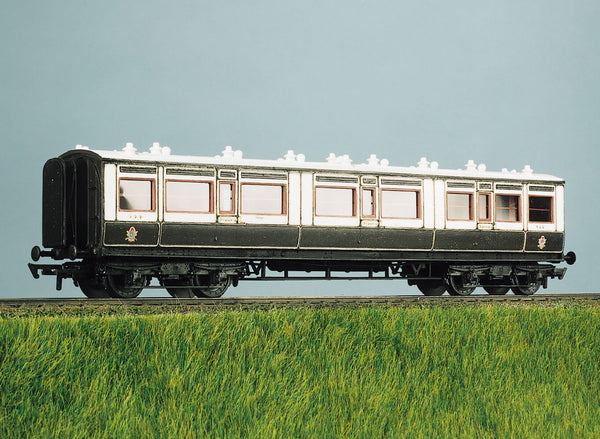
LMS Clerestory Brake Coach Kit
Built between 1898 and 1902 by the Midland Railway, these elegant non-corridor coaches were built for use on express routes. Glue, paint and transfers are required to complete this model.
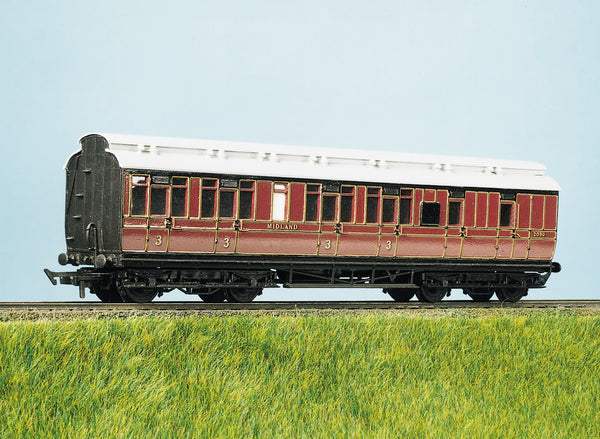
LMS Clerestory Coach Kit
Built between 1898 and 1902 by the Midland Railway, these elegant non-corridor coaches were built for use on express routes. Glue, paint and transfers are required to complete this model.
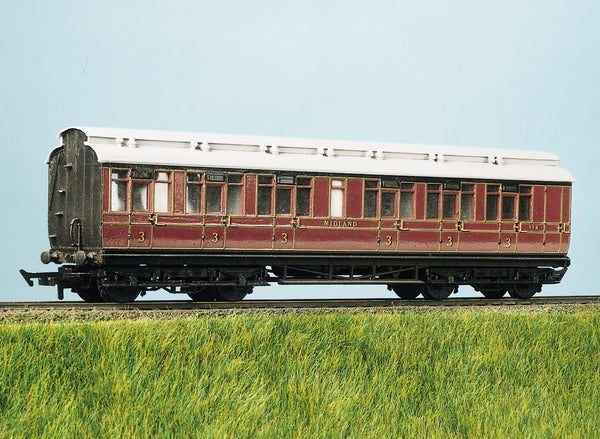
LMS Clerestory Composite Coach Kit
Built between 1898 and 1902 by the Midland Railway, these elegant non-corridor coaches were built for use on express routes. Glue, paint and transfers are required to complete this model.