


BROWSE PECO PRODUCTS
Browse through our complete product portfolio.
130 Products Found
Brake 3rd Observation Bogie Coach
These finely moulded plastic wagon kits come complete with pin point axle wheels. Glue and paint will be required, along with appropriate transfers.

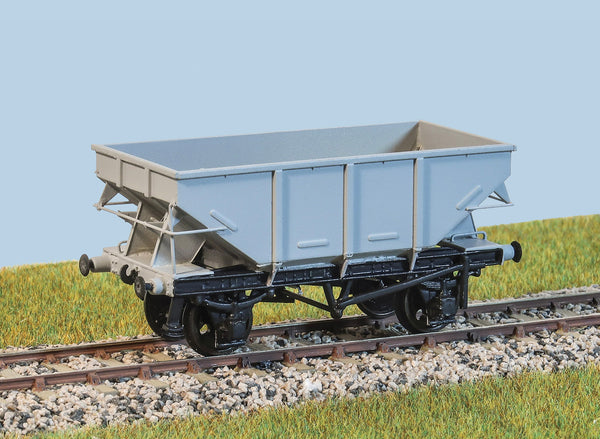
British Railways 13 Ton Steel Body Hopper (LNER)
Over 2,600 of these wagons were built for use on British Railways, between 1949 and 1953. They became synonymous with the North East Region, where coal drop staithes were commonly provided in the station goods yard, so a bottom-discharge hopper was the obvious type to use. Although intended for transporting coal, in later life they became more nomadic around the UK and were used for carrying other materials such as stone and sand. The last examples lingered in service until the early 1980s.
British Railways Bulk Grain Wagon Kit (LNER)
Around 100 of these vans were built by the LNER between 1921 and 1936 for the transportation of grain, initially from the Port of Hull. In time their use became more widespread, often finding work transporting barley from Lincolnshire to the maltings in Scotland. The remaining wagons were retired in the mid-1970s.
Our new kit really is all-new. Brand new tooling producing some very fine plastic mouldings. In addition to that the kit includes brass bearings, fine scale metal wheels and NEM pockets for the tension lock couplers included. A set of waterslide decals for both the LNER and BR periods are included. Assembly is really straight forward aided by the clear and helpful instructions. The resulting model is one that would make a fine addition to any layout, and from a retailer's point of view there is the added attraction of being able to sell multiple kits given that modellers would likely require a rake of these wagons!
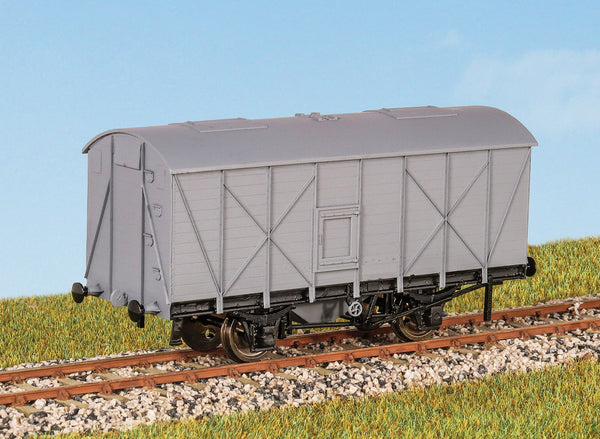
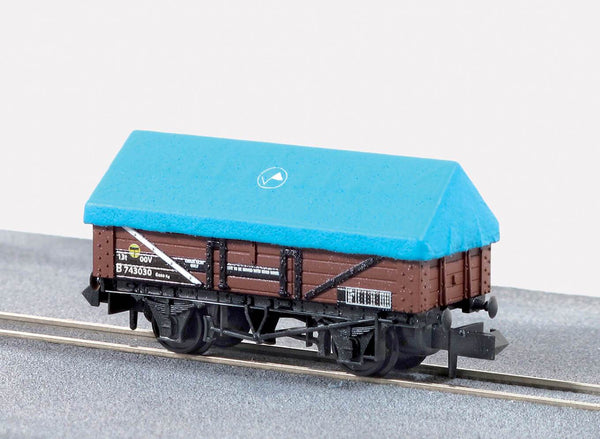
CDA - DB Cargo China Clay Hopper Wagon
In August 2023 DB Cargo retired the last of the former BR/ECC china clay CDA hoppers after a service life of 35 years. These unique and distinctive wagons will be missed by enthusiasts but thanks to PECO, modellers can keep their legacy going in model form!
Note that the CDA wagons are now fitted with metal-tyred wheels as standard.
The CDA China Clay hopper, and the HAA Coal Hopper, are closely related, sharing the same design and operational principles, with bottom hopper doors opened to empty the contents, in the case of china clay, for loading into ships at Carne Point, near Fowey in Cornwall. As china clay must be kept dry special rolling tarpaulin covers protected the load, as featured on our models.
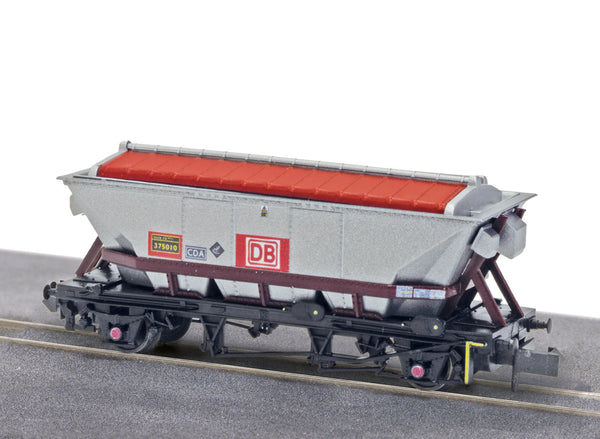
CDA - ECC China Clay Hopper Wagon, Blue
In August 2023 DB Cargo retired the last of the former BR/ECC china clay CDA hoppers after a service life of 35 years. These unique and distinctive wagons will be missed by enthusiasts but thanks to PECO, modellers can keep their legacy going in model form!
Note that the CDA wagons are now fitted with metal-tyred wheels as standard.
The CDA China Clay hopper, and the HAA Coal Hopper, are closely related, sharing the same design and operational principles, with bottom hopper doors opened to empty the contents, in the case of china clay, for loading into ships at Carne Point, near Fowey in Cornwall. As china clay must be kept dry special rolling tarpaulin covers protected the load, as featured on our models.
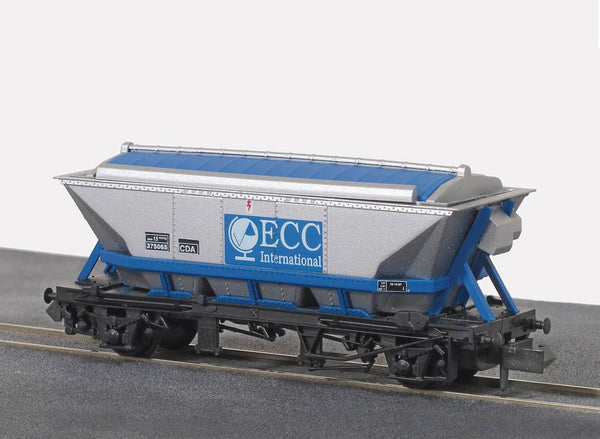
CDA - EWS China Clay Hopper Wagon, Maroon
In August 2023 DB Cargo retired the last of the former BR/ECC china clay CDA hoppers after a service life of 35 years. These unique and distinctive wagons will be missed by enthusiasts but thanks to PECO, modellers can keep their legacy going in model form!
Note that the CDA wagons are now fitted with metal-tyred wheels as standard.
The CDA China Clay hopper, and the HAA Coal Hopper, are closely related, sharing the same design and operational principles, with bottom hopper doors opened to empty the contents, in the case of china clay, for loading into ships at Carne Point, near Fowey in Cornwall. As china clay must be kept dry special rolling tarpaulin covers protected the load, as featured on our models.
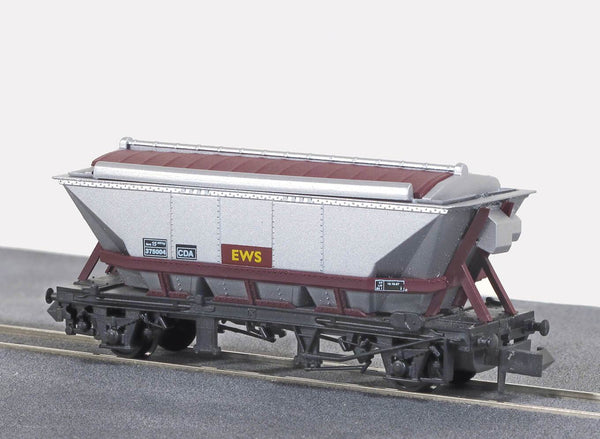
China Clay Hood Wagon
Railway companies all had a stock of their own vehicles for carrying goods and merchandise around their network, and also onto other companies' routes as and when required. These were integrated into British Railways at Nationalisation; some of them to be once more re liveried under sectorisation as the network was prepared to be returned to private ownership. All PECO wagons feature free running wheels in pin point axles. The ELC coupling, whilst compatible with the standard N gauge couplings, keeps a realistic distance between the vehicles and enables the PL-25 electro magnetic decoupler to be used for remote uncoupling.
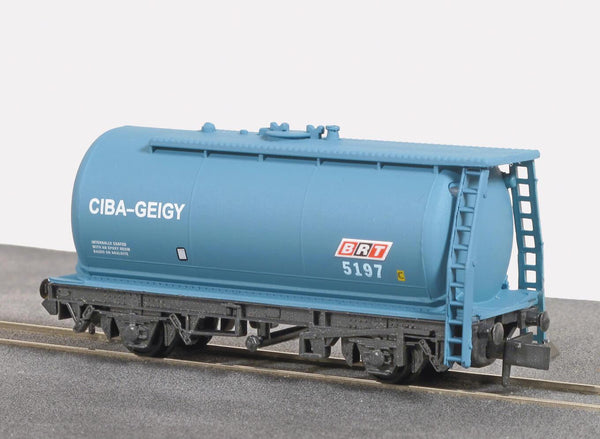
CIBA-GEIGY Tank Wagon, No. 5197
Block trains carrying specialised loads are a feature of the modern railway. All Peco wagons feature free running wheels in pin point axles. The ELC coupling, whilst compatible with the standard N gauge couplings, keeps a realistic distance between vehicles and enables the PL-25 electro magnetic decoupler to be used for remote uncoupling.
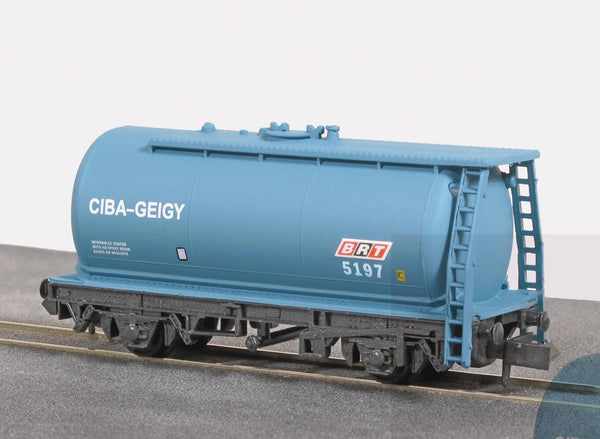
CIBA-GEIGY Tank Wagon, No. 5699
Block trains carrying specialised loads are a feature of the modern railway. All Peco wagons feature free running wheels in pin point axles. The ELC coupling, whilst compatible with the standard N gauge couplings, keeps a realistic distance between vehicles and enables the PL-25 electro magnetic decoupler to be used for remote uncoupling.
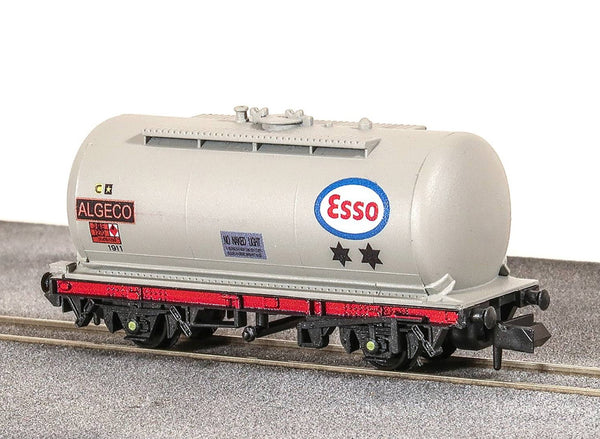
Esso/Algeco 15 ft Tank Wagon No. 1911
Block trains carrying specialised loads are a feature of the modern railway. All Peco wagons feature free running wheels in pin point axles. The ELC coupling, whilst compatible with the standard N gauge couplings, keeps a realistic distance between vehicles and enables the PL-25 electro magnetic decoupler to be used for remote uncoupling.
Ex-BR 16t Mineral Wagon, NCB
All-New Tooling Wagons
Once common on the post-war British Railway network, these 4-wheel vans carried a wide variety of goods throughout the system. No longer in service they remain an iconic wagon type so typical of the railway scene from the 1950s to the 1980s and modellers will find a home for several on their layouts.
The bauxite version of this wagon represents a slightly later period in the wagons life, whilst the black NCB version represents the wagons it it appeared once sold-on for internal use at various coal mine sites.
All of the new-tooling ready-to-run wagons from PECO feature some very fine moulding detail, sharp and precise application of the liveries, detachable couplers and metal-tyred running wheels. Best of all, they are the best value on the market compared to the alternatives available!

Ex-BR Iron Ore Tippler, NCB
All-New Tooling Wagons
Once common on the post-war British Railway network, these 4-wheel vans carried a wide variety of goods throughout the system. No longer in service they remain an iconic wagon type so typical of the railway scene from the 1950s to the 1980s and modellers will find a home for several on their layouts.
The bauxite version of this wagon represents a slightly later period in the wagons life, whilst the black NCB version represents the wagons it it appeared once sold-on for internal use at various coal mine sites.
All of the new-tooling ready-to-run wagons from PECO feature some very fine moulding detail, sharp and precise application of the liveries, detachable couplers and metal-tyred running wheels. Best of all, they are the best value on the market compared to the alternatives available!

Ffestiniog and Blaneau Rly 4 Comp Panelled Composite Coach
These finely moulded plastic wagon kits come complete with pin point axle wheels. Glue and paint will be required, along with appropriate transfers.

Ffestiniog Rly Bogie Coach
These finely moulded plastic wagon kits come complete with pin point axle wheels. Glue and paint will be required, along with appropriate transfers.

Ffestiniog Rly Bogie Luggage Van
These finely moulded plastic wagon kits come complete with pin point axle wheels. Glue and paint will be required, along with appropriate transfers.

Ffestiniog Rly Semi Open Bogie Coach
These finely moulded plastic wagon kits come complete with pin point axle wheels. Glue and paint will be required, along with appropriate transfers.

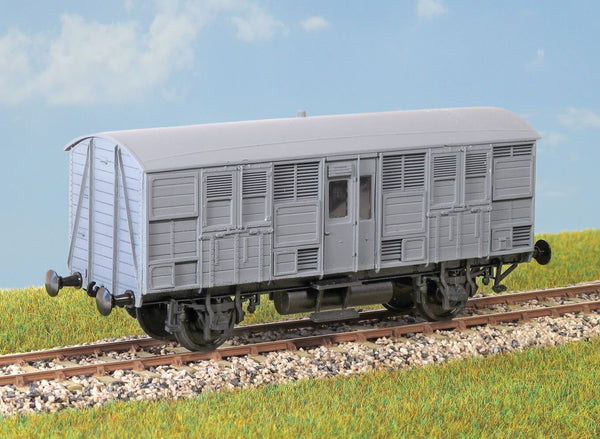
GWR 'Beetle' Prize Cattle Wagon
(Diagram 109) Introduced in the 1920s to carry valuable cattle with their attendants, they were mainly seen on passenger trains until the 1960s. These finely moulded plastic wagon kits come complete with pin point axle wheels and bearings. Glue and paint will be required, along with appropriate transfers. Additional parts to enable the vehicle to be modelled incorporating modifications made to the prototypes during their working life are included where appropriate.
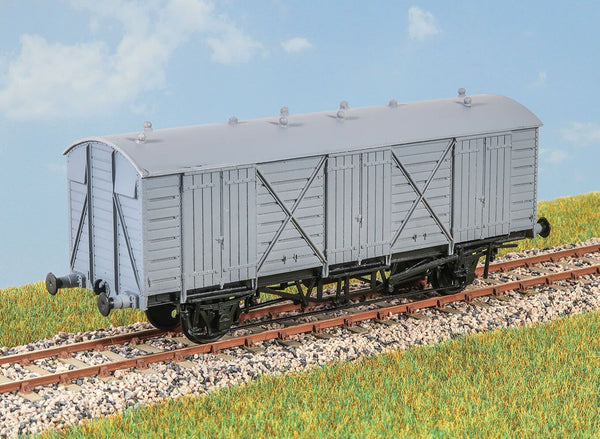
GWR 'Fruit D' Van
This was the final design of the GWR Fruit Van (diagram Y11) of which 50 were built in 1939-1941. More were built by BR in the 1950s and some were in service into the 1970s. These finely moulded plastic wagon kits come complete with pin point axle wheels and bearings. Glue and paint will be required, along with appropriate transfers. Additional parts to enable the vehicle to be modelled incorporating modifications made to the prototypes during their working life are included where appropriate.
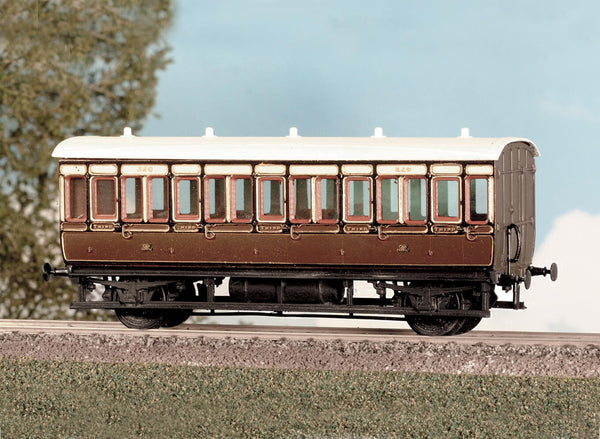
GWR 4 Wheel Coach Kit
These coaches were constructed between 1890 and 1902 for rural duties, but lasted up until the 1950's on workmen's trains and the like. Glue, paint and transfers are required to complete this model.
GWR 4 Wheel Coach Kit
These coaches were constructed between 1890 and 1902 for rural duties, but lasted up until the 1950's on workmen's trains and the like. Glue, paint and transfers are required to complete this model.
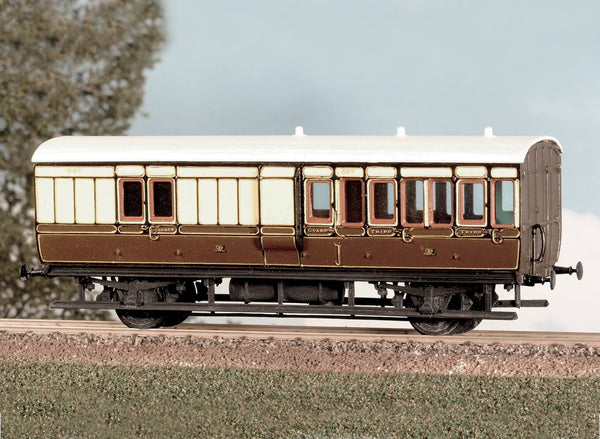
GWR 4 Wheel Composite Coach Kit
These coaches were constructed between 1890 and 1902 for rural duties, but lasted up until the 1950's on workmen's trains and the like. Glue, paint and transfers are required to complete this model.
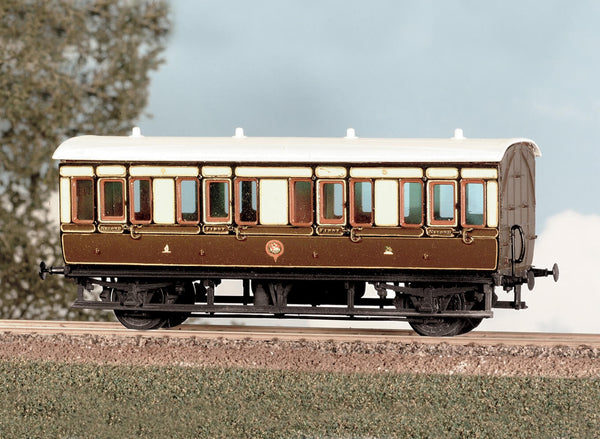
GWR Beetle Prize Cattle Wagon
Introduced to carry valuable cattle with their attendants, they were mainly seen on passenger trains until the 1950s. These finely moulded plastic wagon kits come complete with pin point axle wheels and bearings. Glue and paint will be required, along with appropriate transfers. Additional parts to enable the vehicle to be modelled incorporating modifications made to the prototypes during their working life are included where appropriate.
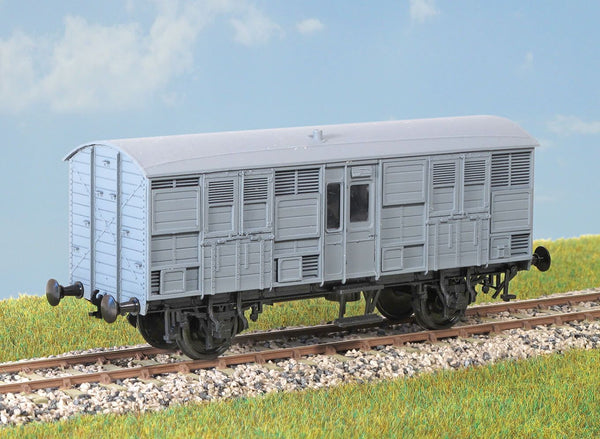
GWR Bloater Fish Van
Introduced in 1916 to carry fish from the many ports on the Great Western Railway, these vans (diagram S8) lasted in regular traffic until 1943.These finely moulded plastic wagon kits come complete with pin point axle wheels and bearings. Glue and paint will be required, along with appropriate transfers. Additional parts to enable the vehicle to be modelled incorporating modifications made to the prototypes during their working life are included where appropriate.
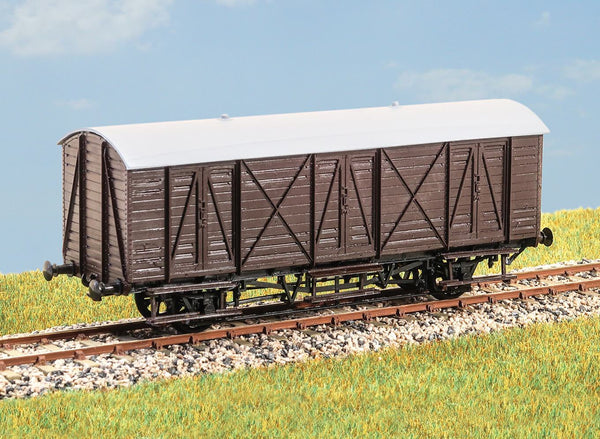
GWR Horse Box Wagon
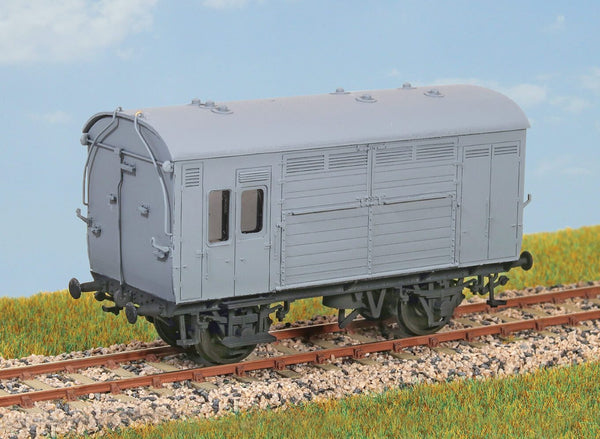
Diagram N13. 300 of these were built in the 1920s with many lasting into the 1950s and 60s. Seen throughout Britain carrying horses to racecourses and stables, invariably marshalled in passenger or parcel trains. These finely moulded plastic wagon kits come complete with pin point axle wheels and bearings. Glue and paint will be required, along with appropriate transfers. Additional parts to enable the vehicle to be modelled incorporating modifications made to the prototypes during their working life are included where appropriate.