


BROWSE PECO PRODUCTS
Browse through our complete product portfolio.
171 Products Found
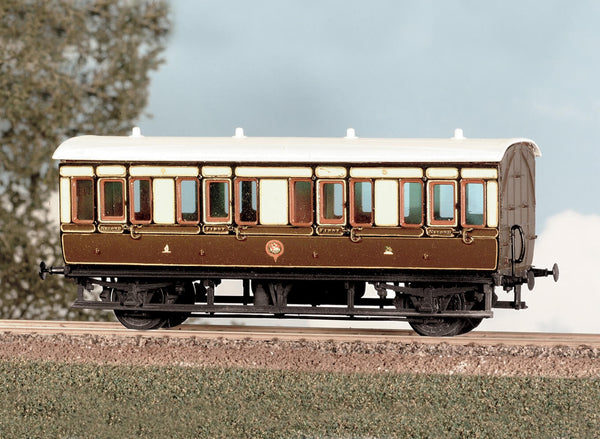
GWR 4 Wheel Composite Coach Kit
These coaches were constructed between 1890 and 1902 for rural duties, but lasted up until the 1950's on workmen's trains and the like. Glue, paint and transfers are required to complete this model.
GWR Beetle Prize Cattle Wagon
Introduced to carry valuable cattle with their attendants, they were mainly seen on passenger trains until the 1950s. These finely moulded plastic wagon kits come complete with pin point axle wheels and bearings. Glue and paint will be required, along with appropriate transfers. Additional parts to enable the vehicle to be modelled incorporating modifications made to the prototypes during their working life are included where appropriate.
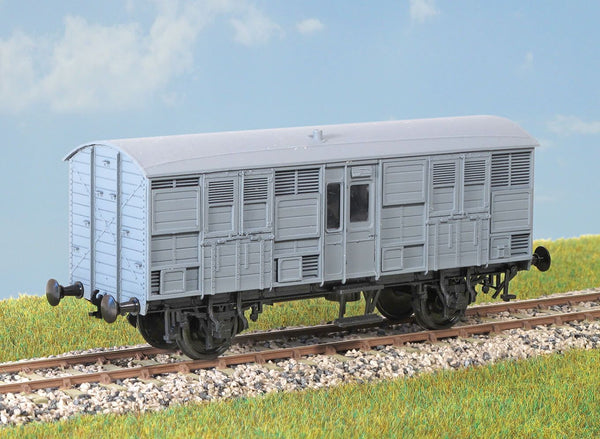
GWR Bloater Fish Van
Introduced in 1916 to carry fish from the many ports on the Great Western Railway, these vans (diagram S8) lasted in regular traffic until 1943.These finely moulded plastic wagon kits come complete with pin point axle wheels and bearings. Glue and paint will be required, along with appropriate transfers. Additional parts to enable the vehicle to be modelled incorporating modifications made to the prototypes during their working life are included where appropriate.
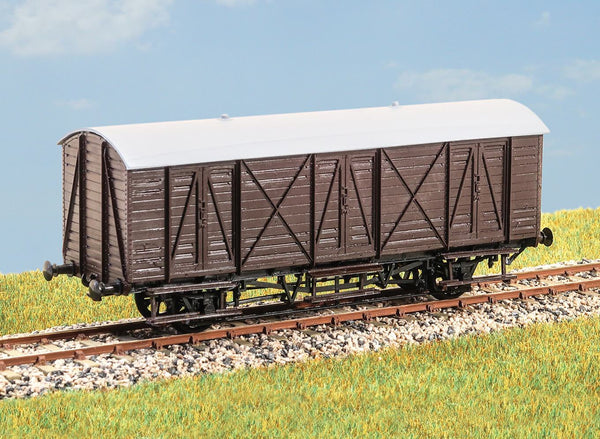
GWR Home and Distant Signal
Part of the Ratio 'Quick Assembly' family of signals. These allow you to make home and distant signals quickly and easily. They include signal operating wire and lever. This kit enables you to replicate a GWR Home and Distant Signal. Kit includes pre-coloured signal arms, glue and paints required to complete model.
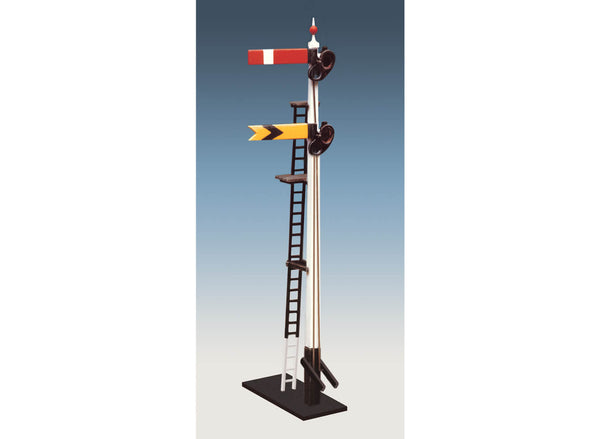
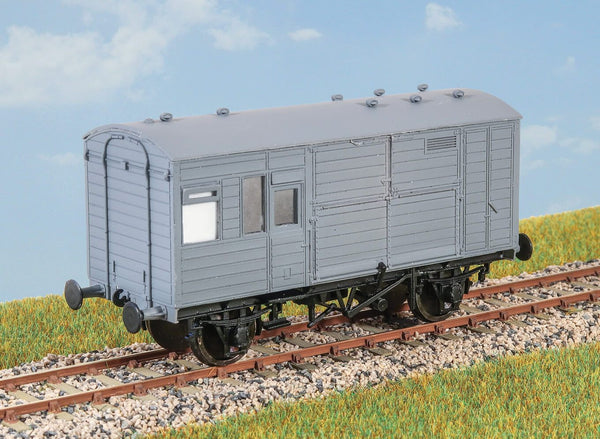
GWR Horse Box Wagon
Diagram N13. 300 of these were built in the 1920s with many lasting into the 1950s and 60s. Seen throughout Britain carrying horses to racecourses and stables, invariably marshalled in passenger or parcel trains. These finely moulded plastic wagon kits come complete with pin point axle wheels and bearings. Glue and paint will be required, along with appropriate transfers. Additional parts to enable the vehicle to be modelled incorporating modifications made to the prototypes during their working life are included where appropriate.
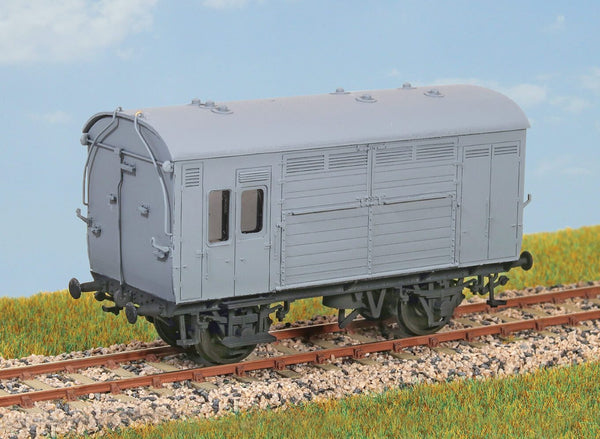
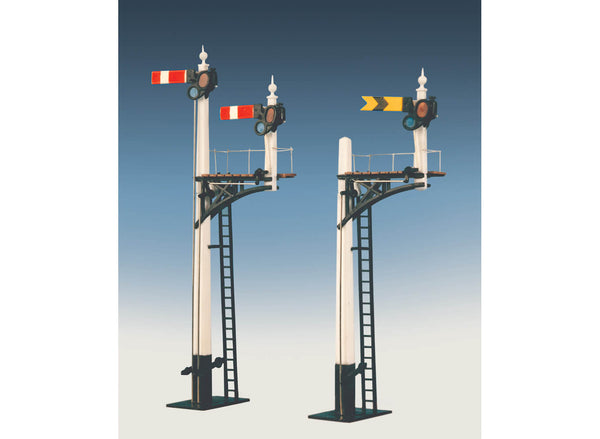
GWR Junction/Bracket Signal
Part of the Ratio 'Quick Assembly' family of signals. These allow you to make home and distant signals quickly and easily. They include signal operating wire and lever. This kit enables you to replicate a GWR Junction/Bracket signal, either as a Home, Distant or combined Home and Distant signal. Glue and paints required to complete model.
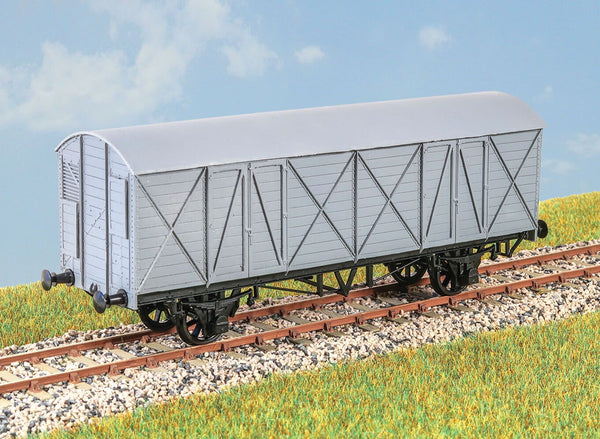
GWR Mink Goods Van
Introduced in 1906, these vans (diagram V11) were used for general goods traffic until during the Second World War. Being fitted with the vacuum brake, they were frequently found on GWR express goods trains. These finely moulded plastic wagon kits come complete with pin point axle wheels and bearings. Glue and paint will be required, along with appropriate transfers. Additional parts to enable the vehicle to be modelled incorporating modifications made to the prototypes during their working life are included where appropriate.
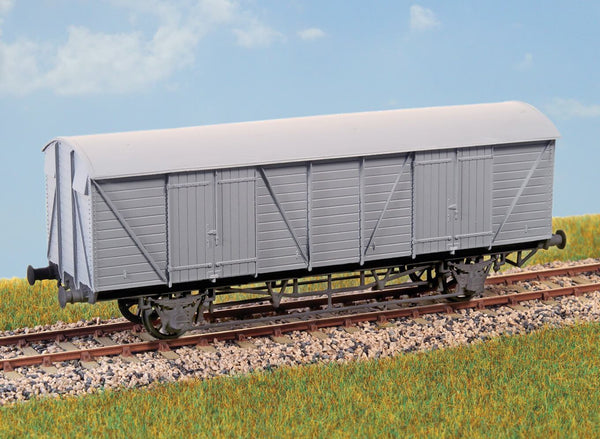
GWR Mink Goods Van
(Diagram V22) Introduced in 1931 to carry express goods traffic between the main stations on the GWR system. One hundred were built and lasted in service until the 1960s.These finely moulded plastic wagon kits come complete with pin point axle wheels and bearings. Glue and paint will be required, along with appropriate transfers. Additional parts to enable the vehicle to be modelled incorporating modifications made to the prototypes during their working life are included where appropriate.
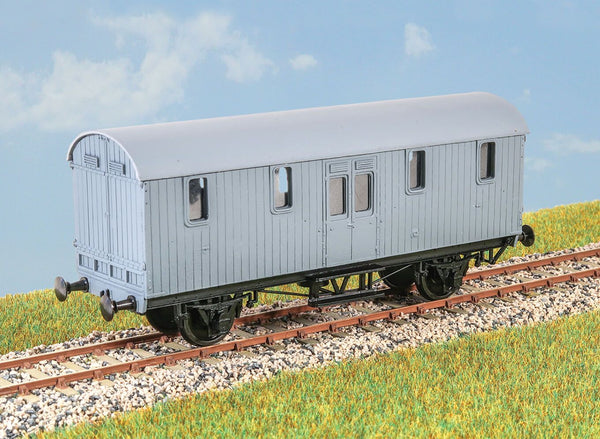
GWR Python Covered Carriage Coach Van
Introduced in 1914, these vehicles carried parcels and motor vehicles until the early days of BR. These finely moulded plastic wagon kits come complete with pin point axle wheels and bearings. Glue and paint will be required, along with appropriate transfers. Additional parts to enable the vehicle to be modelled incorporating modifications made to the prototypes during their working life are included where appropriate.
GWR Signal Box
Although modelled on the signal box at Highley, Severn Valley Railway, this box was designed by the private signalling firm Mackenzie and Holland, making it suitable for many areas of the country. The Ratio Signal Box Interior kit 553 will provide a wealth of interior detail. Supplied with pre-coloured parts although painting and/or weathering can add realism; glue is required to complete this model. Footprint 92mm x 51mm inc. steps.

GWR Wooden Station Building (Monkton Combe)
Monkton Combe, once an intermediate station on the long-closed Camerton branch near Bath, was thrust into the limelight in 1952 when it was chosen to be the location for the filming of the famous Ealing Comedy "The TitfieldThunderbolt". 
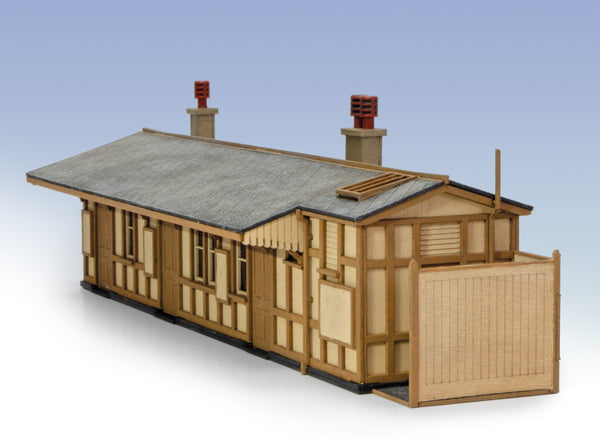
Highland Railway Signal Box
A accurately laser cut wood kit supplemented by injection moulded roof. Glue and paints required to complete model.
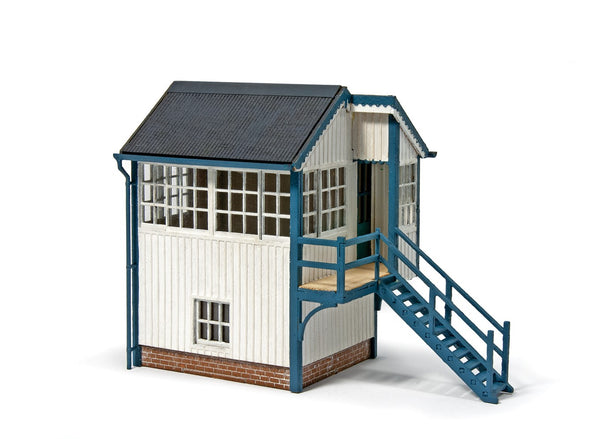
Large Water Tower
This 20,000 gallon design is equally at home replenishing water troughs, a large motive power depot or supplying several platform mounted water cranes (See Ratio Water Crane and Fire Devil kit 413 and Peco LK-2 Water Cranes). Supplied with pre-coloured parts although painting and/or weathering can add realism (See the Pecoscene Weathering Powder range PS-360 - 365); glue is required to complete this model. Footprint 122mm x 49mm
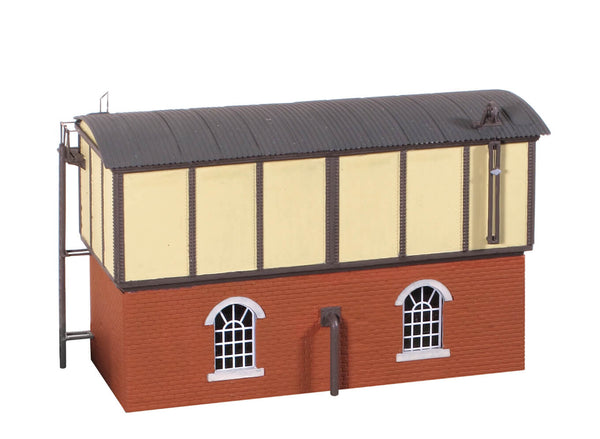
LMS 20ton Goods Brake Van
849 of these vans (diagram 1659) were built between 1924 and 1927. In general traffic they survived into the 1960s, while those in Engineer’s fleet lasted into the 1980s. These finely moulded plastic wagon kits come complete with pin point axle wheels and bearings. Glue and paint will be required, along with appropriate transfers. Additional parts to enable the vehicle to be modelled incorporating modifications made to the prototypes during their working life are included where appropriate.
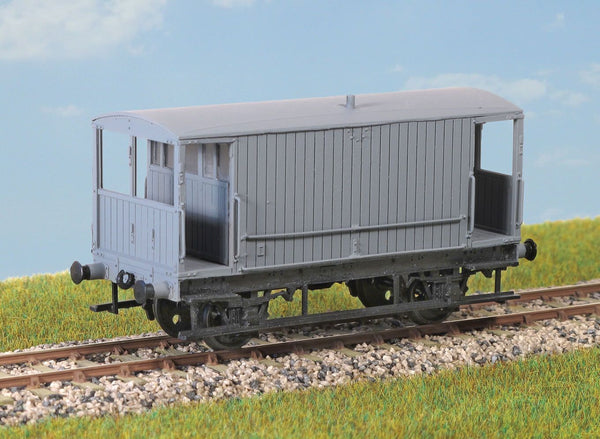
LMS 4 Wheel CCT Van
Built in 1935- 1937, 125 of these useful vans (diagram 1929) carried parcels, mail and motor vehicles in passenger and parcels trains until the early 1970s. These finely moulded plastic wagon kits come complete with pin point axle wheels and bearings. Glue and paint will be required, along with appropriate transfers. Additional parts to enable the vehicle to be modelled incorporating modifications made to the prototypes during their working life are included where appropriate.
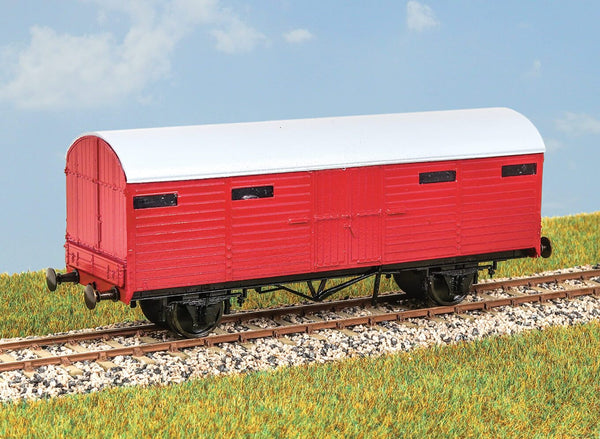
LMS 4 Wheel Motor Car Van
150 of these vans (diagram 2026) were built in 1938, with a further 75 by BR in 1952-1957. Classed as motor car vans, they were also used for parcels and mail.
These finely moulded plastic wagon kits come complete with pin point axle wheels and bearings. Glue and paint will be required, along with appropriate transfers. Additional parts to enable the vehicle to be modelled incorporating modifications made to the prototypes during their working life are included where appropriate.
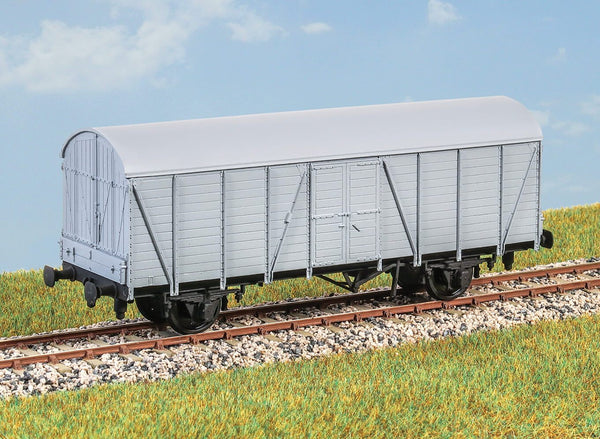
LMS 48 feet Suburban Coach Kit
These non-corridor coaches were built between 1903 and 1910 by the Midland Railway. They were used as close coupled sets for suburban services in the Manchester and Birmingham areas, remaining in service until the early 1950's. Glue, paint and transfers are required to complete this model.
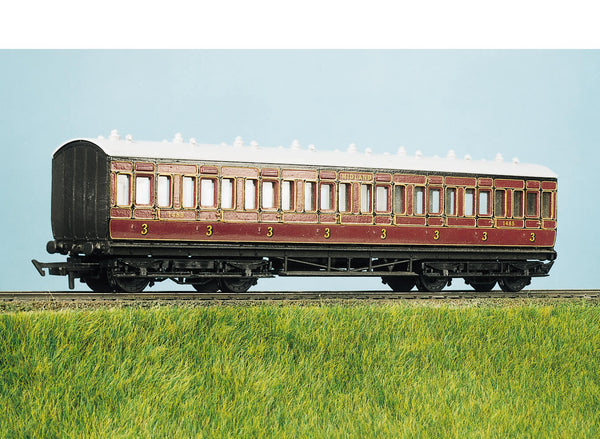
LMS 48 feet Suburban Coach Kit
These non-corridor coaches were built between 1903 and 1910 by the Midland Railway. They were used as close coupled sets for suburban services in the Manchester and Birmingham areas, remaining in service until the early 1950's. Glue, paint and transfers are required to complete this model.
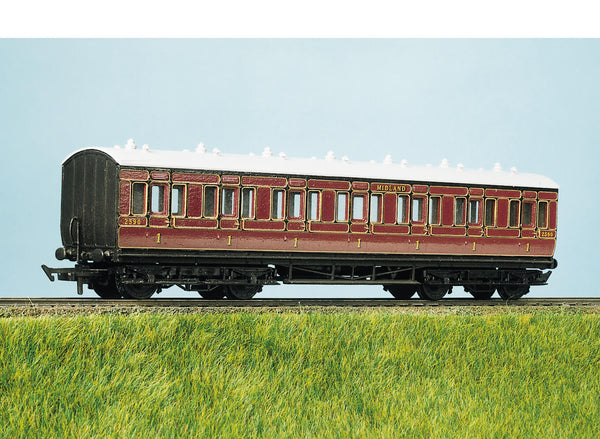
LMS 48 feet Suburban Coach Kit
These non-corridor coaches were built between 1903 and 1910 by the Midland Railway. They were used as close coupled sets for suburban services in the Manchester and Birmingham areas, remaining in service until the early 1950's. Glue, paint and transfers are required to complete this model.
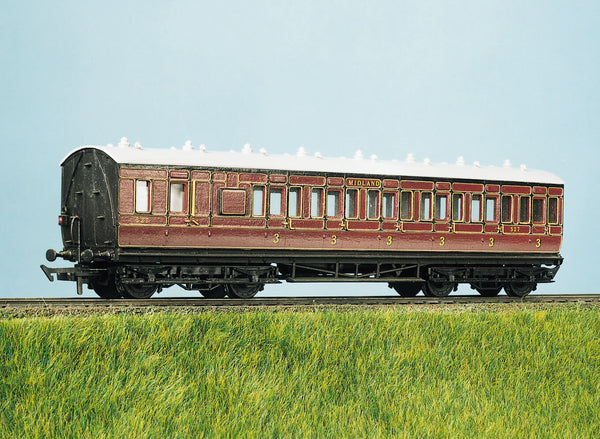
LMS 48 feet Suburban Coach Kit
These non-corridor coaches were built between 1903 and 1910 by the Midland Railway. They were used as close coupled sets for suburban services in the Manchester and Birmingham areas, remaining in service until the early 1950's. Glue, paint and transfers are required to complete this model.
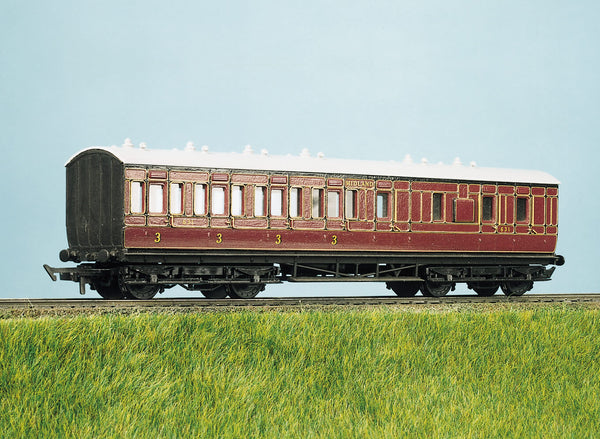
LMS 50ft Arc Roof Corridor Brake Coach Kit
A total of 650 coaches of this type were built at Wolverton between 1891 and 1903 by the London and North Western Railway for main line service and many of them were transferred into the LMS after the 1923 Grouping. Glue, paint and transfers are required to complete this model.
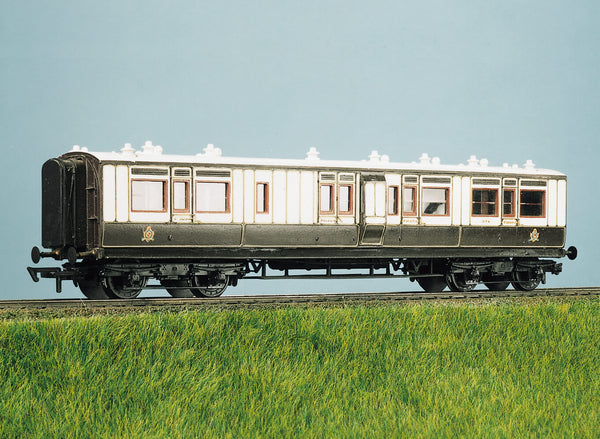
LMS 50ft Arc Roof Corridor Brake Composite Coach Kit
A total of 650 coaches of this type were built at Wolverton between 1891 and 1903 by the London and North Western Railway for main line service and many of them were transferred into the LMS after the 1923 Grouping. Glue, paint and transfers are required to complete this model.
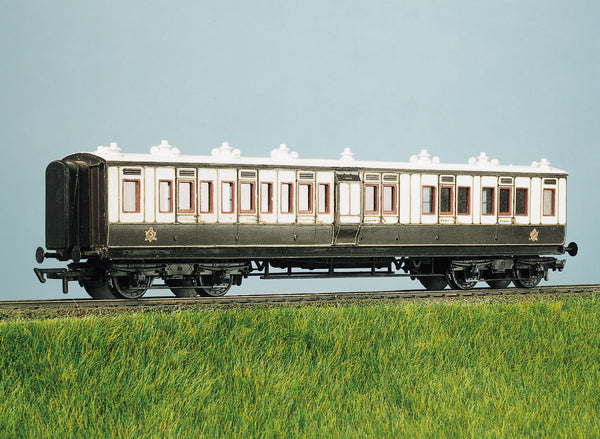
LMS 50ft Arc Roof Corridor Coach Kit
A total of 650 coaches of this type were built at Wolverton between 1891 and 1903 by the London and North Western Railway for main line service and many of them were transferred into the LMS after the 1923 Grouping. Glue, paint and transfers are required to complete this model.
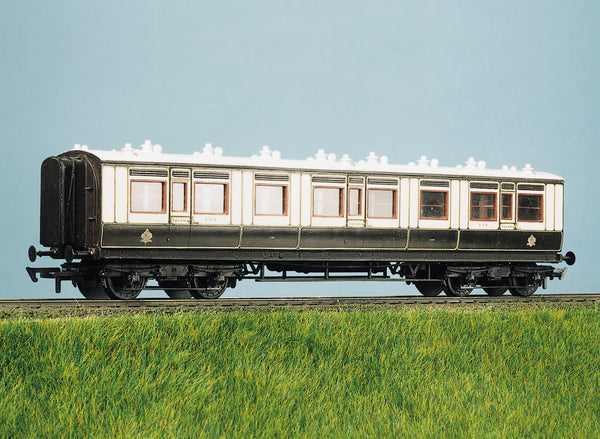
LMS 50ft Arc Roof Corridor Composite Coach Kit
A total of 650 coaches of this type were built at Wolverton between 1891 and 1903 by the London and North Western Railway for main line service and many of them were transferred into the LMS after the 1923 Grouping. Glue, paint and transfers are required to complete this model.
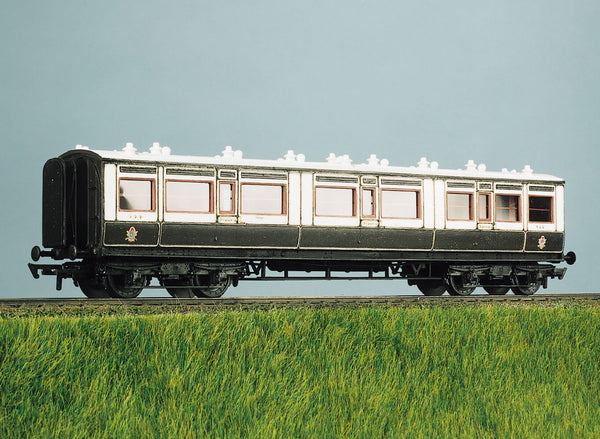
LMS Clerestory Brake Coach Kit
Built between 1898 and 1902 by the Midland Railway, these elegant non-corridor coaches were built for use on express routes. Glue, paint and transfers are required to complete this model.
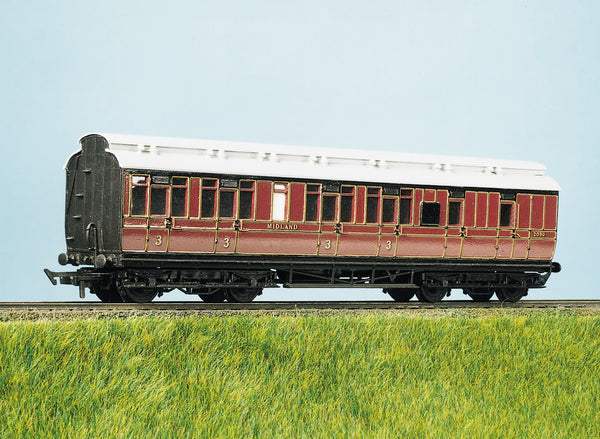
LMS Clerestory Coach Kit
Built between 1898 and 1902 by the Midland Railway, these elegant non-corridor coaches were built for use on express routes. Glue, paint and transfers are required to complete this model.
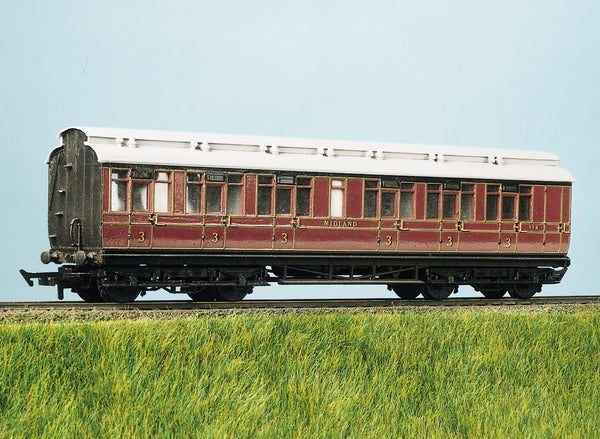
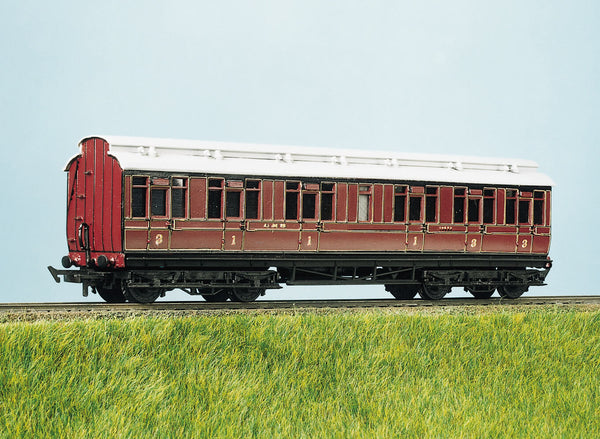
LMS Clerestory Composite Coach Kit
Built between 1898 and 1902 by the Midland Railway, these elegant non-corridor coaches were built for use on express routes. Glue, paint and transfers are required to complete this model.
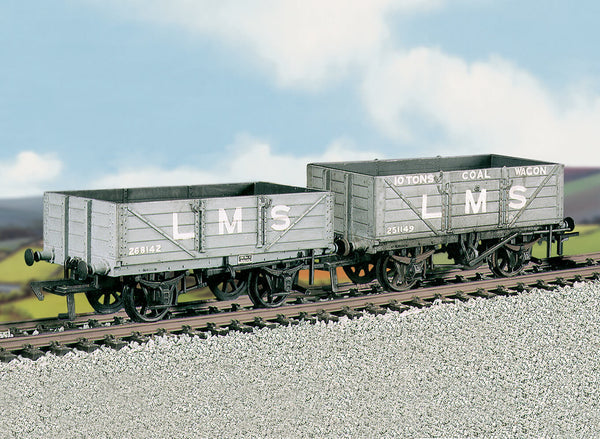
LMS Traffic Coal and 4 Plank Wagons Kit
Set of 2 wagons. Originally LNWR wagons, they were in common use for carrying coal and general merchandise. The kit includes metal wheels, transfers and brass buffers heads, and requires glue and paint to complete.
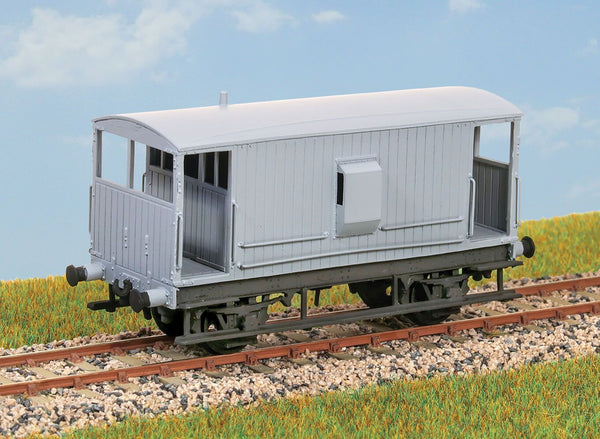
LMS/BR 20ton Brake Van
950 of these brake vans (diagram 1657) were built in 1927-1931. They lasted in general traffic until the mid 1960s. Some survivors in the Engineer’s fleet lasted into the 1980s.
These finely moulded plastic wagon kits come complete with pin point axle wheels and bearings. Glue and paint will be required, along with appropriate transfers. Additional parts to enable the vehicle to be modelled incorporating modifications made to the prototypes during their working life are included where appropriate.
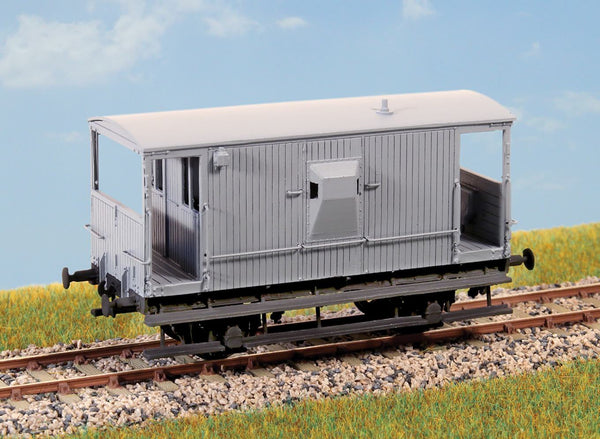
LNER 20ton Brake Van Toad E
900 of these vans were built between 1930 and 1936. Seen all over the former LNER system, they lasted in service into the mid 1960s. These finely moulded plastic wagon kits come complete with pin point axle wheels and bearings. Glue and paint will be required, along with appropriate transfers. Additional parts to enable the vehicle to be modelled incorporating modifications made to the prototypes during their working life are included where appropriate.
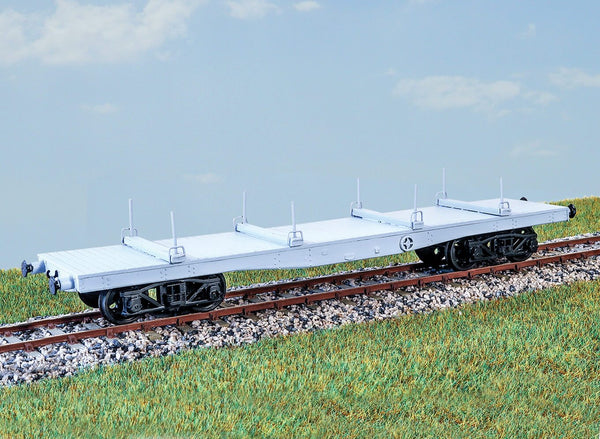
LNER Bogie Bolster Wagon
(Quad) In 1921 the NER bought a number of these wagons from the Government. They lasted until the mid 1950s. Several worked as flat wagons. These finely moulded plastic wagon kits come complete with pin point axle wheels and bearings. Glue and paint will be required, along with appropriate transfers. Additional parts to enable the vehicle to be modelled incorporating modifications made to the prototypes during their working life are included where appropriate.
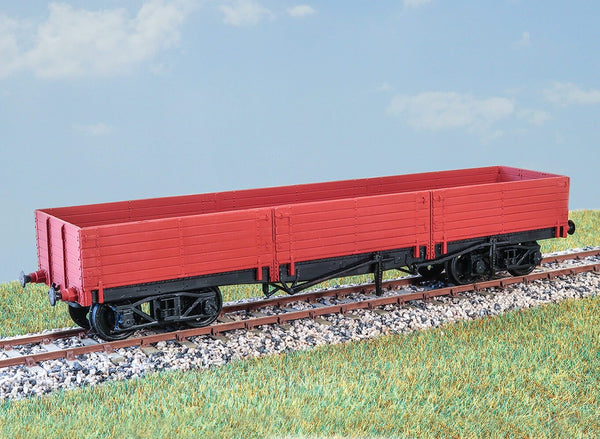
LNER Bogie Brick Wagon
Built in 1930 (repeating a 1921 GNR design), these wagons (diagram 70) carried brick between Peterborough and London. Examples were in use until 1966. These finely moulded plastic wagon kits come complete with pin point axle wheels and bearings. Glue and paint will be required, along with appropriate transfers. Additional parts to enable the vehicle to be modelled incorporating modifications made to the prototypes during their working life are included where appropriate.
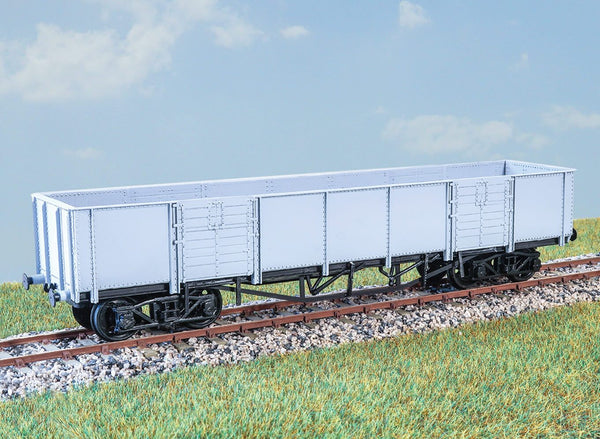
LNER Bogie Sulphate Wagon
Eighty of these wagons (diagram 69) were built in the 1930s to carry fertilizer from the I.C.I. Works at Billingham, Tee-side. Many ended their days carrying refuse in the Kings Cross area in the 1960s.These finely moulded plastic wagon kits come complete with pin point axle wheels and bearings. Glue and paint will be required, along with appropriate transfers. Additional parts to enable the vehicle to be modelled incorporating modifications made to the prototypes during their working life are included where appropriate.
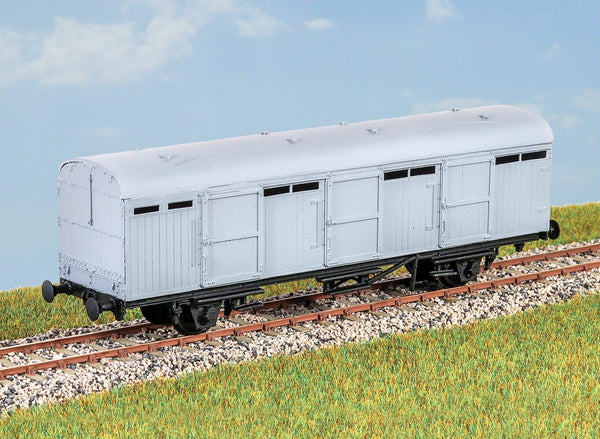
LNER Extra Long CCT Van
Built in two batches in 1939 and 1950, these vehicles (diagram 6) were used to carry parcels, mail and motor vehicles in passenger and parcels trains until 1980. These finely moulded plastic wagon kits come complete with pin point axle wheels and bearings. Glue and paint will be required, along with appropriate transfers. Additional parts to enable the vehicle to be modelled incorporating modifications made to the prototypes during their working life are included where appropriate.
LNER Horse Box Wagon
30 of these horse boxes (diagram 5) were built by the LNER in 1938, mainly to carry racehorses to meetings throughout Britain. Many lasted into the early 1960s. These finely moulded plastic wagon kits come complete with pin point axle wheels and bearings. Glue and paint will be required, along with appropriate transfers. Additional parts to enable the vehicle to be modelled incorporating modifications made to the prototypes during their working life are included where appropriate.
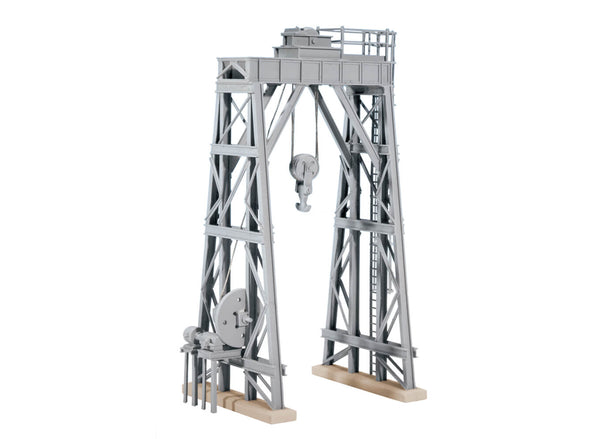
Locomotive Lifting Hoist
Modelled on a hoist found at Plymouth Laira depot which is still in use today assisting with the maintenance of Locos and rolling stock. An Inspection Pit (Peco LK-56/156) was also often provided.The Rolling Underframe kit (Ref 546A) can be added to transform this unit into a movable crane. Supplied with pre-coloured parts although painting and/or weathering can add realism (See the Pecoscene Weathering Powder range PS-360 - 365); glue is required to complete this model. Footprint 61mm wide, Span 90mm
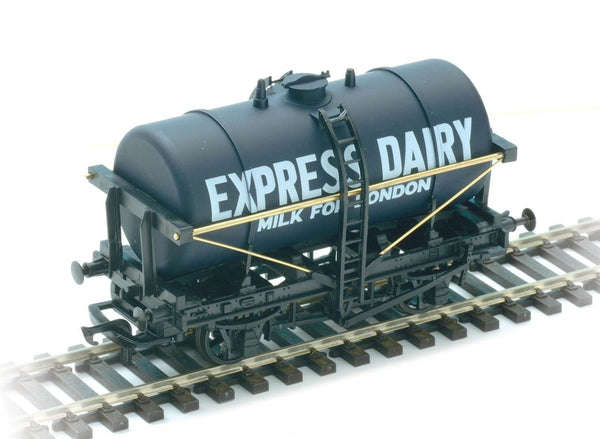
Milk Tank Wagon Express Dairy
These 10ft Tank Wagon kits include:
‚Ģ Actual working axlebox springs
‚Ģ Sprung metal buffers
‚Ģ Fully painted and lettered body
‚Ģ Pin-point axles and bearings for maximum length trains
‚Ģ Both Peco Simplex and Peco Anita tension lock couplings
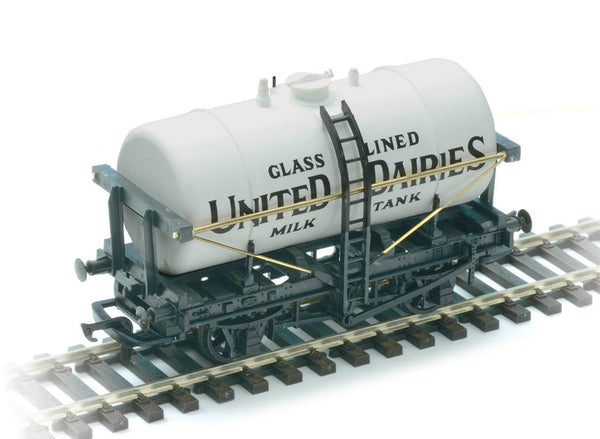
Milk Tank Wagon United Dairies
These 10ft Tank Wagon kits include:
‚Ģ Actual working axlebox springs
‚Ģ Sprung metal buffers
‚Ģ Fully painted and lettered body
‚Ģ Pin-point axles and bearings for maximum length trains
‚Ģ Both Peco Simplex and Peco Anita tension lock couplings
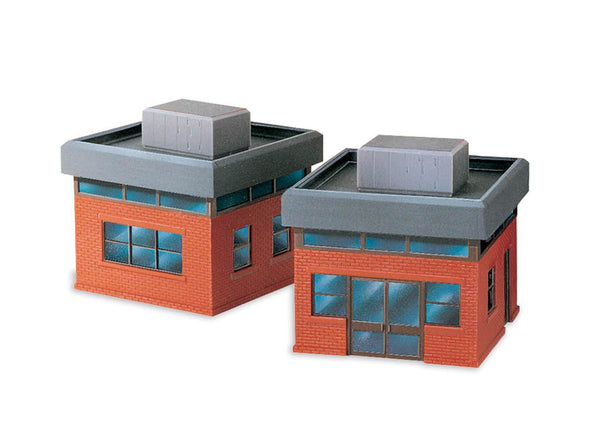
Office Buildings
A pre coloured plastic kit that can be put together in a number of different configurations.
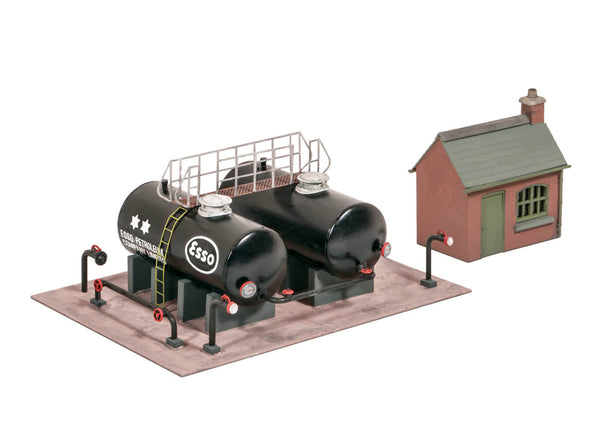
Oil Depot
Oil depot for distribution of domestic oil, which was transferred to road vehicles to deliver to domestic customers. Kit includes hut, base , pipe fittings, catwalk, ladders and Esso transfers. The Peco Wonderful Wagons Petrol Tanker Kits R-75RD and R-75S kits can be used as delivery vehicles. Supplied with pre-coloured parts although painting and/or weathering can add realism (See the Pecoscene Weathering Powder range PS-360 - 365); glue is required to complete this model. Footprint 180mm x 95mm
OO/HO 1960s Semi-Detatched House Backs
NEW Wooden Laser-Cut Kits
Following on from the release of our Victorian houses, we have moved forward a century with these rather more utilitarian house kits, based on a design that first appeared in the 1960s. We have all seen these houses - they are all over the UK, forming a familiar feature in virtually every town and city.
There are 3 kits available: Low-relief Fronts & Backs, and the Full Building Kit. Easy and satisfying to build, the laser-cut detail is extremely fine, with wonderful brick and tile textures on the surface. The models also feature guttering and downpipes, a separate porch at the front and blinds in the windows, which can be positioned as desired. Once built the models can be painted to reflect the modeller's individual choice.
You can easily imagine a row of these 1960s house backs lining up alongside the railway, or a small housing estate located close to the railway station - a perfect scene on the layout that can be enhanced with various other PECO, Ratio, Wills and Harburn Hamlet accessories.

OO/HO 1960s Semi-Detatched House Complete
NEW Wooden Laser-Cut Kits
Following on from the release of our Victorian houses, we have moved forward a century with these rather more utilitarian house kits, based on a design that first appeared in the 1960s. We have all seen these houses - they are all over the UK, forming a familiar feature in virtually every town and city.
There are 3 kits available: Low-relief Fronts & Backs, and the Full Building Kit. Easy and satisfying to build, the laser-cut detail is extremely fine, with wonderful brick and tile textures on the surface. The models also feature guttering and downpipes, a separate porch at the front and blinds in the windows, which can be positioned as desired. Once built the models can be painted to reflect the modeller's individual choice.
You can easily imagine a row of these 1960s house backs lining up alongside the railway, or a small housing estate located close to the railway station - a perfect scene on the layout that can be enhanced with various other PECO, Ratio, Wills and Harburn Hamlet accessories.

OO/HO 1960s Semi-Detatched House Fronts
NEW Wooden Laser-Cut Kits
Following on from the release of our Victorian houses, we have moved forward a century with these rather more utilitarian house kits, based on a design that first appeared in the 1960s. We have all seen these houses - they are all over the UK, forming a familiar feature in virtually every town and city.
There are 3 kits available: Low-relief Fronts & Backs, and the Full Building Kit. Easy and satisfying to build, the laser-cut detail is extremely fine, with wonderful brick and tile textures on the surface. The models also feature guttering and downpipes, a separate porch at the front and blinds in the windows, which can be positioned as desired. Once built the models can be painted to reflect the modeller's individual choice.
You can easily imagine a row of these 1960s house backs lining up alongside the railway, or a small housing estate located close to the railway station - a perfect scene on the layout that can be enhanced with various other PECO, Ratio, Wills and Harburn Hamlet accessories.

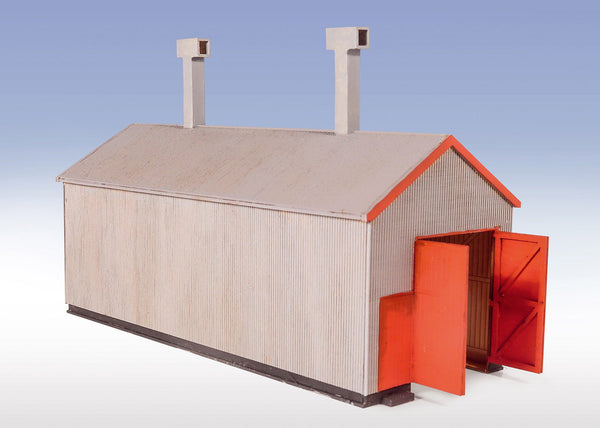
OO/HO/OO-9 Corrugated Engine Shed Lasercut Kit
Based on the buildings at the Ffestiniog Railway Boston Lodge base in Porthmadog, North Wales, these two new kits perfectly complement our OO-9 scale rolling stock, and of course, the Small and Large Engine locomotives. Produced from fine plywood sheets the kits feature some very exquisite texture detailing replicating either the stone or corrugated iron finish. Both kits include some interior detail such as roof bracing.
The corrugated iron building, LK220, which at Boston Lodge sits alongside the older stone building, is a simpler single-track structure but again can also be built single or double-ended and with or without the chimneys. Footprint 167 x 64mm.
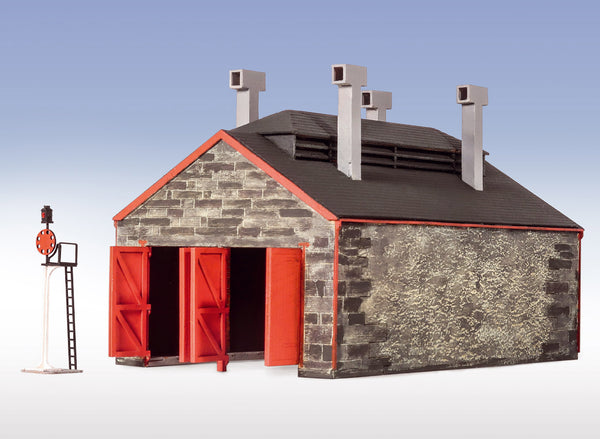
OO/HO/OO-9 Two Road Engine Shed Lasercut Kit
Based on the buildings at the Ffestiniog Railway Boston Lodge base in Porthmadog, North Wales, these two new kits perfectly complement our OO-9 scale rolling stock, and of course, the Small and Large Engine locomotives. Produced from fine plywood sheets the kits feature some very exquisite texture detailing replicating either the stone or corrugated iron finish. Both kits include some interior detail such as roof bracing.
The stone engine shed kit LK219 has two alternative roofs, depending on whether the modeller wishes to use the chimneys and roof vents, and this kit also includes a separate and authentic FR disc signal. The shed can also be built single or double-ended. Footprint 167 x 97mm.
Parkside OO - 4-Wheel Milk Tank Wagon Kit
These kits have been transferred over to Parkside from the PECO "Wonderful Wagons" range, a long-standing favourite kit of modellers for many years. Back then these kits were pre-coloured and decorated, but we have overhauled the kits, added an NEM pocket (so modellers can easily fit a coupler of their choice - although the kit is supplied with a set of tension-lock couplers) and now supply the kits with either a set of milk company decals (PC91) or oil company decals (PC92). The decals provide a whole lot more detail than previously applied to the original pre-decorated kits.
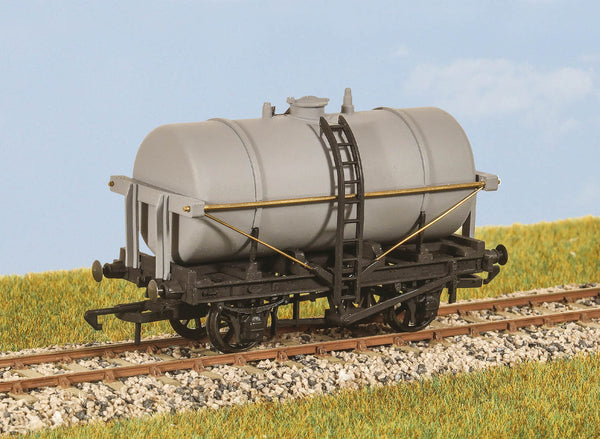
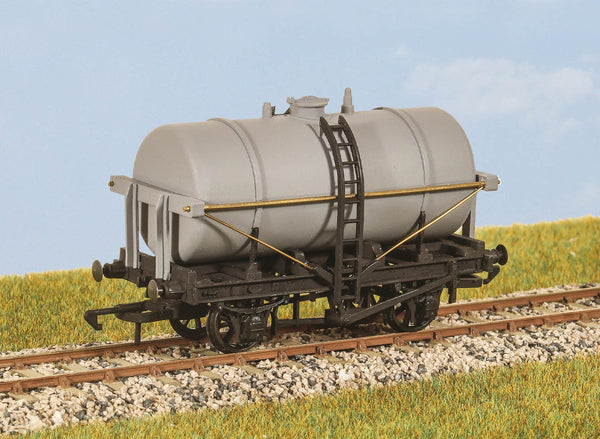
Parkside OO - 4-Wheel Oil Tank Wagon Kit
These kits have been transferred over to Parkside from the PECO "Wonderful Wagons" range, a long-standing favourite kit of modellers for many years. Back then these kits were pre-coloured and decorated, but we have overhauled the kits, added an NEM pocket (so modellers can easily fit a coupler of their choice - although the kit is supplied with a set of tension-lock couplers) and now supply the kits with either a set of milk company decals (PC91) or oil company decals (PC92). The decals provide a whole lot more detail than previously applied to the original pre-decorated kits.
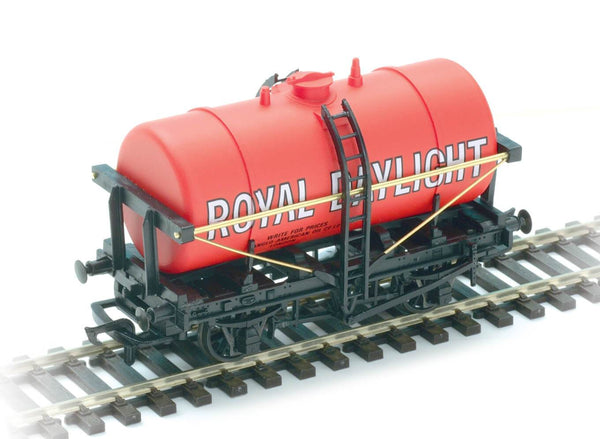
Petrol Tank Wagon Royal Daylight
These 10ft Tank Wagon kits include:
‚Ģ Actual working axlebox springs
‚Ģ Sprung metal buffers
‚Ģ Fully painted and lettered body
‚Ģ Pin-point axles and bearings for maximum length trains
‚Ģ Both Peco Simplex and Peco Anita tension lock couplings