


BROWSE PECO PRODUCTS
Browse through our complete product portfolio.
137 Products Found
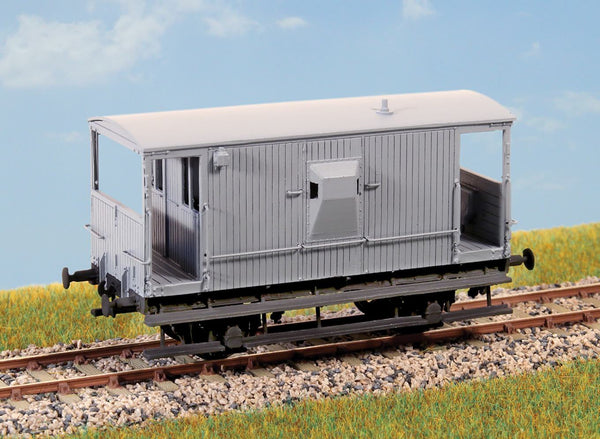
LNER 20ton Brake Van Toad E
900 of these vans were built between 1930 and 1936. Seen all over the former LNER system, they lasted in service into the mid 1960s. These finely moulded plastic wagon kits come complete with pin point axle wheels and bearings. Glue and paint will be required, along with appropriate transfers. Additional parts to enable the vehicle to be modelled incorporating modifications made to the prototypes during their working life are included where appropriate.
LNER Horse Box Wagon
30 of these horse boxes (diagram 5) were built by the LNER in 1938, mainly to carry racehorses to meetings throughout Britain. Many lasted into the early 1960s. These finely moulded plastic wagon kits come complete with pin point axle wheels and bearings. Glue and paint will be required, along with appropriate transfers. Additional parts to enable the vehicle to be modelled incorporating modifications made to the prototypes during their working life are included where appropriate.
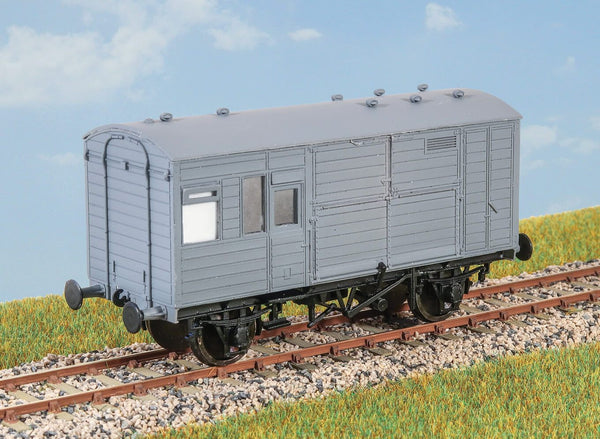
GWR Horse Box Wagon
Diagram N13. 300 of these were built in the 1920s with many lasting into the 1950s and 60s. Seen throughout Britain carrying horses to racecourses and stables, invariably marshalled in passenger or parcel trains. These finely moulded plastic wagon kits come complete with pin point axle wheels and bearings. Glue and paint will be required, along with appropriate transfers. Additional parts to enable the vehicle to be modelled incorporating modifications made to the prototypes during their working life are included where appropriate.
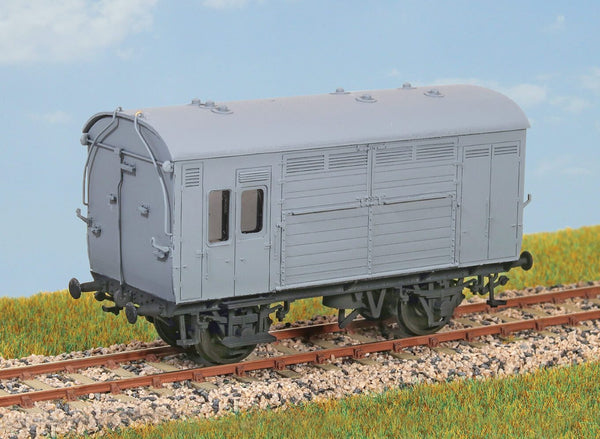
GWR 'Fruit D' Van
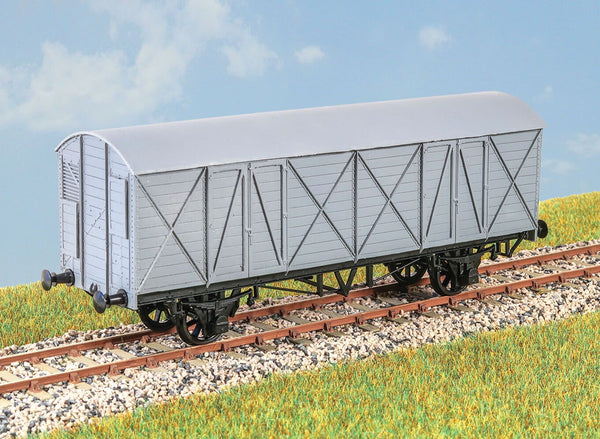
This was the final design of the GWR Fruit Van (diagram Y11) of which 50 were built in 1939-1941. More were built by BR in the 1950s and some were in service into the 1970s. These finely moulded plastic wagon kits come complete with pin point axle wheels and bearings. Glue and paint will be required, along with appropriate transfers. Additional parts to enable the vehicle to be modelled incorporating modifications made to the prototypes during their working life are included where appropriate.
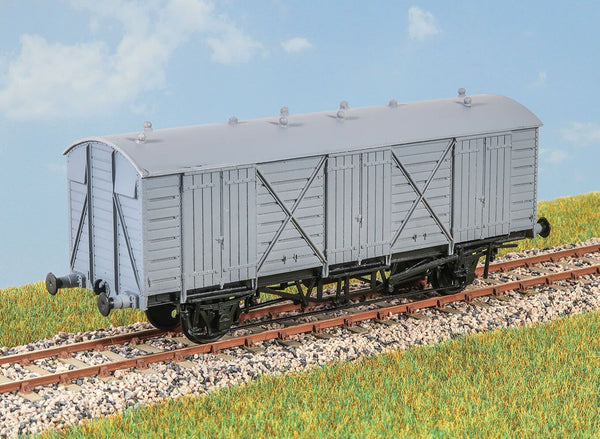
GWR 'Beetle' Prize Cattle Wagon
(Diagram 109) Introduced in the 1920s to carry valuable cattle with their attendants, they were mainly seen on passenger trains until the 1960s. These finely moulded plastic wagon kits come complete with pin point axle wheels and bearings. Glue and paint will be required, along with appropriate transfers. Additional parts to enable the vehicle to be modelled incorporating modifications made to the prototypes during their working life are included where appropriate.
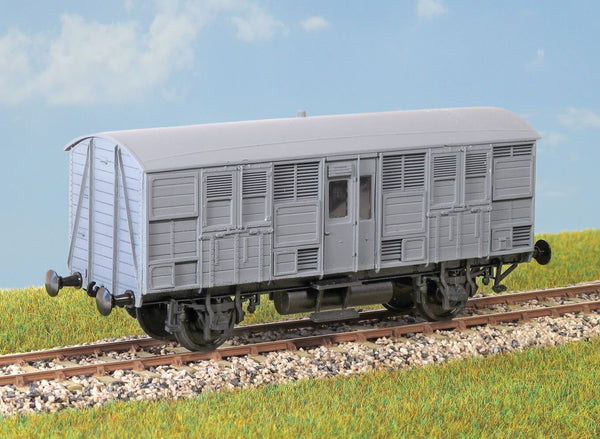
LMS 20ton Goods Brake Van
849 of these vans (diagram 1659) were built between 1924 and 1927. In general traffic they survived into the 1960s, while those in Engineer’s fleet lasted into the 1980s. These finely moulded plastic wagon kits come complete with pin point axle wheels and bearings. Glue and paint will be required, along with appropriate transfers. Additional parts to enable the vehicle to be modelled incorporating modifications made to the prototypes during their working life are included where appropriate.
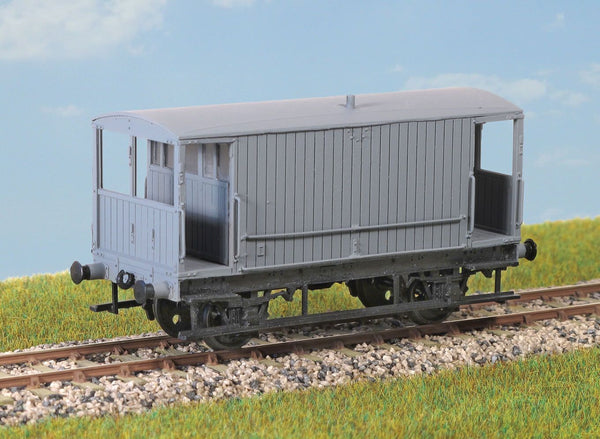
LMS/BR 20ton Brake Van
950 of these brake vans (diagram 1657) were built in 1927-1931. They lasted in general traffic until the mid 1960s. Some survivors in the Engineer’s fleet lasted into the 1980s.
These finely moulded plastic wagon kits come complete with pin point axle wheels and bearings. Glue and paint will be required, along with appropriate transfers. Additional parts to enable the vehicle to be modelled incorporating modifications made to the prototypes during their working life are included where appropriate.
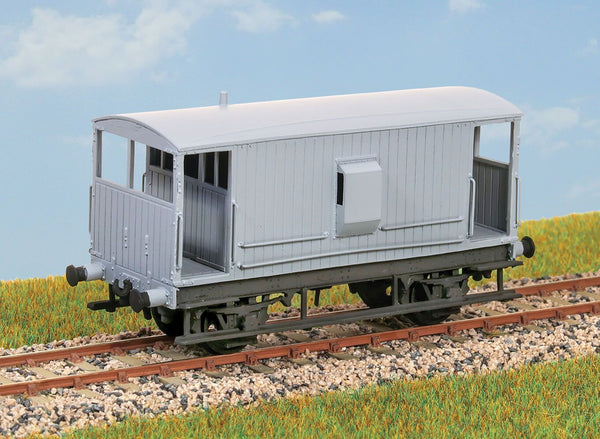
BR CCT Parcels Van
This BR built wagon (diagram 3101) had plywood body sides but had timber doors for extra strength as with the SR version. 150 were built between 1951 and 1955. Withdrawal took place in the early 1980s.
These finely moulded plastic wagon kits come complete with pin point axle wheels and bearings. Glue and paint will be required, along with appropriate transfers. Additional parts to enable the vehicle to be modelled incorporating modifications made to the prototypes during their working life are included where appropriate.
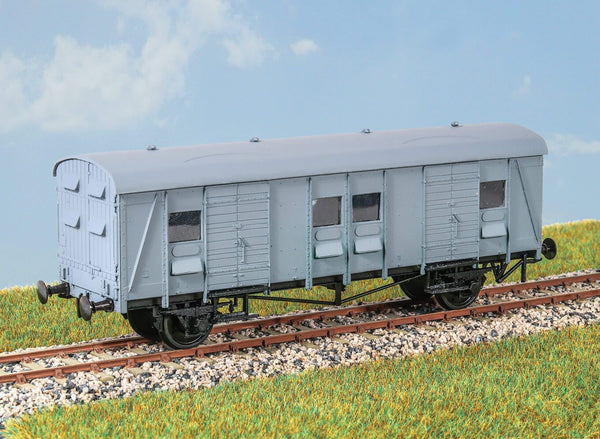
GWR Bloater Fish Van
Introduced in 1916 to carry fish from the many ports on the Great Western Railway, these vans (diagram S8) lasted in regular traffic until 1943.These finely moulded plastic wagon kits come complete with pin point axle wheels and bearings. Glue and paint will be required, along with appropriate transfers. Additional parts to enable the vehicle to be modelled incorporating modifications made to the prototypes during their working life are included where appropriate.
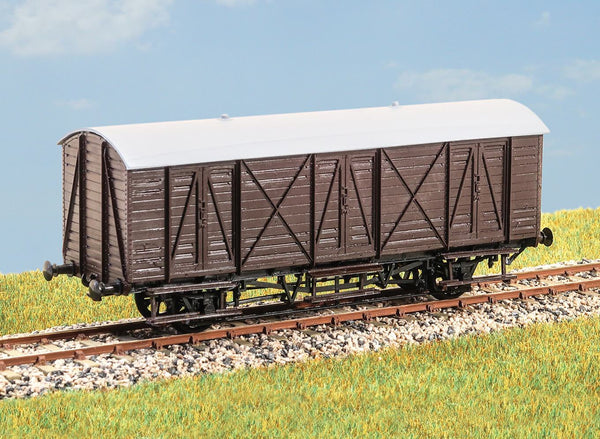
LMS 4 Wheel Motor Car Van
150 of these vans (diagram 2026) were built in 1938, with a further 75 by BR in 1952-1957. Classed as motor car vans, they were also used for parcels and mail.
These finely moulded plastic wagon kits come complete with pin point axle wheels and bearings. Glue and paint will be required, along with appropriate transfers. Additional parts to enable the vehicle to be modelled incorporating modifications made to the prototypes during their working life are included where appropriate.
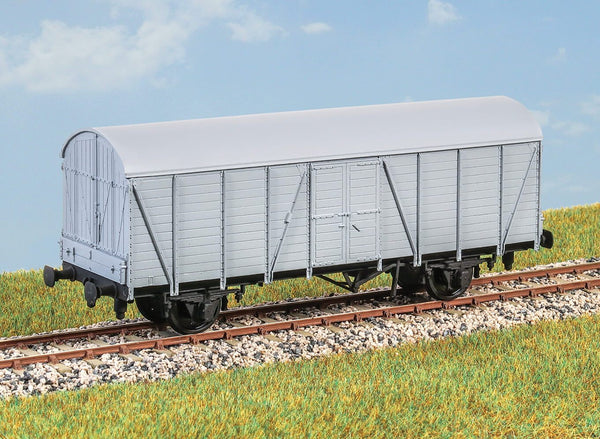
SR CCT Parcels Van
50 of these vans were built in 1938, with examples lasting into the 1980s and used to carry parcels, mail, luggage and motor vehicles. They were equally at home on branch line or main line trains. These finely moulded plastic wagon kits come complete with pin point axle wheels and bearings. Glue and paint will be required, along with appropriate transfers. Additional parts to enable the vehicle to be modelled incorporating modifications made to the prototypes during their working life are included where appropriate.
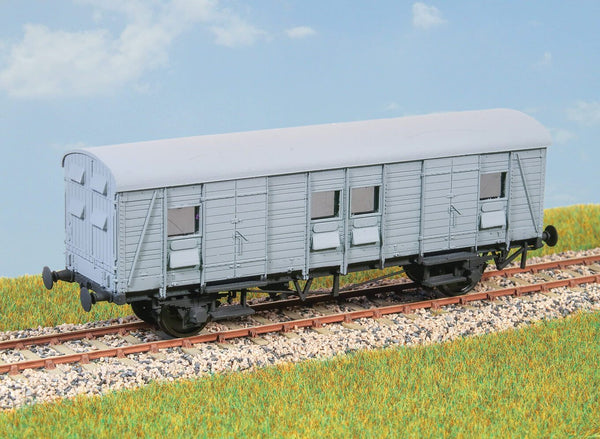
GWR Mink Goods Van
Introduced in 1906, these vans (diagram V11) were used for general goods traffic until during the Second World War. Being fitted with the vacuum brake, they were frequently found on GWR express goods trains. These finely moulded plastic wagon kits come complete with pin point axle wheels and bearings. Glue and paint will be required, along with appropriate transfers. Additional parts to enable the vehicle to be modelled incorporating modifications made to the prototypes during their working life are included where appropriate.