


BROWSE PECO PRODUCTS
Browse through our complete product portfolio.
606 Products Found
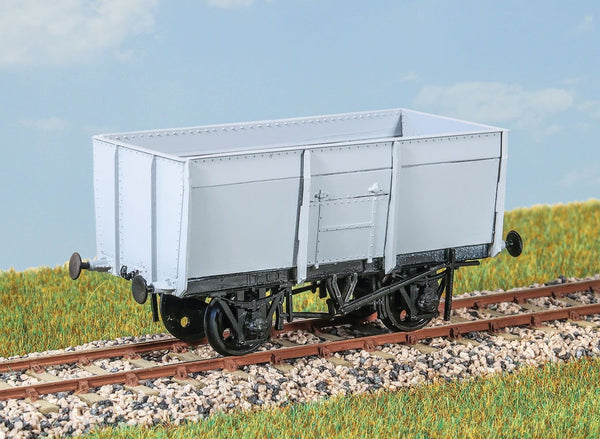
BR 16ton Mineral Wagon
About 8000 were built in 1944-1947, almost 2000 of which worked in France until repatriated in the early 1950s. Most survived until the mid 1960s, as BR diagram 1/100. These finely moulded plastic wagon kits come complete with pin point axle wheels and bearings. Glue and paint will be required, along with appropriate transfers. Additional parts to enable the vehicle to be modelled incorporating modifications made to the prototypes during their working life are included where appropriate.
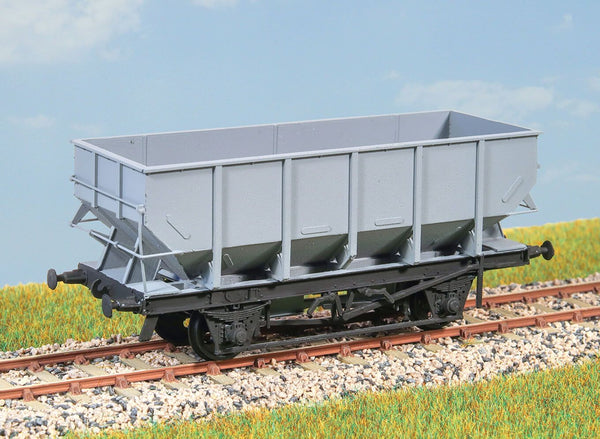
BR 21ton Coal Hopper Wagon
Diagram 1/146. 16,800 were built between 1952 and 1958. They were widely used for coal traffic especially in North East England. Common well into the 1980s. The kit has a choice of roller and oil axleboxes. These finely moulded plastic wagon kits come complete with pin point axle wheels and bearings. Glue and paint will be required, along with appropriate transfers. Additional parts to enable the vehicle to be modelled incorporating modifications made to the prototypes during their working life are included where appropriate.
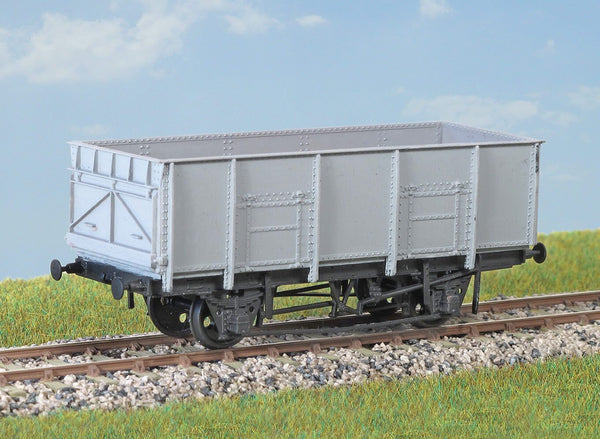
BR 21ton Coal Wagon
1000 of these wagons 21 ton Coal Wagon (diagram 1/110) were built in 1950/51 for BR by the Metro-Cammell company. Many were still in service in the late 1970s. These finely moulded plastic wagon kits come complete with pin point axle wheels and bearings. Glue and paint will be required, along with appropriate transfers. Additional parts to enable the vehicle to be modelled incorporating modifications made to the prototypes during their working life are included where appropriate.
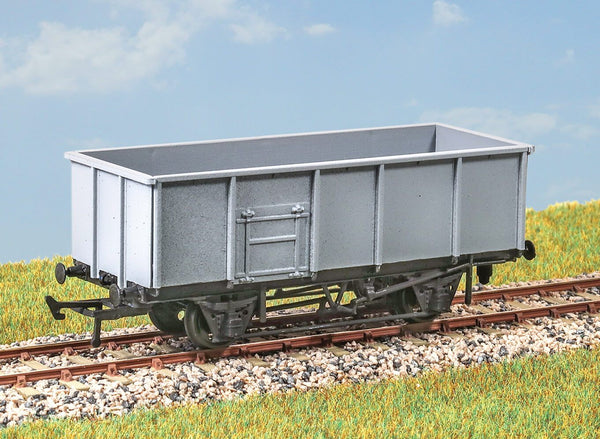
BR 21ton Mineral Wagon
(Rebuilt 1977) This vehicle represents the end of the evolution of the classic British coal wagon. Introduced in 1977, using spare chassis, 947 were built and used chiefly for industrial coal traffic.These finely moulded plastic wagon kits come complete with pin point axle wheels and bearings. Glue and paint will be required, along with appropriate transfers. Additional parts to enable the vehicle to be modelled incorporating modifications made to the prototypes during their working life are included where appropriate.
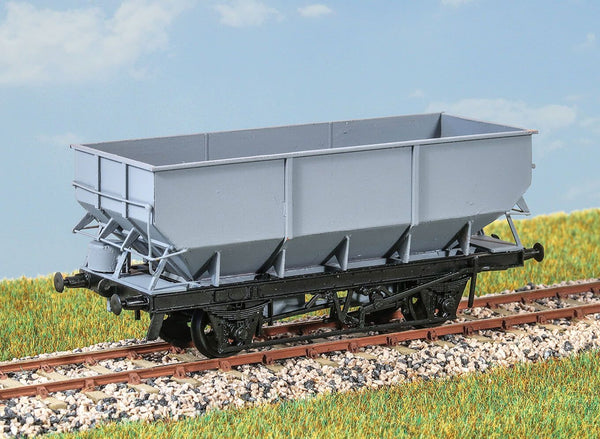
BR 21ton Rebodied Hopper Wagon
21 ton Rebodied Hopper Wagon (Vac. Braked) In the 1970s BR started to put new bodies on hopper wagons built in the 1940s and 1950s. Some ran with vacuum brakes. Examples lasted into the 1990s. These finely moulded plastic wagon kits come complete with pin point axle wheels and bearings. Glue and paint will be required, along with appropriate transfers . Additional parts to enable the vehicle to be modelled incorporating modifications made to the prototypes during their working life are included where appropriate.
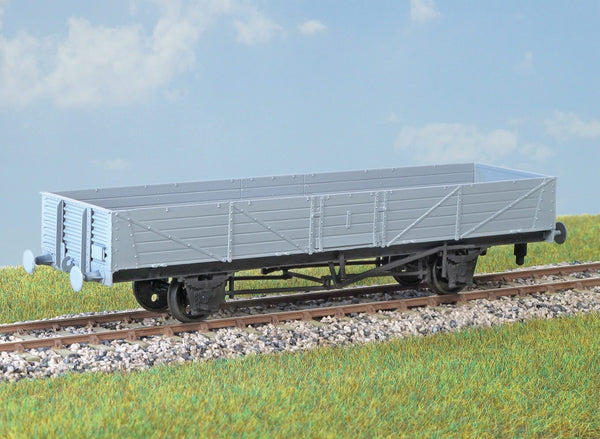
BR 22ton Tube Wagon
2350 of these wagons (diagram 1/448) were built between 1954 and 1961 to carry long tubes and bulky general merchandise. Most were withdrawn by the 1980s, but some survive in infrastructure use. These finely moulded plastic wagon kits come complete with pin point axle wheels and bearings. Glue and paint will be required, along with appropriate transfers. Additional parts to enable the vehicle to be modelled incorporating modifications made to the prototypes during their working life are included where appropriate.
BR 24¬? ton Coal Wagon
Over 2000 of these wagons (diagram 1/115) were built in 1953-1956 to carry coal to power stations and steel works. Withdrawn by 1982. These finely moulded plastic wagon kits come complete with pin point axle wheels and bearings. Glue and paint will be required, along with appropriate transfers. Additional parts to enable the vehicle to be modelled incorporating modifications made to the prototypes during their working life are included where appropriate.
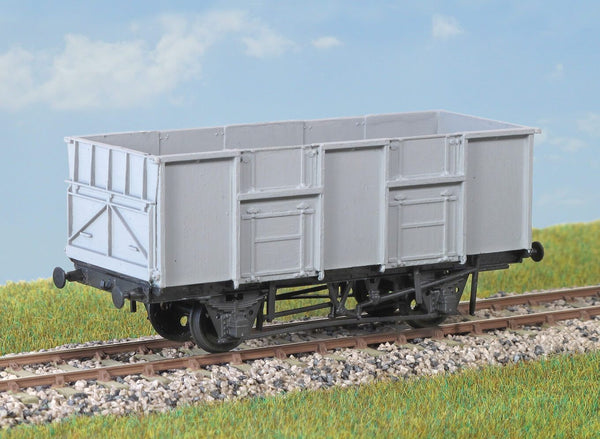
BR Ale Pallet Wagon
The mid 1960s saw a small fleet of these (diagram 1/028) rebuilt from tube wagons to carry beer casks between breweries and distribution depots. Traffic ended in the late 70s but some survived as barrier wagons. These finely moulded plastic wagon kits come complete with pin point axle wheels and bearings. Glue and paint will be required, along with appropriate transfers. Additional parts to enable the vehicle to be modelled incorporating modifications made to the prototypes during their working life are included where appropriate.
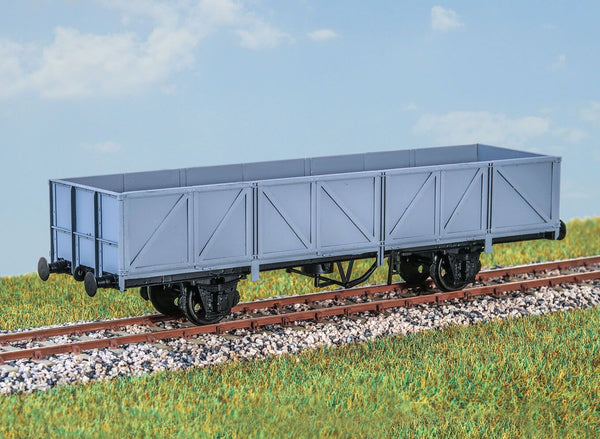
BR Banana Van
300 of these wagons were built between 1952 and 1954. They were originally fitted with steam heating, but this was later removed. Used mainly by the companies Geest and Fyffes, these vans could be part of a mixed train or a 'block load' on their way from the shipping dock. Transfers are included; glue and paints are required to complete this model.
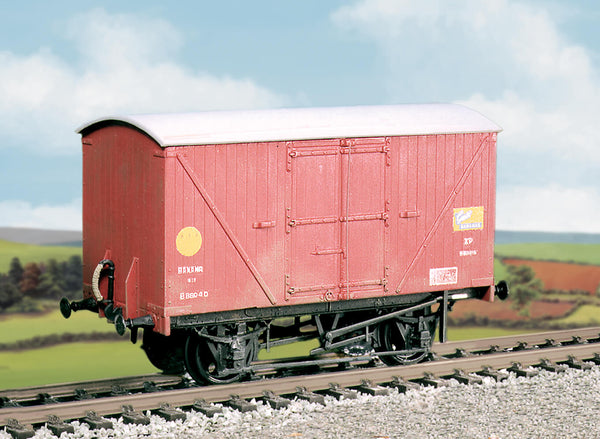
BR BD Container
Diagram 3/050; a Conflat wagon or road vehicle load. As supplied with Conflat A Container Wagon kit PC52.
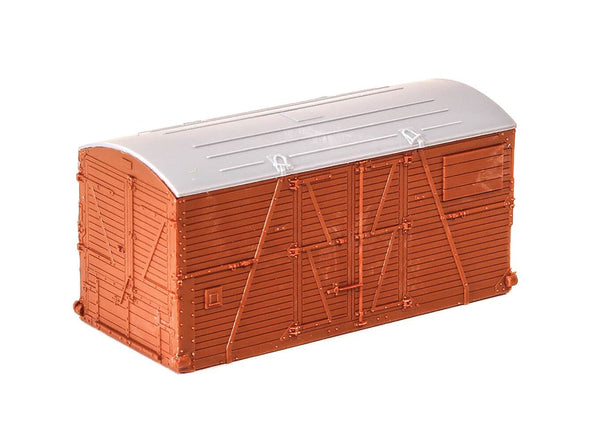
BR Conflat Container Wagon
4500 of these wagons (diagram 1/067) were built in 1955/56 purely to carry containers. The FM carried frozen meat and was widely used in the 1950s and 1960s. These finely moulded plastic wagon kits come complete with pin point axle wheels and bearings. Glue and paint will be required, along with appropriate transfers. Additional parts to enable the vehicle to be modelled incorporating modifications made to the prototypes during their working life are included where appropriate.
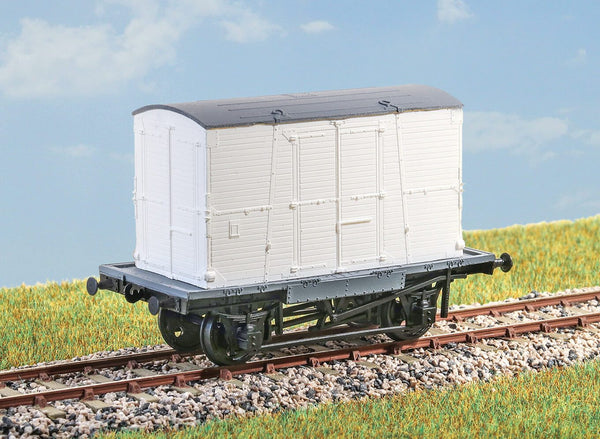
BR Conflat Container Wagon
‘Conflat A’ Container Wagon with BD container (diagram 3/050) 4500 were built in 1955/56 purely to carry containers. The BD was the most common general merchandise container on BR. Over 9000 were built to this diagram.
These finely moulded plastic wagon kits come complete with pin point axle wheels and bearings. Glue and paint will be required, along with appropriate transfers . Additional parts to enable the vehicle to be modelled incorporating modifications made to the prototypes during their working life are included where appropriate.
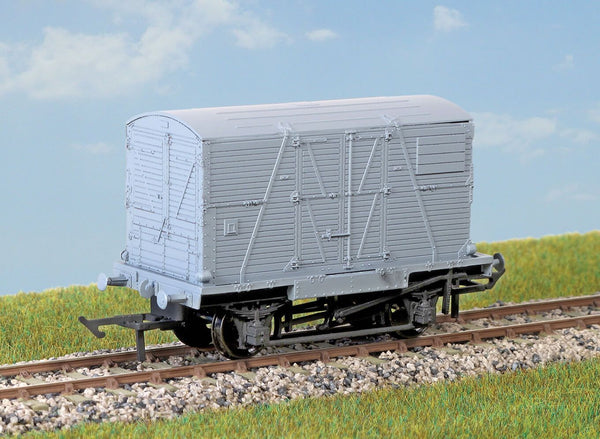
BR FM Container
Diagram 3/201; a Conflat wagon or road vehicle load. As supplied with Conflat A Container Wagon kit PC46.
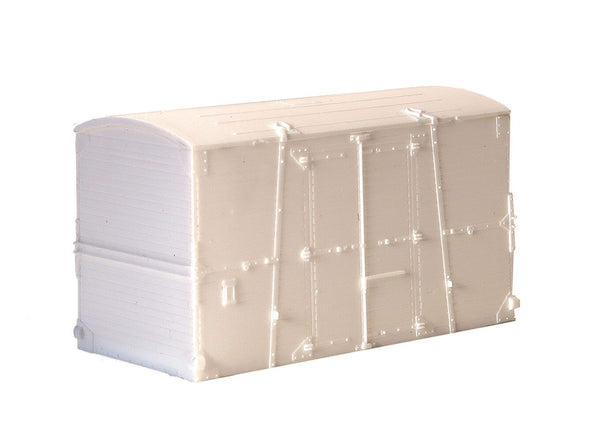
BR Grampus Engineers Wagon
Over 700 of these vacuum braked Grampus (diagram 1/572) were built around 1960 to carry track materials. This kit can also make the air braked Rudd, built from the early 1990s. These finely moulded plastic wagon kits come complete with pin point axle wheels and bearings. Glue and paint will be required, along with appropriate transfers. Additional parts to enable the vehicle to be modelled incorporating modifications made to the prototypes during their working life are included where appropriate.
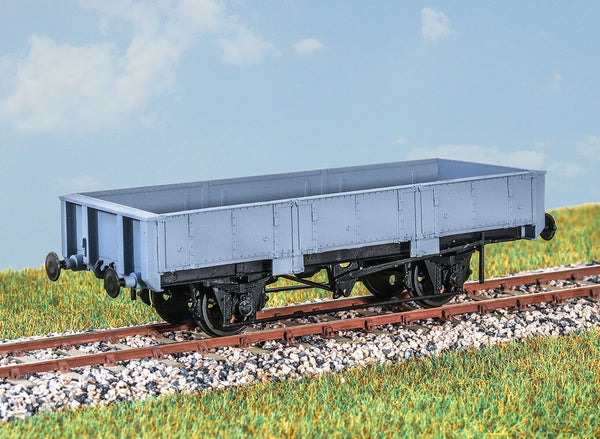
BR Rudd 21ton Ballast Wagon
Built on ex-hopper chassis, these wagons carry mainly waste ballast. Drop side doors are a feature of this design. These finely moulded plastic wagon kits come complete with pin point axle wheels and bearings. Glue and paint will be required, along with appropriate transfers. Additional parts to enable the vehicle to be modelled incorporating modifications made to the prototypes during their working life are included where appropriate.
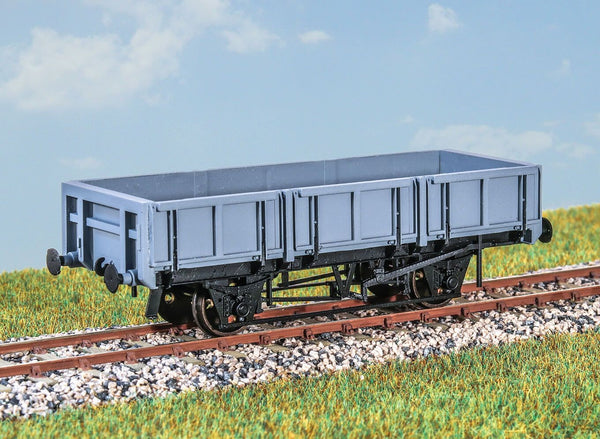
BR Shock Absorbing Open Wagon
Introduced 1955-1958, these wagons (diagram 1/050) carried fragile traffic from earthenware pipes to whisky barrels. Our model features adjustable body and tarpaulin rail. These finely moulded plastic wagon kits come complete with pin point axle wheels and bearings. Glue and paint will be required, along with appropriate transfers. Additional parts to enable the vehicle to be modelled incorporating modifications made to the prototypes during their working life are included where appropriate.
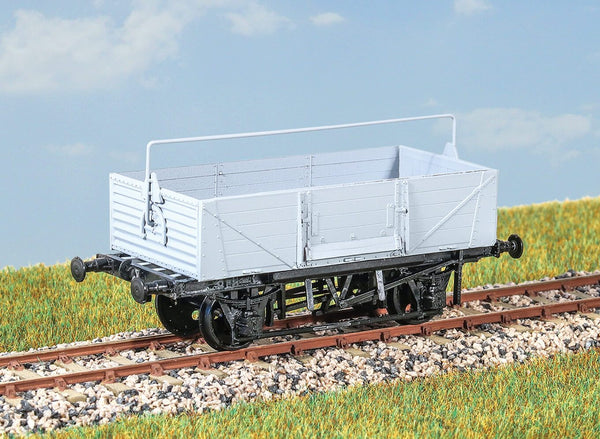
BR Shock Absorbing Wagon
Introduced 1953 - 1956, these vans (diagram 1/209) carried fragile traffics such as biscuits, whisky and china and lasted in service until the late 1970s. These finely moulded plastic wagon kits come complete with pin point axle wheels and bearings. Glue and paint will be required, along with appropriate transfers. Additional parts to enable the vehicle to be modelled incorporating modifications made to the prototypes during their working life are included where appropriate.
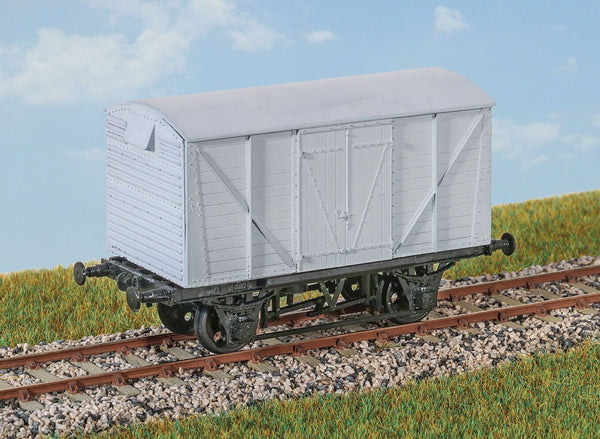
BR Van 'Vanwide' with Air Brake
VEA ex Vanwide (Air Brake and FAT19 Suspension) In the late 1970s several hundred Vanwides were upgraded with air brakes and improved suspension for use in Speedlink trains. Used into the 1990s. These finely moulded plastic wagon kits come complete with pin point axle wheels and bearings. Glue and paint will be required, along with appropriate transfers. Additional parts to enable the vehicle to be modelled incorporating modifications made to the prototypes during their working life are included where appropriate.
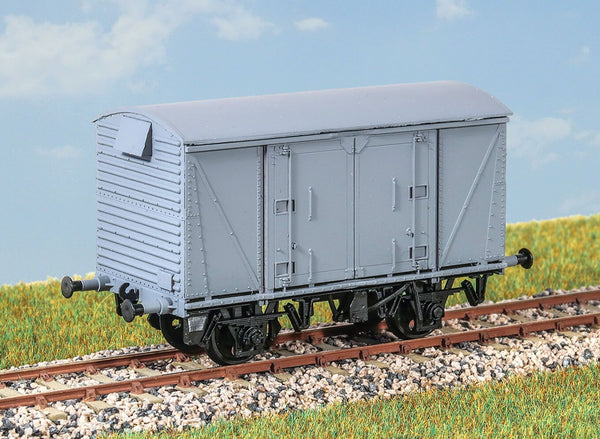
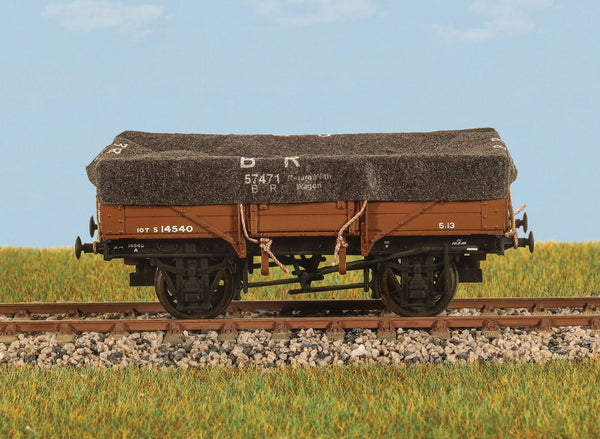
BR Wagon Tarpaulin
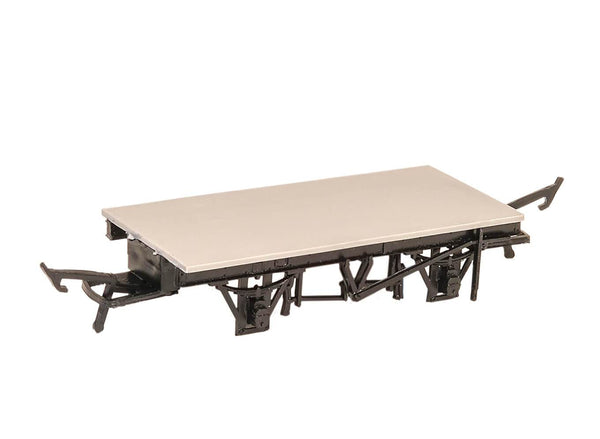
BR/RCH 9 foot Wagon Chassis kit (Unfitted) - Double Brake
Kit and scratch builders accessory; as included in the 16 ton Mineral Wagon kit PC22.
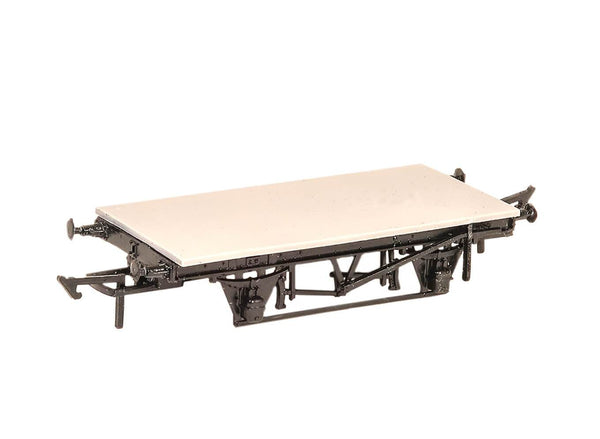
BR/RCH 9 foot Wagon Chassis kit (Unfitted) - Morton Brake
Kit and scratch builders accessory; as included in the 16 ton Mineral Wagon kit PC21.
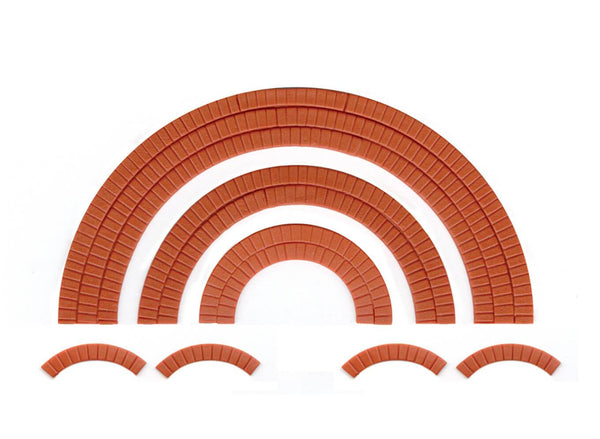
Brick Arch Overlays
Scratch and Kit builders accessory pack. Supplied with pre-coloured parts although painting and/or weathering can add realism; glue is required to complete this model. This kit includes:
‚Ģ 4 Semi - Circular brick arches - Internal Diameter 59mm, External Diameter 79mm
‚Ģ 4 Semi - Circular brick arches - Internal Diameter 39mm, External Diameter 53mm
‚Ģ 4 Semi - Circular brick arches - Internal Diameter 20mm, External Diameter 33mm
‚Ģ 16 Window Arches - Length 13mm
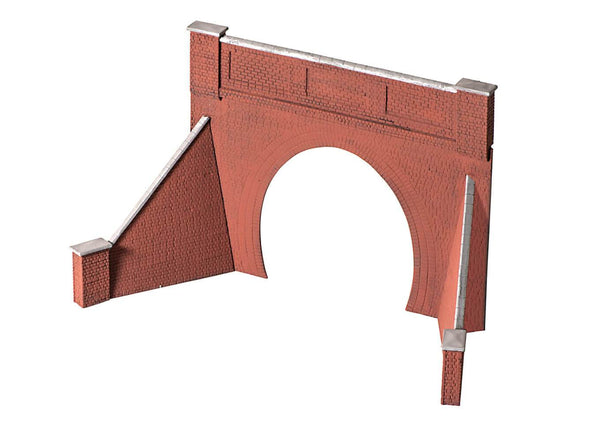
Brick Tunnel Mouth and Wing Walls
This single track Tunnel Mouth is 133mm wide x 108mm high; total footprint is 180mm x 72mm including wing walls. Supplied with pre-coloured parts although painting and/or weathering can add realism; glue is required to complete this model.
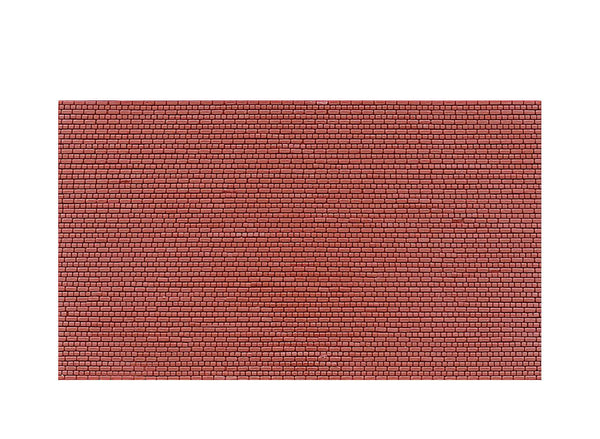
Brickwork, English Bond
These sheets are invaluable for scratchbuilding, saving many hours of repetitive work creating the various surface patterns and textures. They are the same as those used in the Craftsman kits to make extension work easier. Each pack contains 4 sheets 130mm x 75mm of injection moulded styrene approximately 2mm thick, making them rigid enough to be self supporting.
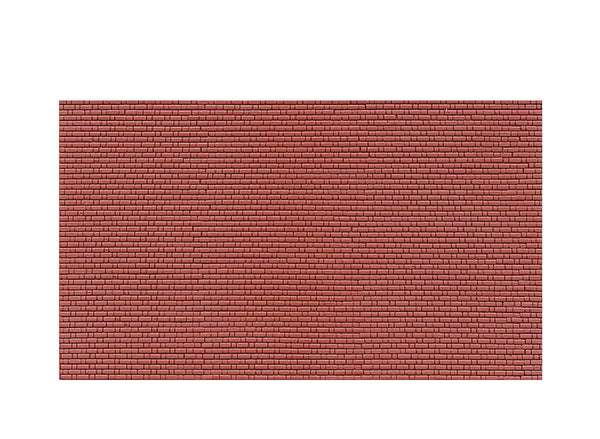
Brickwork, Flemish Bond
These sheets are invaluable for scratchbuilding, saving many hours of repetitive work creating the various surface patterns and textures. They are the same as those used in the Craftsman kits to make extension work easier. Each pack contains 4 sheets 130mm x 75mm of injection moulded styrene approximately 2mm thick, making them rigid enough to be self supporting.
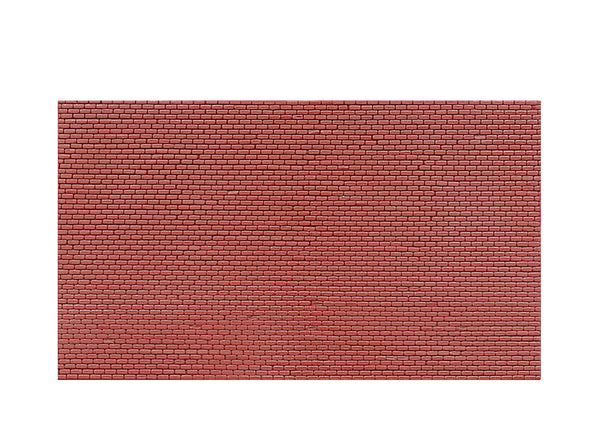
Brickwork, Plain Bond
These sheets are invaluable for scratchbuilding, saving many hours of repetitive work creating the various surface patterns and textures. They are the same as those used in the Craftsman kits to make extension work easier. Each pack contains 4 sheets 130mm x 75mm of injection moulded styrene approximately 2mm thick, making them rigid enough to be self supporting.
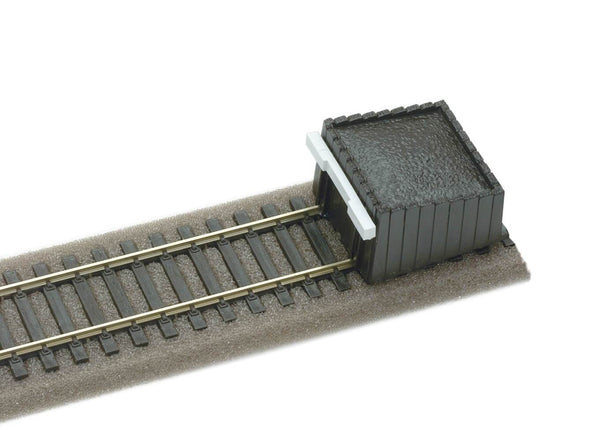
Buffer Stop
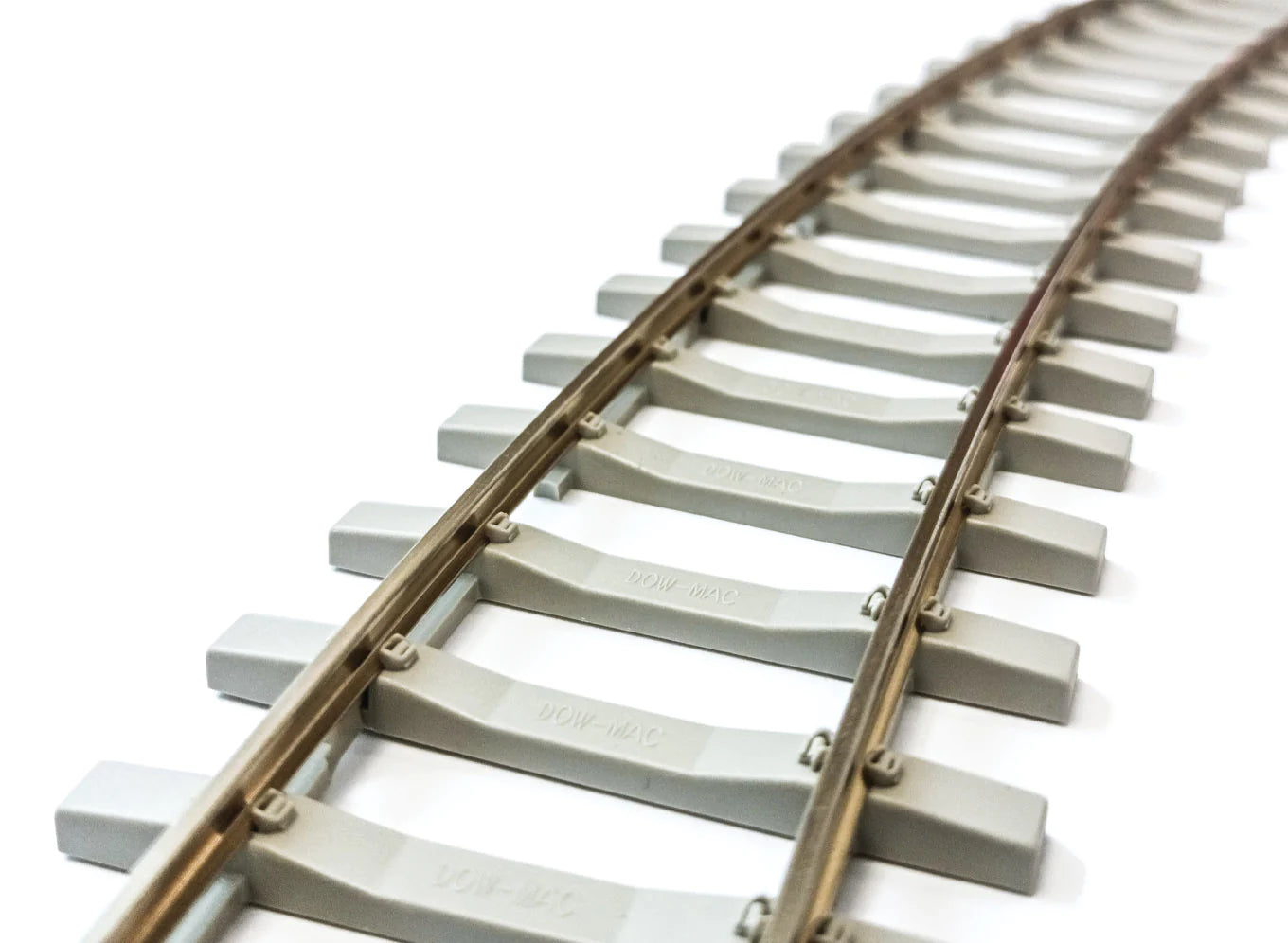
Moulded in one piece and ready to use. Slots locate the unit correctly onto the track. PECO Setrack 00 Gauge Code 100 - Unit trackage System
The high quality rigid unit trackage system suitable for all popular brands of 00 gauge model trains.
Being fully compatible with the Code 100 PECO Streamline range, it need never be discarded as your layout develops.
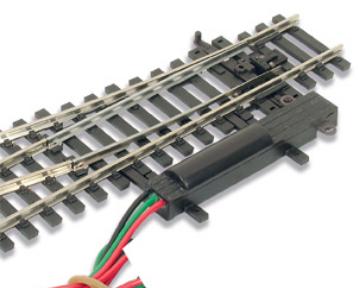
The solid nickel silver rails are integrally moulded into the sleeper bases for maximum realism and strength. Turnouts are fitted with an over-centre spring for immediate use, no extra levers necessary.
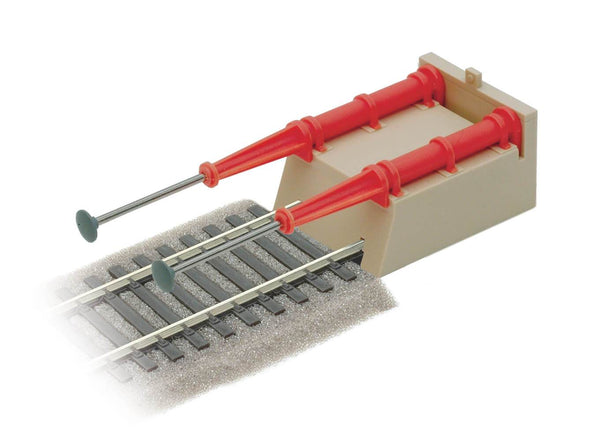
Buffer Stop, Hydraulic
Excellent model of the impressive buffer stops seen at most main line stations. Will give any model railway that authentic 'big city terminus' look.
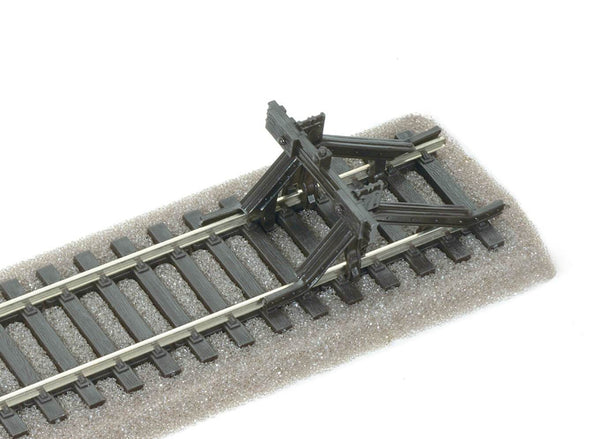
Buffer Stop, Rail-built
Detailed model of the standard British Railways type. Three plastic moulded parts which, after assembly, clip onto the rails.
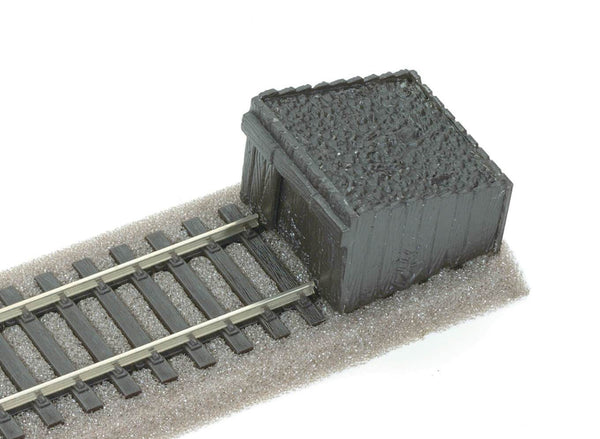
Buffer Stop, Sleeper-built
Realistically simulated woodgrain mouldings with ballast textured surface on top. recessed to accommodate couplings.
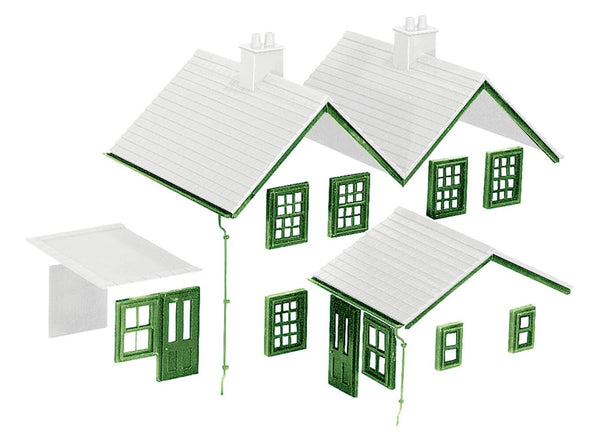
Building Kit 1
A selection of windows, doors, gutters and downpipes, stanchions, plus bench seat and ventilator
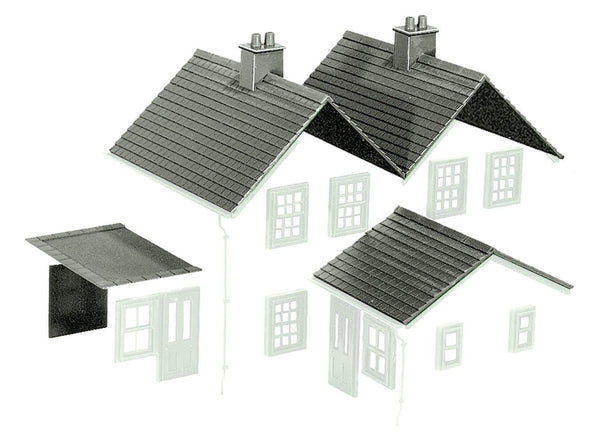
Building Kit 2
A kit containing roofs, chimneys and notice boards for kit adaptation and scratchbuilding.
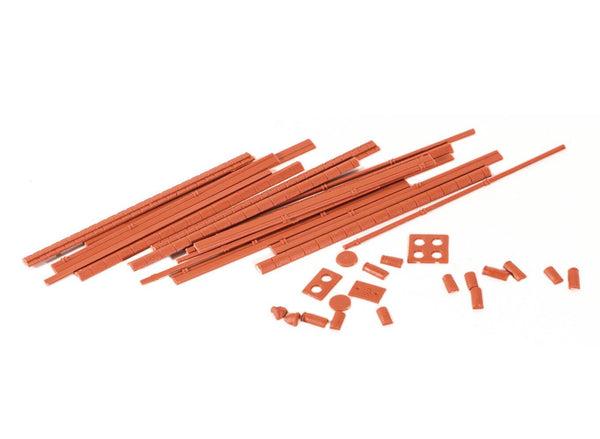
Buildings Pack A
Scratch and Kit builders accessory pack. This kit contains:
‚Ģ 24 Tall chimney pots
‚Ģ 24 Short chimney pots
‚Ģ 2 Large chimney stack cappings (Takes 4 pots)
‚Ģ 2 Small chimney stack cappings (Takes 2 pots)
‚Ģ 8 x 80mm lengths of round roof ridges
‚Ģ 8 x 80mm lengths of angled roof ridges
‚Ģ 8 x 80mm lengths of chimney stack trim
‚Ģ 16 x 80mm lengths of guttering
‚Ģ 8 x 80mm lengths of small down pipes
‚Ģ 8 x 80mm lengths of large down pipes
‚Ģ 4 x 80mm lengths of barge board strips
‚Ģ 2 x 80mm lengths of window sill strips
‚Ģ 8 down pipe hoppers
‚Ģ 8 wall tie plates
‚Ģ 4 soot/drainage manhole covers
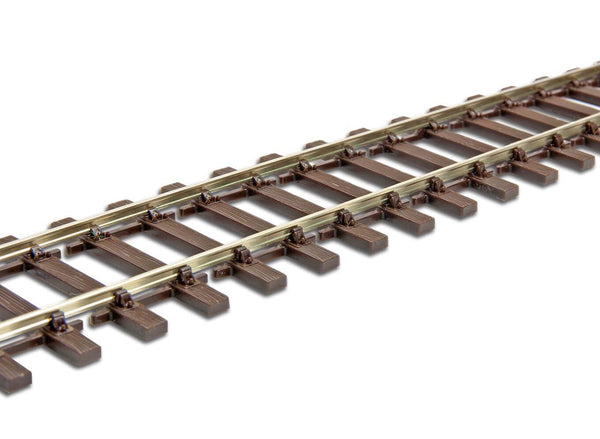
Bullhead 00 Gauge Streamline Track
Bullhead track has been in use on the railways since the earliest times, and is still very much in evidence today. This flexible track provides a highly detailed and faithful 00 scale replication of this long standing feature of Britain's railways.
Our SL-114 Bullhead Rail Joiners include bolt detail and therefore complement the fine detail of this track range.
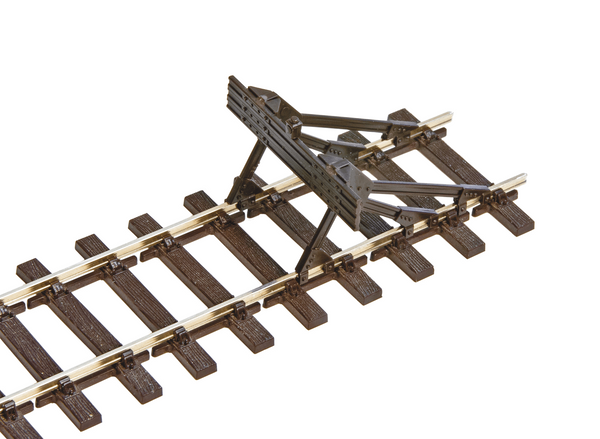
Bullhead OO Gauge Buffer Stop - Rail built
Most buffer stops of the period prior to the 1970s were constructed from spare bullhead rail and these new mouldings contain plenty of detail such as bolt heads and the bullhead profile of the rail. The design has also accounted for the option of an alternative buffer for EM gauge.
There are enough parts in the kit for two buffer stops. Designed to clip onto the bullhead rail profile, this easy-to-assemble kit will be simplicity itself to install.
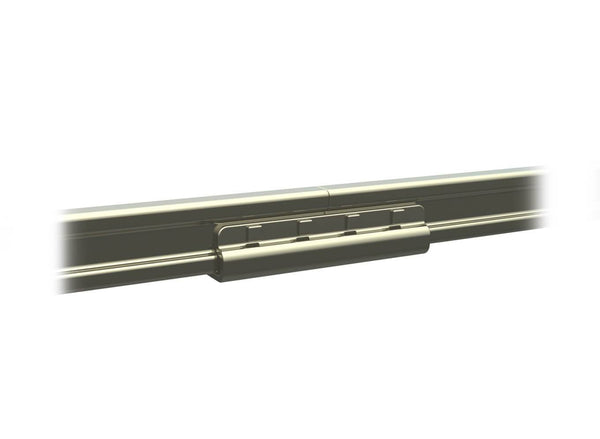
Bullhead OO Gauge Rail Joiners
These authentic looking rail joiners incorporate bolt detail, and complement the fine scale appearance and detail of our 00 Code 75 Bullhead track range.
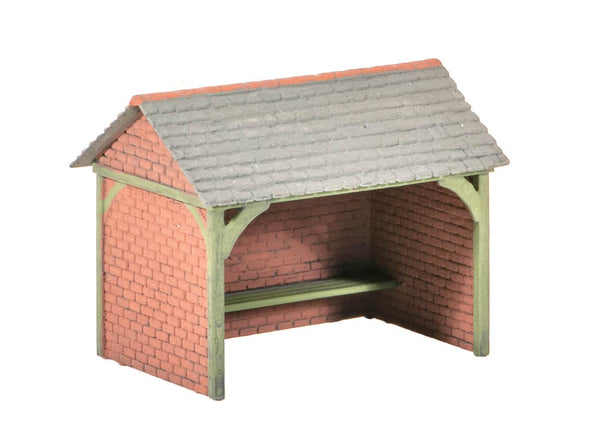
Bus Shelter
A typical rural bus shelter to add interest to a village or small town scene. Supplied with pre-coloured parts although painting and/or weathering can add realism; glue is required to complete this model. Footprint: 52mm x 35mm.
Bus Stop and Shelter
Pack contains 2 Bus Stops and Shelters plus stick on signs. See Modelscene Passengers Standing Sets A and B 5057 and 5058.

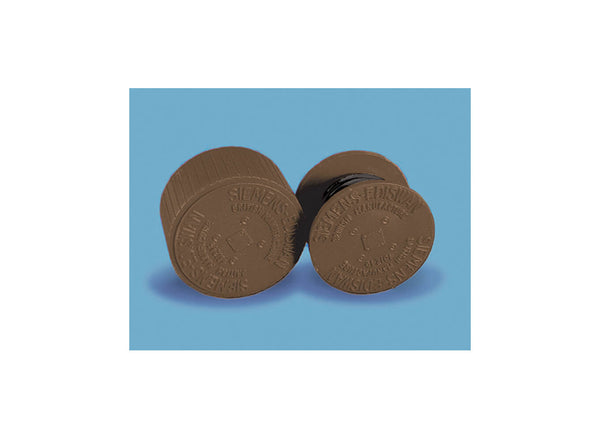
Cable Drums
Pack contains 2 Cable Drums as supplied in the Modelscene 5078 Cable Laying Party.
Cable Laying Party
Pack contains 3 painted figures, Cable Drum and Wheelbarrow. Use Modelscene 5079 Cable Drums to extend this set.

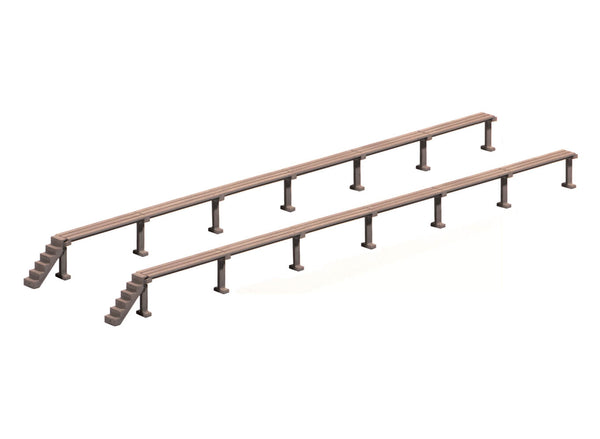
Carriage Cleaning Platform
Where carriages, multiple unit sets or modern locos are stored for cleaning and maintenance, narrow platforms are provided for access. Still widely used today alongside carriage sidings, and also within storage and maintenance facilities (See Ratio 527 Carriage Shed and Wills Modern SSM300 Modern Industrial Building and SSM315 Extension kits). Supplied with pre-coloured parts although painting and/or weathering can add realism (See the Pecoscene Weathering Powder range PS-360 - 365); glue is required to complete this model. Footprint: 500mm long plus access steps
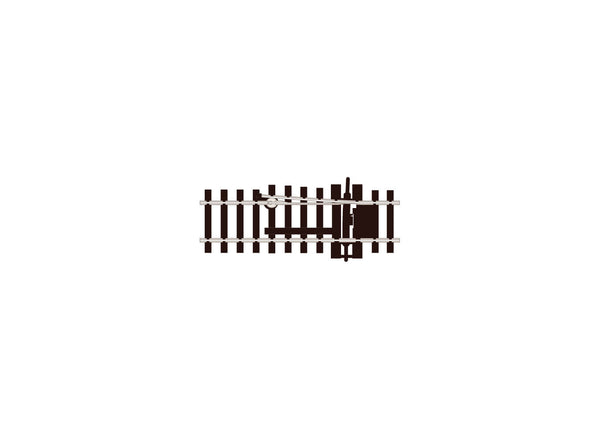
Catch Turnout, Left Hand
The purpose of a Catch Turnout is to derail a vehicle before it rolls out of a siding or branch line on to a main line.
Peco Streamline Code 75 track meets the standards of enthusiasts who prefer to run trains on scale height rail. Today most manufacturers' wheels are suitable for use on Code 75 track but some vintage models may have flanges which are too deep to clear the rail fixings. Code 75 can be easily combined with code 100 track by using the SL-113 Transition Track.
The wide range of turnouts and crossings in this series includes every type, and the geometry of this range has been cleverly designed to make it easy to build convenient, complex and aesthetically pleasing formations using combinations of small, medium and large radius turnouts and crossings. Layout plans suggestions can be found in our publications ‘Track Plans for Layouts to Suit all Locations’ (Ref PM-202), ‘60 Plans for Small Railways’ (Ref no PB-3), and ‘Track Plans for Various Locations’ (Ref no PB-66).
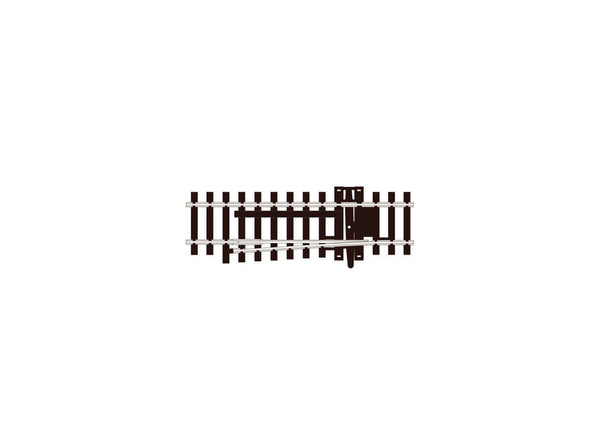
Catch Turnout, Left Hand
The purpose of a Catch Turnout is to derail a vehicle before it rolls out of a siding or branch line on to a main line.
If you wish to mix wheel standards on your 00/H0 layout, this is the trackage to choose. Code 100 rail allows flange depths up to 1.6mm which means that both vintage and current stock will run happily together.
The wide range of turnouts and crossings in this series includes every type, and the geometry of this range has been cleverly designed to make it easy to build convenient, complex and aesthetically pleasing formations using combinations of small, medium and large radius turnouts and crossings. Layout plans suggestions can be found in our publications ‘Track Plans for Layouts to Suit all Locations’ (Ref PM-202), ‘60 Plans for Small Railways’ (Ref no PB-3), and ‘Track Plans for Various Locations’ (Ref no PB-66).
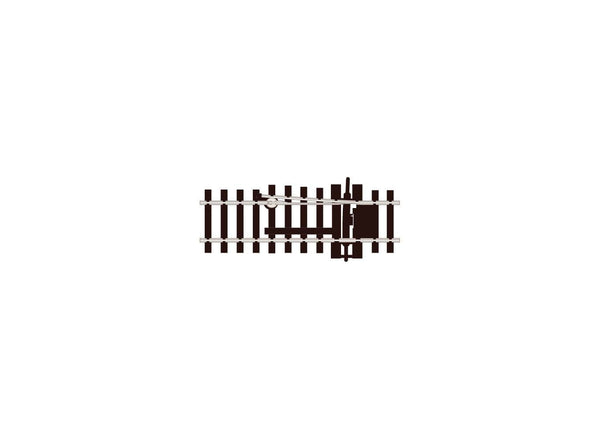
Catch Turnout, Right Hand
The purpose of a Catch Turnout is to derail a vehicle before it rolls out of a siding or branch line on to a main line.
Peco Streamline Code 75 track meets the standards of enthusiasts who prefer to run trains on scale height rail. Today most manufacturers' wheels are suitable for use on Code 75 track but some vintage models may have flanges which are too deep to clear the rail fixings. Code 75 can be easily combined with code 100 track by using the SL-113 Transition Track.
The wide range of turnouts and crossings in this series includes every type, and the geometry of this range has been cleverly designed to make it easy to build convenient, complex and aesthetically pleasing formations using combinations of small, medium and large radius turnouts and crossings. Layout plans suggestions can be found in our publications ‘Track Plans for Layouts to Suit all Locations’ (Ref PM-202), ‘60 Plans for Small Railways’ (Ref no PB-3), and ‘Track Plans for Various Locations’ (Ref no PB-66).
Catch Turnout, Right Hand
The purpose of a Catch Turnout is to derail a vehicle before it rolls out of a siding or branch line on to a main line.
If you wish to mix wheel standards on your 00/H0 layout, this is the trackage to choose. Code 100 rail allows flange depths up to 1.6mm which means that both vintage and current stock will run happily together.
The wide range of turnouts and crossings in this series includes every type, and the geometry of this range has been cleverly designed to make it easy to build convenient, complex and aesthetically pleasing formations using combinations of small, medium and large radius turnouts and crossings. Layout plans suggestions can be found in our publications ‘Track Plans for Layouts to Suit all Locations’ (Ref PM-202), ‘60 Plans for Small Railways’ (Ref no PB-3), and ‘Track Plans for Various Locations’ (Ref no PB-66).
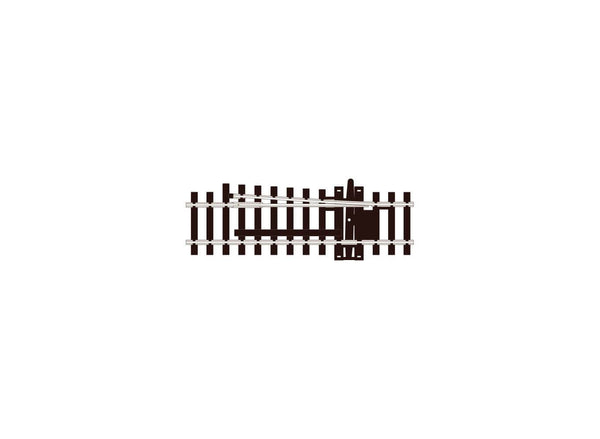
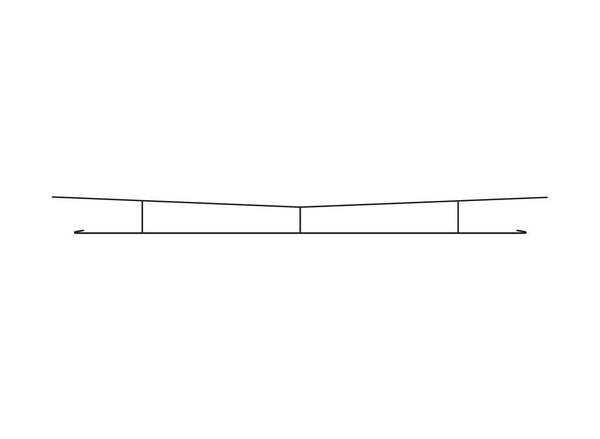
Catenary Contact Wires 200mm
The Peco Catenary System enables 00 Gauge modellers to faithfully replicate the BR Mk.3 System widely used around the country. The system features all metal construction with steel posts and copper contact wires with comprehensive instructions and installation jigs available. This pack includes:
‚Ģ 5 200mm long OHLE Contact Wires for use with the LC-100 Catenary System 12 Mast Pack and LC-110 Catenary System Mast.
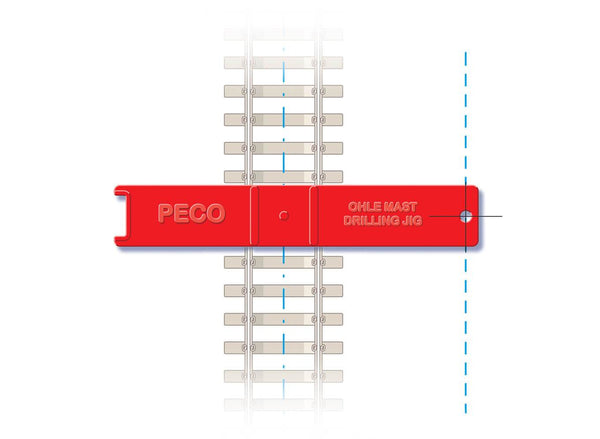
Catenary Mast Installation Jig
The Peco Catenary System enables 00 Gauge modellers to faithfully replicate the BR Mk.3 System widely used around the country. The system features all metal construction with steel posts and copper contact wires with comprehensive instructions and installation jigs available.
‚Ģ The Installation jig is for use when installing the OHLE Catenary system. N.B. 2 of these jigs are included in the LC-100 Catenary System Startup Pack.
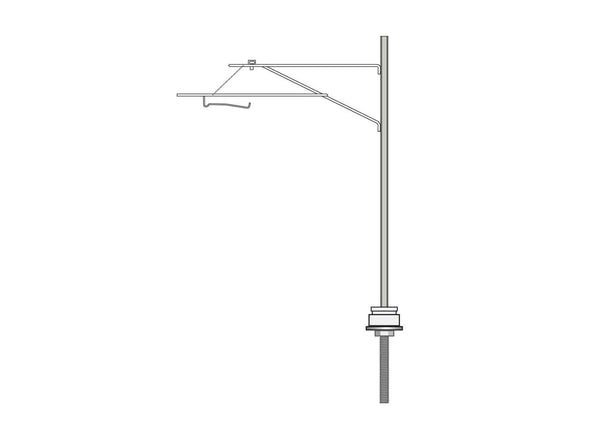
Catenary System Mast
The Peco Catenary System enables 00 Gauge modellers to faithfully replicate the BR Mk.3 System widely used around the country. The system features all metal construction with steel posts and copper contact wires with comprehensive instructions and installation jigs available. This pack includes:
‚Ģ An additional Mast plus push on/push off hangar to extend the LC-100 Catenary System Startup Pack.