


Which frog?
How do frogs differ?
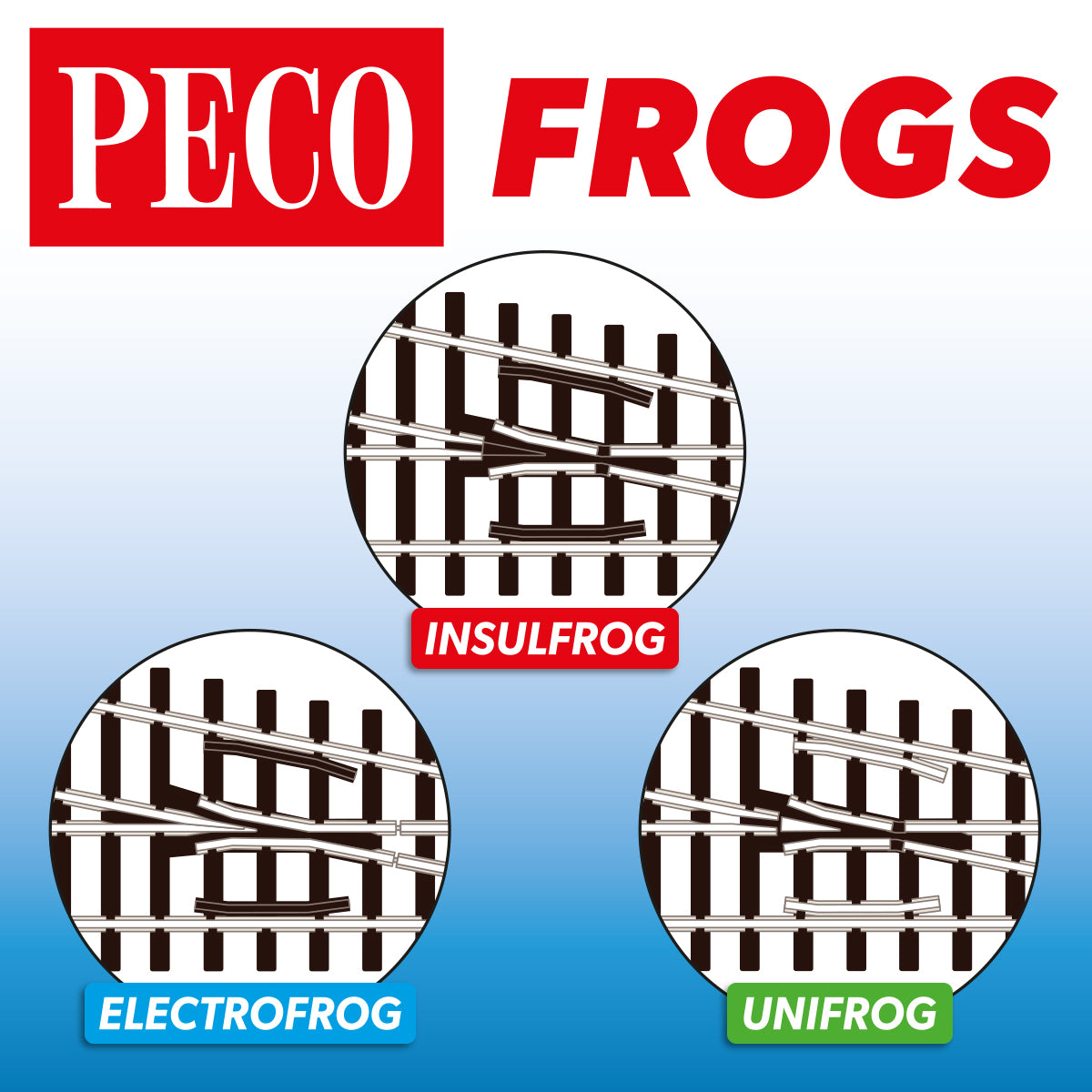
When choosing model railway points, the frog design plays an important role in how electricity is conducted through the track. PECO offers three frog systems across its track ranges: Insulfrog, Electrofrog and Unifrog.
Each has a different approach to electrical continuity, with implications for wiring, locomotive performance and layout operation. These differences are particularly relevant when considering locomotives with short wheelbases, which may be more sensitive to interruptions in electrical pickup.
What is a Frog?
The frog is the section of a model railway turnout where the rails cross, allowing wheels to follow one route or another through the points.
Although this area is relatively small, its electrical design can influence how power reaches a locomotive as it passes through the turnout. The construction of the frog determines how electrical continuity is managed and whether the frog can be powered as part of the track's electrical arrangement.
PECO Insulfrog, Electrofrog and Unifrog turnouts each approach this differently, offering different electrical arrangements to suit a range of layout designs and operating requirements.
The Three Frog Types at a Glance
The main differences between the three systems relate to the construction of the frog, how electrical continuity is provided and whether additional wiring is required.
| Feature | Insulfrog | Electrofrog | Unifrog |
|---|---|---|---|
| Frog construction | Insulated | Conductive metal | Metal frog with electrical isolation |
| Frog powered as supplied | No | Yes, subject to the turnout's electrical configuration | No |
| Additional frog wiring | Generally not required | Depends on the turnout and layout wiring | Optional, if switched frog power is required |
| Electrical considerations | Insulated crossing section | Polarity and electrical isolation must be considered | Can be configured with or without powered frog operation |
| DC and DCC layouts | Suitable | Suitable with appropriate wiring | Suitable with appropriate wiring |
Note: Wiring requirements depend on the specific turnout and layout. Always consult the instructions supplied with your track.

Insulfrog
Insulfrog turnouts feature an electrically insulated frog, providing a straightforward electrical arrangement that generally requires no additional frog wiring.
This makes Insulfrog a practical option for layouts where simplicity of wiring is a priority.
One consideration is that the insulated section can affect locomotives with short wheelbases or limited electrical pickup, particularly when running slowly. Locomotive performance will depend on its pickup arrangement and the overall electrical setup of the layout.
Key characteristics:
- An electrically insulated frog.
- A straightforward wiring arrangement.
- Generally requires no additional frog wiring.
- Suitable for DC and DCC layouts when installed correctly.
Electrofrog
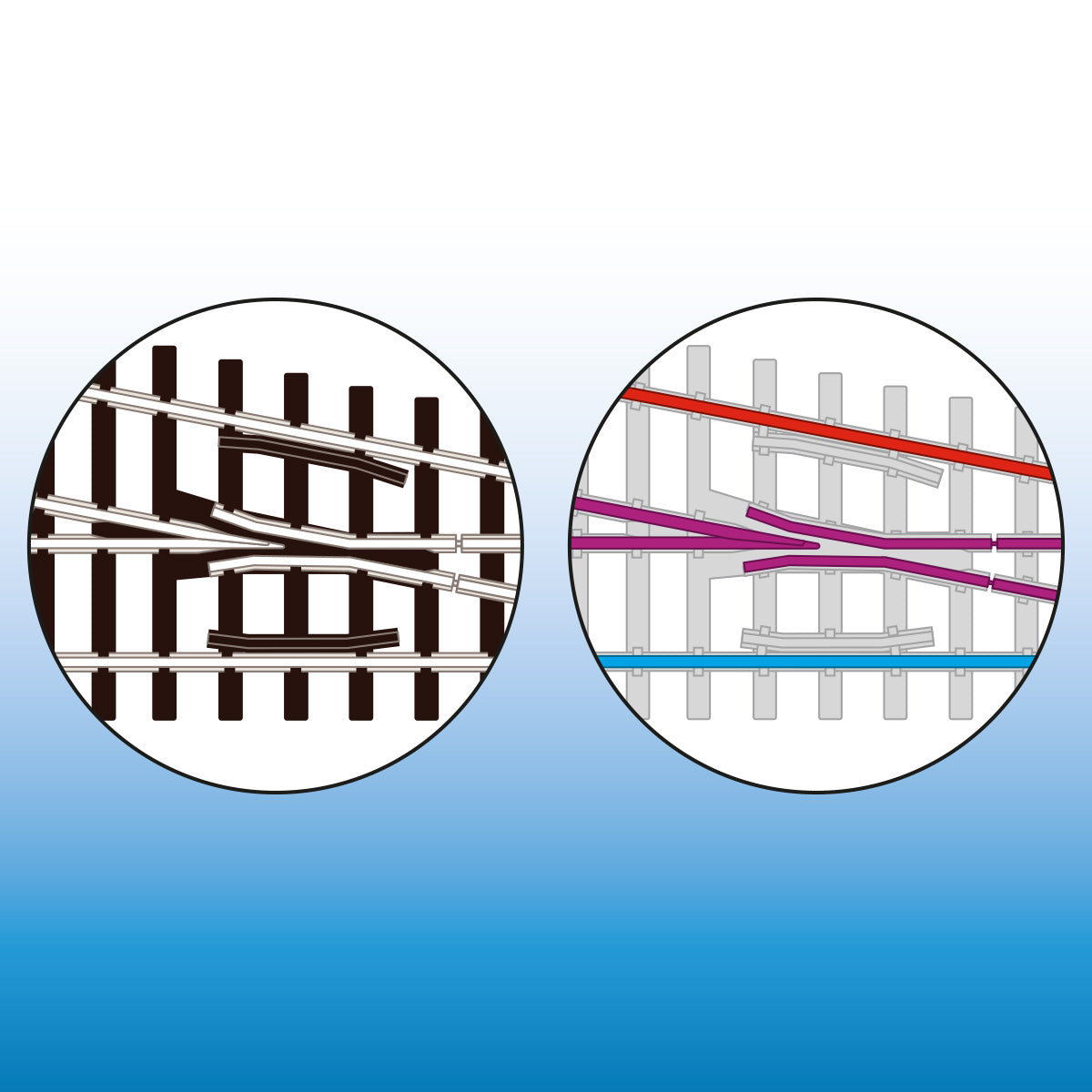
Electrofrog turnouts feature a conductive metal frog that can be powered to provide electrical continuity through the crossing.
The frog's electrical polarity must correspond to the selected route. Appropriate wiring and electrical isolation are therefore important when installing Electrofrog turnouts, helping to prevent short circuits during operation.
The wiring arrangement should be planned according to the turnout configuration and the requirements of the layout, including any additional considerations for DCC operation.
Key characteristics:
- A conductive metal frog.
- Electrical continuity through the frog when correctly configured.
- Can benefit locomotives with limited electrical pickup.
- Requires careful attention to wiring and polarity.
Unifrog
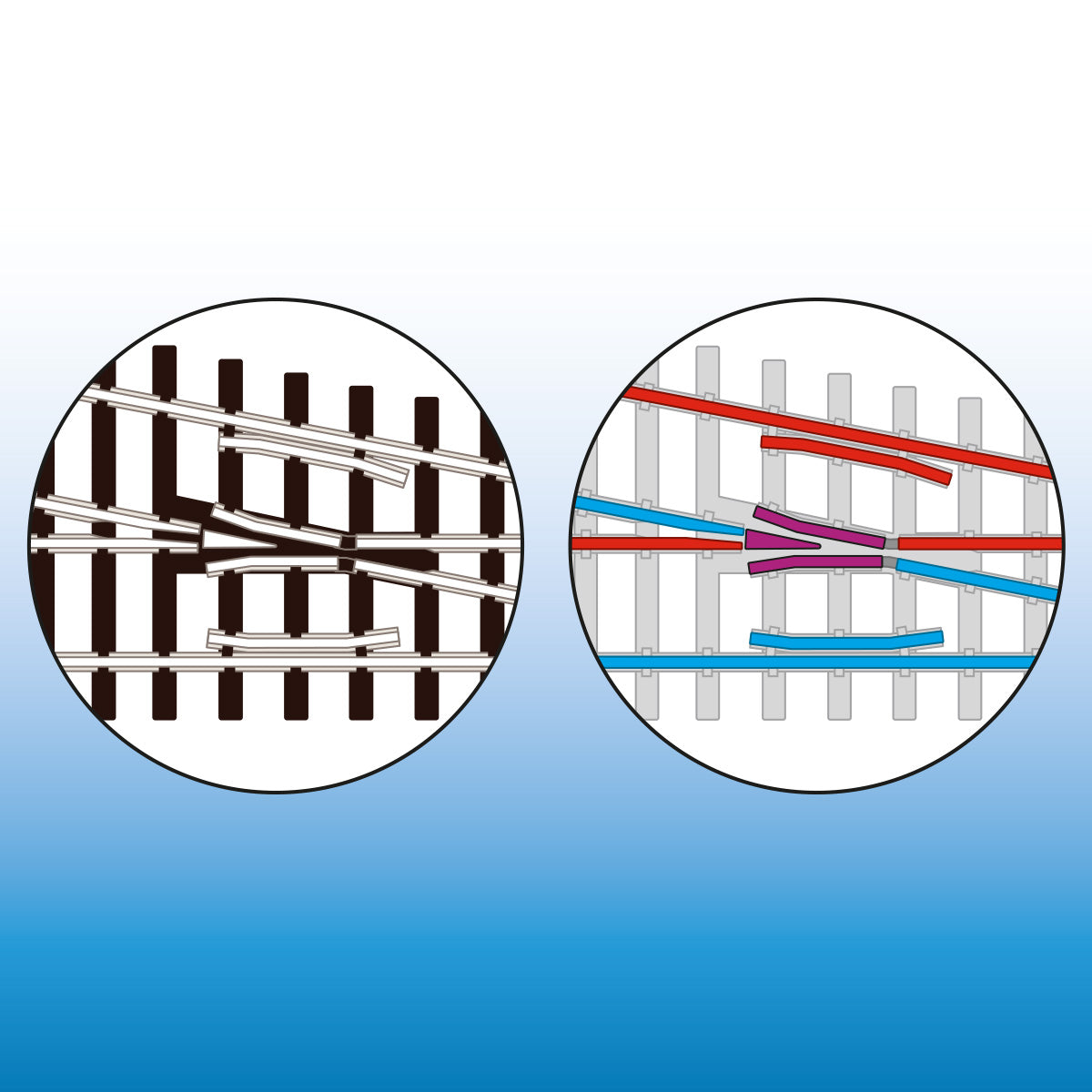
Unifrog turnouts feature a metal frog with electrical isolation, offering flexibility in how the frog is incorporated into a layout's electrical arrangement.
The frog can be left unpowered or connected to a suitable switched frog-power supply if required. This allows modellers to choose an arrangement that suits their locomotives, wiring preferences and layout design.
For layouts where additional electrical continuity is desirable, the option to provide switched frog power can be a useful consideration.
Key characteristics:
- A metal frog with electrical isolation.
- Can be used without additional frog wiring.
- Allows the frog to be powered through an appropriate switching arrangement.
- Offers flexibility for different layout wiring requirements.
Which Frog Type Is Right for Your Layout?
The right choice depends on your locomotives, wiring preferences and the way you intend to operate your railway.

Choose Insulfrog if…
You want a straightforward electrical arrangement and prefer to keep additional wiring to a minimum.

Choose Electrofrog if…
You want electrical continuity through the frog and are prepared to accommodate the wiring and polarity requirements.

Choose Unifrog if…
You want the option of using an unpowered frog initially, with the flexibility to power it later if your layout requirements change.
There isn't a single answer that suits every railway. Consider the locomotives you run, your approach to wiring and the complexity of your layout before deciding.
Are PECO Frog Types Suitable for DCC?
Yes. PECO turnouts can be used on Digital Command Control (DCC) layouts, provided they are installed and wired correctly.
DCC supplies power and control signals to locomotives through the track. As with DC layouts, maintaining reliable electrical contact is important, particularly for locomotives with limited pickup.
The main consideration is how the turnout is wired. Insulated frogs simplify some aspects of installation, while conductive frogs require appropriate attention to polarity and electrical isolation. Unifrog offers the option of leaving the frog unpowered or connecting it to a suitable switching arrangement.
Before installing your points, consult the relevant PECO instructions and check that the wiring arrangement is suitable for your particular turnout and layout.
For more detailed guidance, visit the PECO Technical Advice Bureau FAQs.
Explore PECO by Scale & Gauge
Browse a selection of PECO products across some of the scales and gauges we support, from popular layouts to specialist modelling.
OO Gauge
1:76 scale, 16.5mm gauge. Explore PECO track, accessories and modelling products for Britain’s most widely used model railway scale.
N Gauge
1:148 scale in British modelling, using 9mm gauge track. A compact choice for detailed layouts where space is limited.
TT:120
1:120 scale with 12mm gauge track, accurately representing British Standard Gauge for modern British railway layouts.
HO
1:87 scale with 16.5mm gauge track. PECO offers HO track systems and compatible products for international railway modelling.
O Gauge
1:43.5 scale with 32mm gauge track. Larger models provide plenty of scope for detailed railway modelling with space for extra detail.
Narrow Gauge
Explore OO-9 and other specialist narrow-gauge combinations, where a smaller track gauge represents a narrower prototype railway.
Further Technical Advice
Choosing a scale is just the beginning. The PECO Technical Advice Bureau provides practical guidance on track, wiring, layout planning and many other aspects of railway modelling.