

BROWSE PECO PRODUCTS
Browse through our complete product portfolio.
381 Products Found
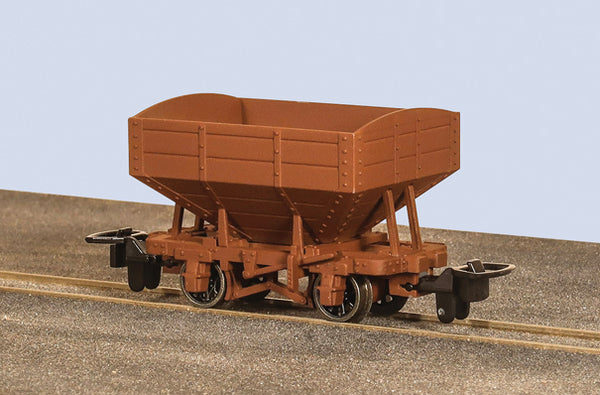
Snailbeach Hopper Wagon, Unmarked Brown
The Snailbeach District Railways system was located in Shropshire and was built to carry lead ore over a narrow gauge route with a gauge of 2ft 4 inches. The mines were located at Stiperstones and they transferred their ore to a connection with the Great Western Railway at Pontesbury.  A fleet of various hopper wagons was used to transport the ore and it is one of those wagons that is the subject of our new model. Opened in 1877 the railway was finally closed in 1959, latterly using tractors to move the hoppers after the end of steam.
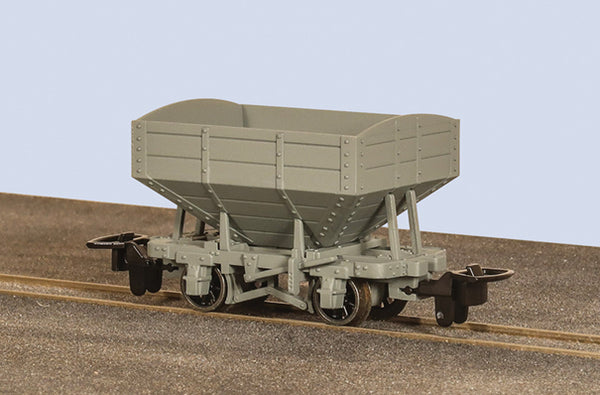
Snailbeach Hopper Wagon, Unmarked Grey
The Snailbeach District Railways system was located in Shropshire and was built to carry lead ore over a narrow gauge route with a gauge of 2ft 4 inches. The mines were located at Stiperstones and they transferred their ore to a connection with the Great Western Railway at Pontesbury.  A fleet of various hopper wagons was used to transport the ore and it is one of those wagons that is the subject of our new model. Opened in 1877 the railway was finally closed in 1959, latterly using tractors to move the hoppers after the end of steam.
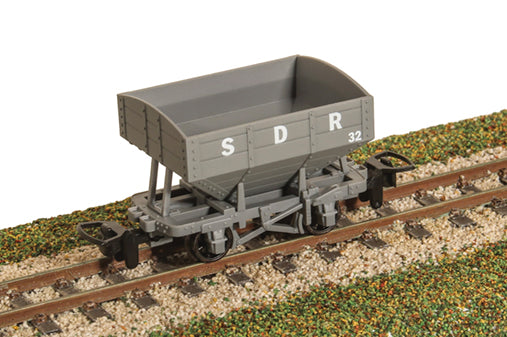
Snailbeach Hopper Wagon, SDR Grey
The Snailbeach District Railways system was located in Shropshire and was built to carry lead ore over a narrow gauge route with a gauge of 2ft 4 inches. The mines were located at Stiperstones and they transferred their ore to a connection with the Great Western Railway at Pontesbury.  A fleet of various hopper wagons was used to transport the ore and it is one of those wagons that is the subject of our new model. Opened in 1877 the railway was finally closed in 1959, latterly using tractors to move the hoppers after the end of steam.
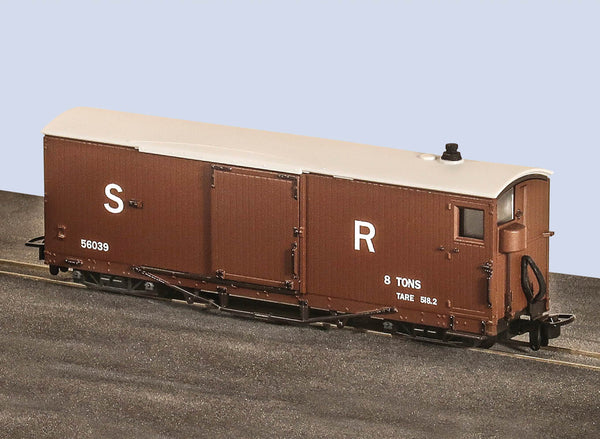
OO-9 Lynton & Barnstaple 8 ton Bogie Goods Brake Van, SR, Brown, No.50639, Closed Veranda
These finely detailed ready to run coaches and wagons are accurately modelled on the rolling stock of the Lynton and Barnstaple Railway, both as an independent railway and after its' absorption into the Southern railway in 1922. They are also available painted but unlettered for those modellers who wish to tailor them for use on other lines.
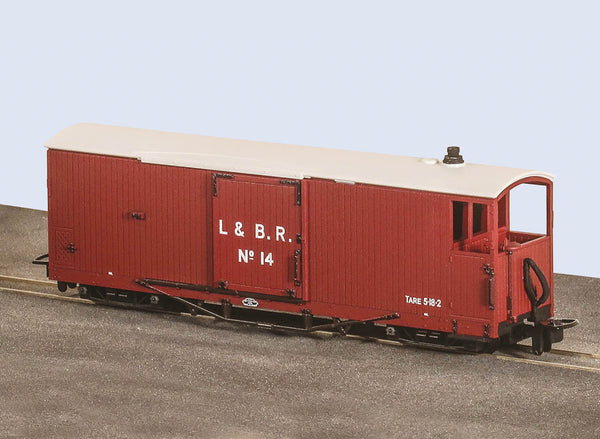
OO-9 Lynton & Barnstaple 8 ton Bogie Goods Brake Van, Red, No.14, Open Veranda
These finely detailed ready to run coaches and wagons are accurately modelled on the rolling stock of the Lynton and Barnstaple Railway, both as an independent railway and after its' absorption into the Southern railway in 1922. They are also available painted but unlettered for those modellers who wish to tailor them for use on other lines.
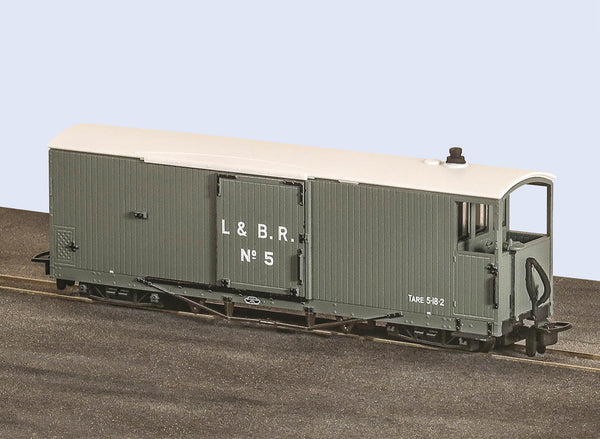
OO-9 Lynton & Barnstaple 8 ton Bogie Goods Brake Van, Grey, No.5, Open Veranda
These finely detailed ready to run coaches and wagons are accurately modelled on the rolling stock of the Lynton and Barnstaple Railway, both as an independent railway and after its' absorption into the Southern railway in 1922. They are also available painted but unlettered for those modellers who wish to tailor them for use on other lines.
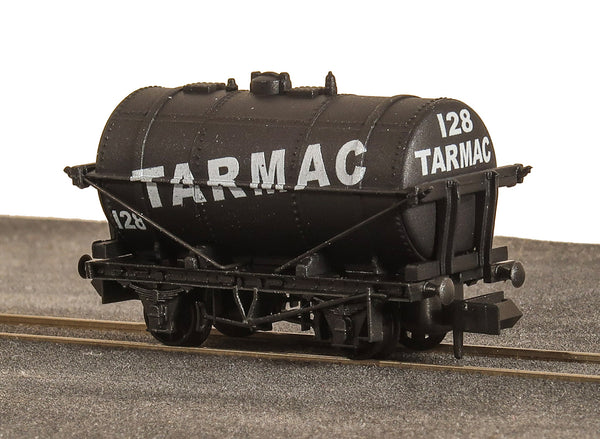
Tank Wagon Tarmac No.128
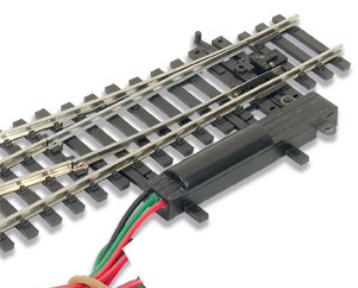
Private owner wagons abounded prior to nationalisation, they would often be seen far from their base as they were sent to collect raw materials and supplies such as coal, and deliver finished goods. All Peco wagons feature free running wheels in pin point axles. The ELC coupling, whilst compatible with the standard N gauge couplings, keeps a realistic distance between vehicles and enables the PL-25 electro magnetic decoupler to be used for remote uncoupling.
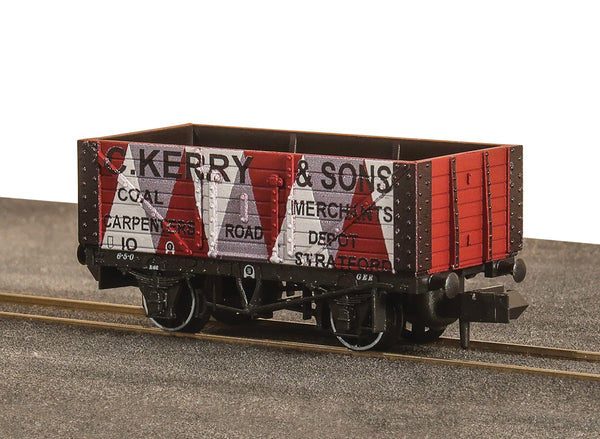
7 Plank Wagon C. Kerry & Sons
Private owner wagons abounded prior to nationalisation, they would often be seen far from their base as they were sent to collect raw materials and supplies such as coal, and deliver finished goods. All Peco wagons feature free running wheels in pin point axles. The ELC coupling, whilst compatible with the standard N gauge couplings, keeps a realistic distance between vehicles and enables the PL-25 electro magnetic decoupler to be used for remote uncoupling.
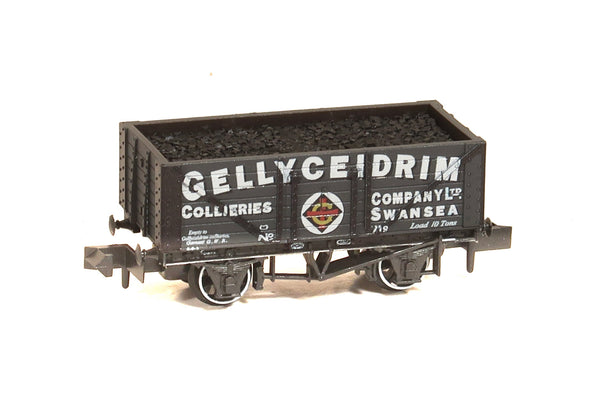
7 Plank Coal Wagon, Gellyceidrim Colliery
Private owner wagons abounded prior to nationalisation, they would often be seen far from their base as they were sent to collect raw materials and supplies such as coal, and deliver finished goods. All Peco wagons feature free running wheels in pin point axles. The ELC coupling, whilst compatible with the standard N gauge couplings, keeps a realistic distance between vehicles and enables the PL-25 electro magnetic decoupler to be used for remote uncoupling.
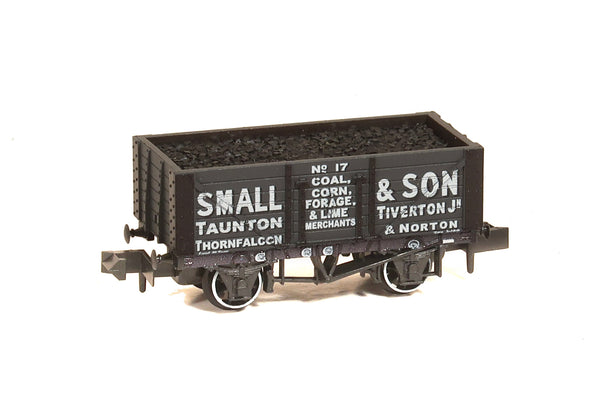
7 Plank Wagon, Small & Son, No.17
Private owner wagons abounded prior to nationalisation, they would often be seen far from their base as they were sent to collect raw materials and supplies such as coal, and deliver finished goods. All Peco wagons feature free running wheels in pin point axles. The ELC coupling, whilst compatible with the standard N gauge couplings, keeps a realistic distance between vehicles and enables the PL-25 electro magnetic decoupler to be used for remote uncoupling.
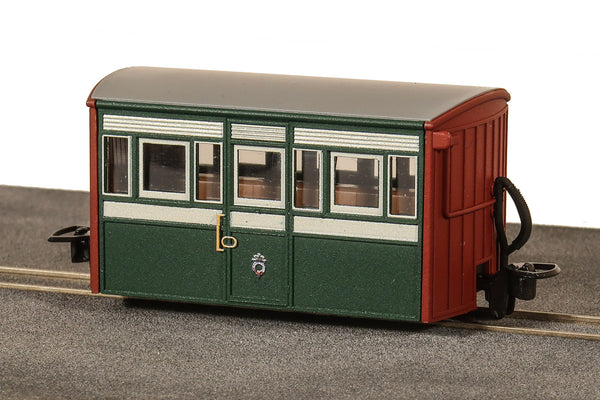
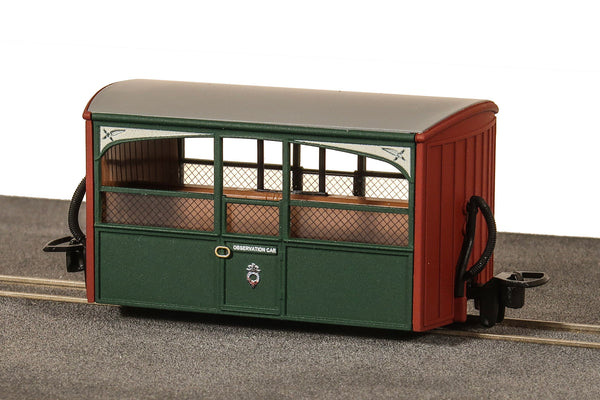
OO-9 FR Bug Box Coach, Zoo Car, Early Preservation Livery
The curiously-named "bug Box" 4-wheel coaches were the first passenger carrying coaches built for the Ffestiniog Railway. Dating from 1864 to 1867 they were built by Brown, Marshall & company. The term "Bug Box is a more recent term given to them, possibly in the 1950s, and originally they were referred to as "Small Birmingham's".
There are three types of vehicle: First Class, Third Class, and Open third, sometimes referred to as “Zoo” cars.
OO-9 FR Bug Box Coach, 3rd Class, Early Preservation Livery
The curiously-named "bug Box" 4-wheel coaches were the first passenger carrying coaches built for the Ffestiniog Railway. Dating from 1864 to 1867 they were built by Brown, Marshall & company. The term "Bug Box is a more recent term given to them, possibly in the 1950s, and originally they were referred to as "Small Birmingham's".
There are three types of vehicle: First Class, Third Class, and Open third, sometimes referred to as “Zoo” cars.