


BROWSE PECO PRODUCTS
Browse through our complete product portfolio.
1114 Products Found
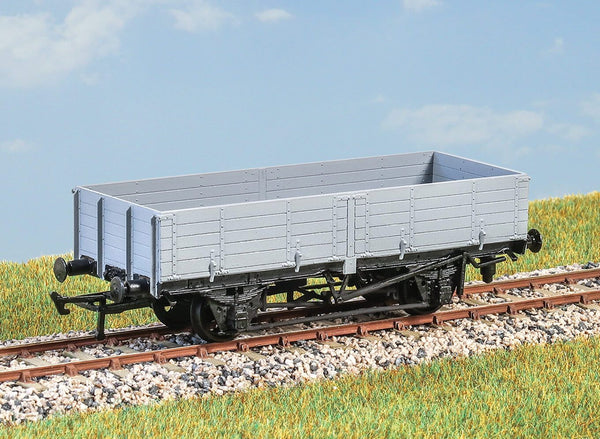
BR 12ton Pipe Wagon
Introduced in 1949 to an LMS design, 800 of these wagons (diagram 1/460) carried large diameter pipes for the construction industry. Withdrawn in the early 1980s. These finely moulded plastic wagon kits come complete with pin point axle wheels and bearings. Glue and paint will be required, along with appropriate transfers. Additional parts to enable the vehicle to be modelled incorporating modifications made to the prototypes during their working life are included where appropriate.
BR 12ton Van
In 1962, 1994 of these vans (diagram 1/217) were built. They have extra wide doors to allow fork lift trucks to handle loading. Some were converted to air brake operation. These finely moulded plastic wagon kits come complete with pin point axle wheels and bearings. Glue and paint will be required, along with appropriate transfers. Additional parts to enable the vehicle to be modelled incorporating modifications made to the prototypes during their working life are included where appropriate.
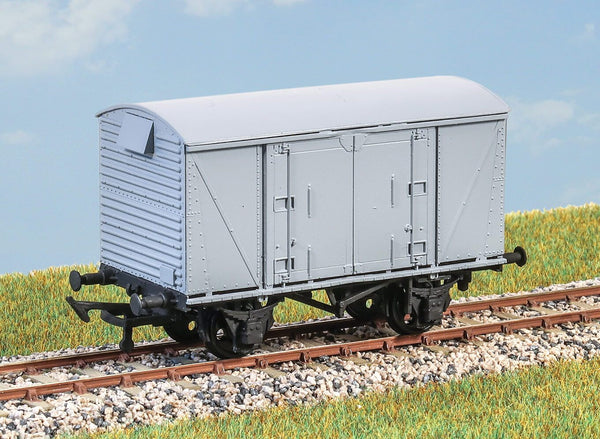
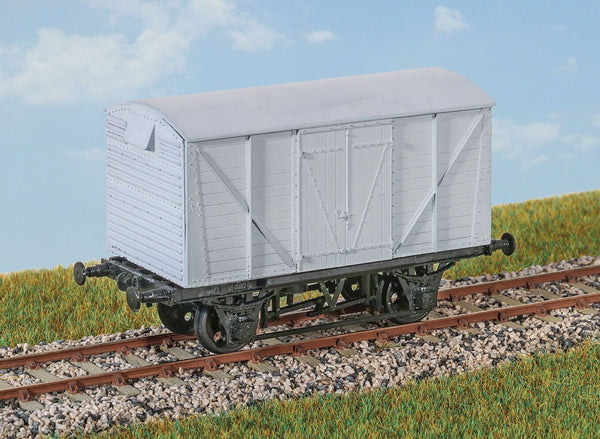
BR 12ton Van Plank Sides
Over 19,000 of these standard vans (diagram 1/208) were built in the 1950s for general goods traffic and lasted into the 1980s. Alternative plywood doors are included. These finely moulded plastic wagon kits come complete with pin point axle wheels and bearings. Glue and paint will be required, along with appropriate transfers . Additional parts to enable the vehicle to be modelled incorporating modifications made to the prototypes during their working life are included where appropriate.
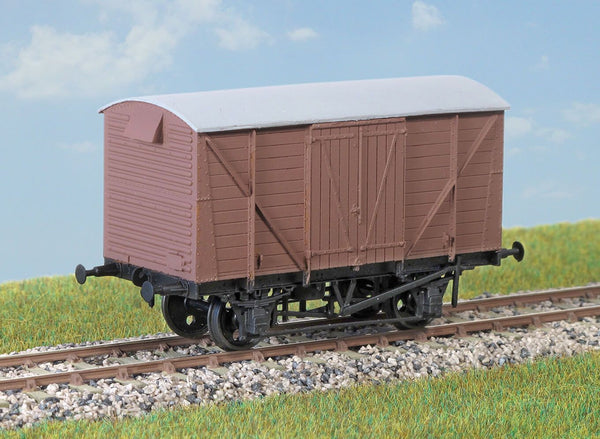
BR 13ton Medium Goods Wagon
(Diagram 1/019) 4000 were built in 1950-55 to carry such loads as farm machinery and containers. In the 60s they had a second lease of life as Civil Engineers’ ballast wagons. Withdrawn in 1970s/80s.
These finely moulded plastic wagon kits come complete with pin point axle wheels and bearings. Glue and paint will be required, along with appropriate transfers. Additional parts to enable the vehicle to be modelled incorporating modifications made to the prototypes during their working life are included where appropriate.
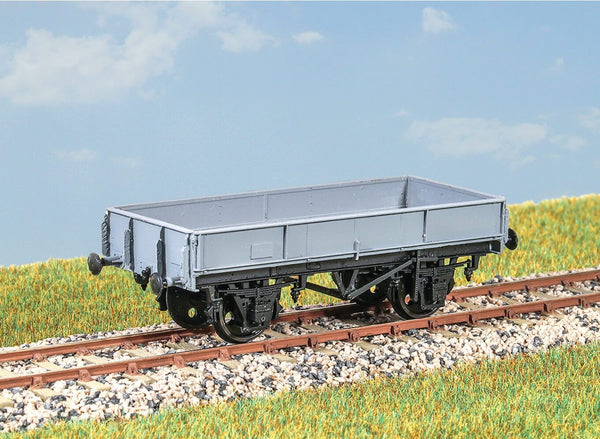
BR 13ton Open Goods Wagon
Over 8000 of these wagons (diagram 1/039, 1/044) were built to an LMS design in the 1950s. Used until the 1980s, some lasted another decade in the Civil Engineer’s fleet. These finely moulded plastic wagon kits come complete with pin point axle wheels and bearings. Glue and paint will be required, along with appropriate transfers. Additional parts to enable the vehicle to be modelled incorporating modifications made to the prototypes during their working life are included where appropriate.
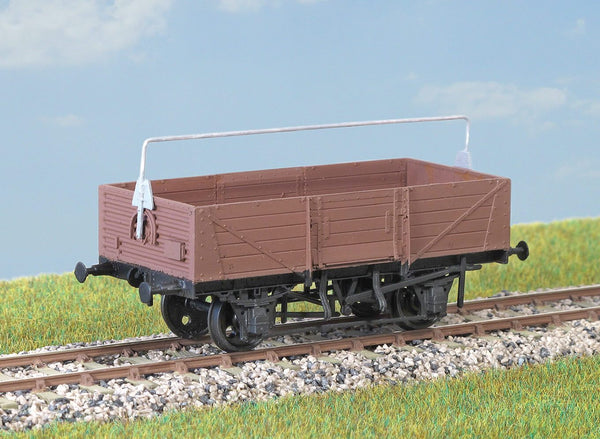
BR 13ton Steel Open Goods Wagon
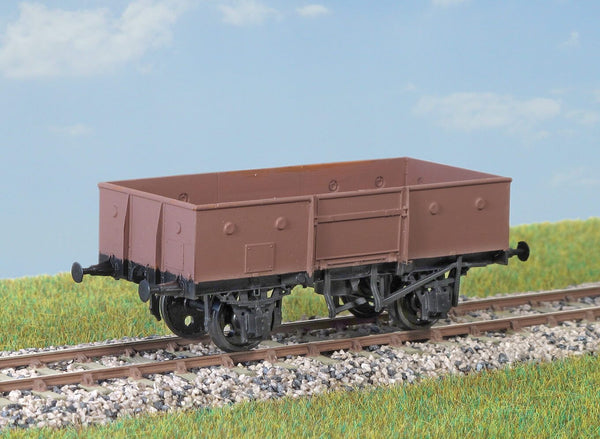
6500 of these wagons (diagram 1/037, 1/041) were built in the early 1950s, using a post war LNER design. Many survived into the 1980s. These finely moulded plastic wagon kits come complete with pin point axle wheels and bearings. Glue and paint will be required, along with appropriate transfers. Additional parts to enable the vehicle to be modelled incorporating modifications made to the prototypes during their working life are included where appropriate.
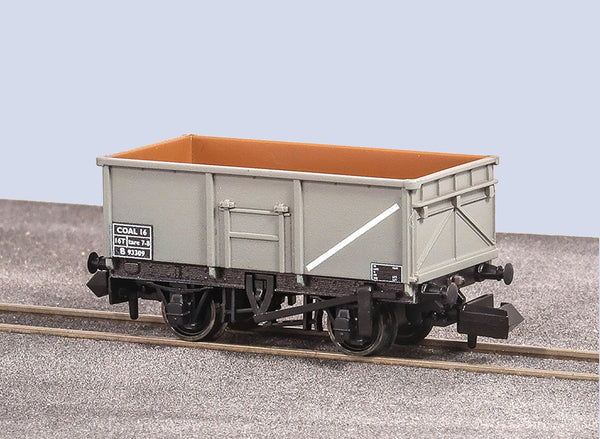
BR 16 Ton Mineral (Coal) Wagon , Unfitted, Grey
The 16 Ton Mineral Wagon here is the basic unfitted coal wagon, so typical and common a sight on Britain's railways during the 1950s to 1980s. Now all gone with the demise of the coal industry. There would be rakes and rakes of these wagons trailing behind a locomotive throughout the UK, but most likely more so around the coalfields.
Produced from new tooling, fine moulded detail, sharp printing, free running metal-tyred wheels and removable couplers are the key features of our new models. But best of all, they represent excellent value for money when compared to the competition, and all made in the UK.
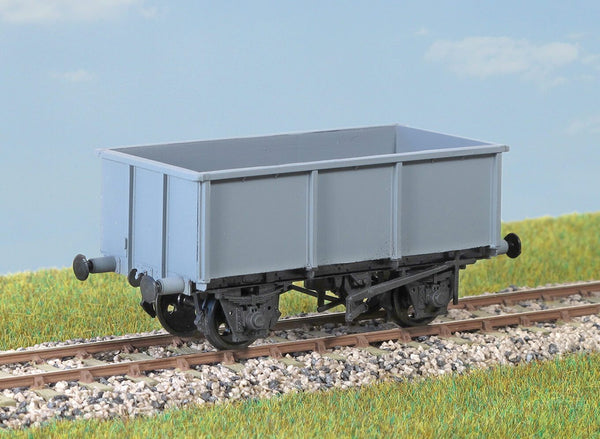
BR 16ton Iron Ore Tippler Wagon
500 of these vans (diagram 1/185) were built in the mid 1930s to carry fruit traffic - comprising soft and hard fruit and flowers - to destinations throughout Britain. These finely moulded plastic wagon kits come complete with pin point axle wheels and bearings. Glue and paint will be required, along with appropriate transfers. Additional parts to enable the vehicle to be modelled incorporating modifications made to the prototypes during their working life are included where appropriate.
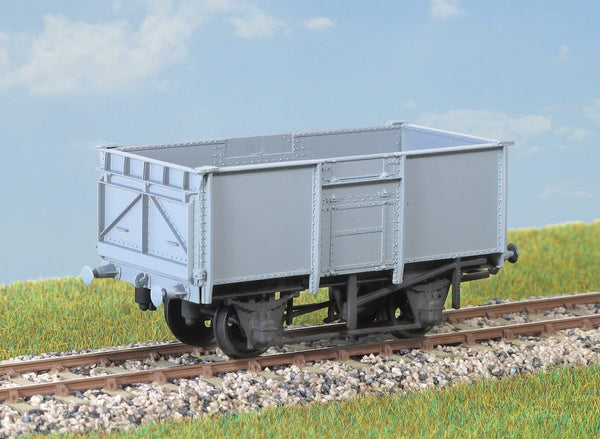
BR 16ton Min Wagon Riveted Body
Over 21,000 of these wagons (diagram 109) were built in the 1950s. This kit caters for either pressed steel end doors or the more common fabricated type. These finely moulded plastic wagon kits come complete with pin point axle wheels and bearings. Glue and paint will be required, along with appropriate transfers. Additional parts to enable the vehicle to be modelled incorporating modifications made to the prototypes during their working life are included where appropriate.
BR 16ton Mineral Wagon
Vacuum fitted, introduced in 1956, these wagons continued to be used throughout the BR period, carrying coal to coal depots and factories as well as scrap (from 1975), aggregate and engineer’s spoil.
These finely moulded plastic wagon kits come complete with pin point axle wheels and bearings. Glue and paint will be required, along with appropriate transfers. Additional parts to enable the vehicle to be modelled incorporating modifications made to the prototypes during their working life are included where appropriate.
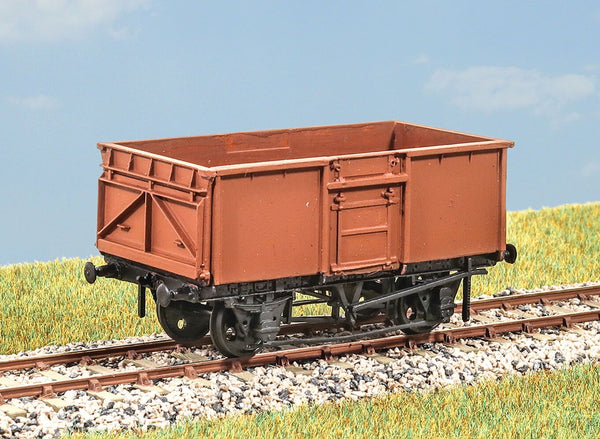
BR 16ton Mineral Wagon
16 ton Mineral Wagon, Non Vacuum Fitted (diagram 1/108) Over 206,000 of these all steel, welded body wagons equipped with hand brakes only were built in the 1950s. They lasted in large numbers until the late 1980s. These finely moulded plastic wagon kits come complete with pin point axle wheels and bearings. Glue and paint will be required, along with appropriate transfers. Additional parts to enable the vehicle to be modelled incorporating modifications made to the prototypes during their working life are included where appropriate.
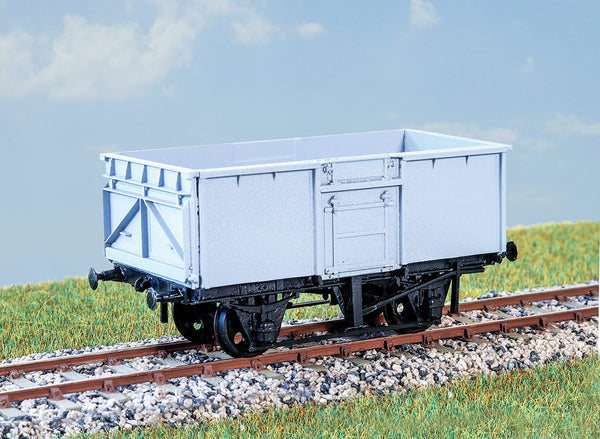
BR 16ton Mineral Wagon
(French type) Introduced in 1946, 7000 of these wagons were supplied to France and returned to BR in 1950-1952, where they lasted until the mid 1960s. These finely moulded plastic wagon kits come complete with pin point axle wheels and bearings. Glue and paint will be required, along with appropriate transfers. Additional parts to enable the vehicle to be modelled incorporating modifications made to the prototypes during their working life are included where appropriate.
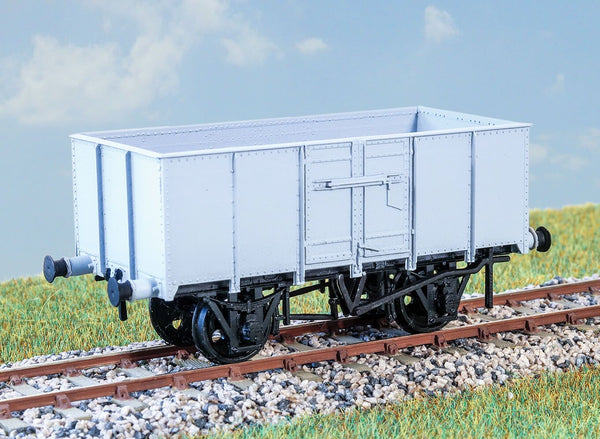
BR 16ton Mineral Wagon
About 8000 were built in 1944-1947, almost 2000 of which worked in France until repatriated in the early 1950s. Most survived until the mid 1960s, as BR diagram 1/100. These finely moulded plastic wagon kits come complete with pin point axle wheels and bearings. Glue and paint will be required, along with appropriate transfers. Additional parts to enable the vehicle to be modelled incorporating modifications made to the prototypes during their working life are included where appropriate.
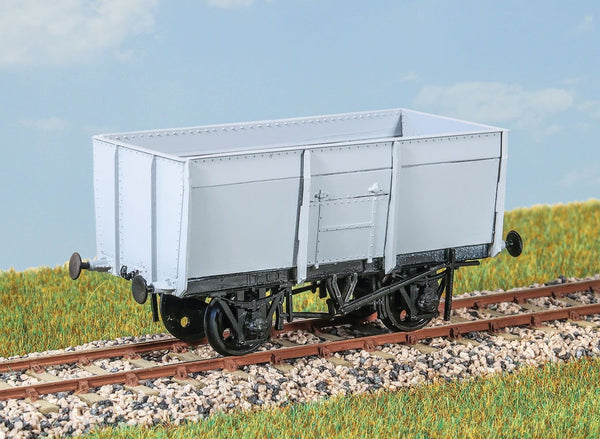
BR 16ton Steel Mineral Wagon
These wagon kits include body components, chassis weight, disc wheels and couplings, and full instructions.
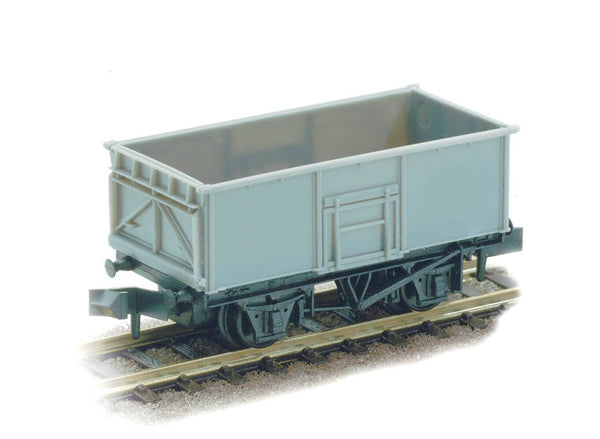
BR 20ton Pig Iron Wagon
These wagon kits include body components, chassis weight, disc wheels and couplings, and full instructions.
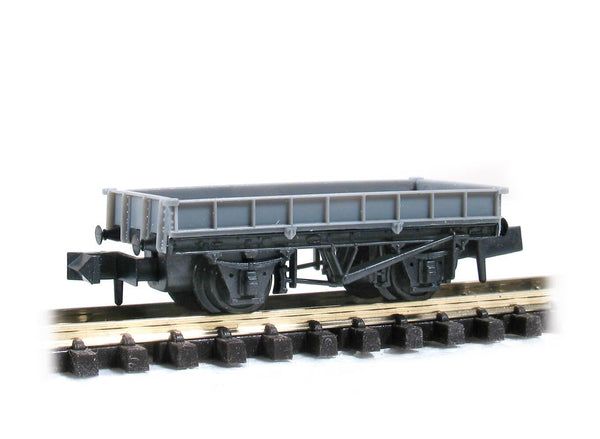
BR 21ton Coal Hopper Wagon
Diagram 1/146. 16,800 were built between 1952 and 1958. They were widely used for coal traffic especially in North East England. Common well into the 1980s. The kit has a choice of roller and oil axleboxes. These finely moulded plastic wagon kits come complete with pin point axle wheels and bearings. Glue and paint will be required, along with appropriate transfers. Additional parts to enable the vehicle to be modelled incorporating modifications made to the prototypes during their working life are included where appropriate.
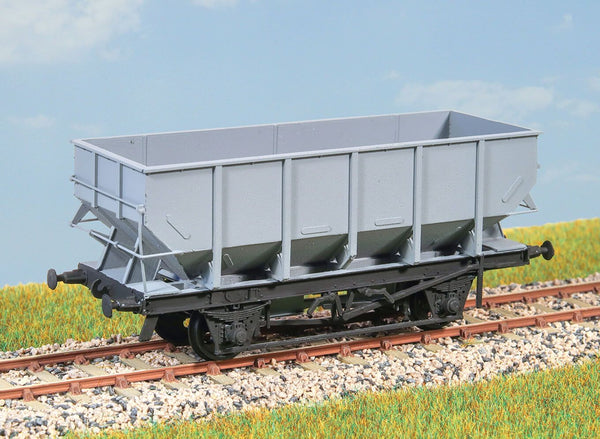
BR 21ton Coal Wagon
1000 of these wagons 21 ton Coal Wagon (diagram 1/110) were built in 1950/51 for BR by the Metro-Cammell company. Many were still in service in the late 1970s. These finely moulded plastic wagon kits come complete with pin point axle wheels and bearings. Glue and paint will be required, along with appropriate transfers. Additional parts to enable the vehicle to be modelled incorporating modifications made to the prototypes during their working life are included where appropriate.
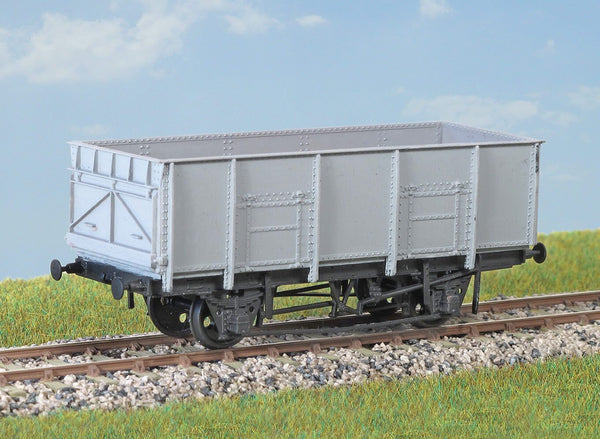
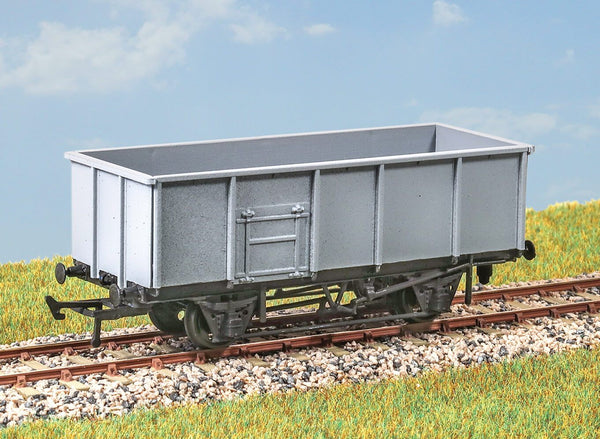
BR 21ton Mineral Wagon
(Rebuilt 1977) This vehicle represents the end of the evolution of the classic British coal wagon. Introduced in 1977, using spare chassis, 947 were built and used chiefly for industrial coal traffic.These finely moulded plastic wagon kits come complete with pin point axle wheels and bearings. Glue and paint will be required, along with appropriate transfers. Additional parts to enable the vehicle to be modelled incorporating modifications made to the prototypes during their working life are included where appropriate.
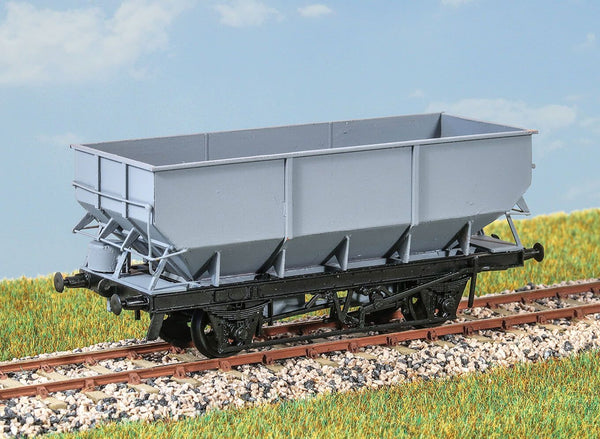
BR 21ton Rebodied Hopper Wagon
21 ton Rebodied Hopper Wagon (Vac. Braked) In the 1970s BR started to put new bodies on hopper wagons built in the 1940s and 1950s. Some ran with vacuum brakes. Examples lasted into the 1990s. These finely moulded plastic wagon kits come complete with pin point axle wheels and bearings. Glue and paint will be required, along with appropriate transfers . Additional parts to enable the vehicle to be modelled incorporating modifications made to the prototypes during their working life are included where appropriate.
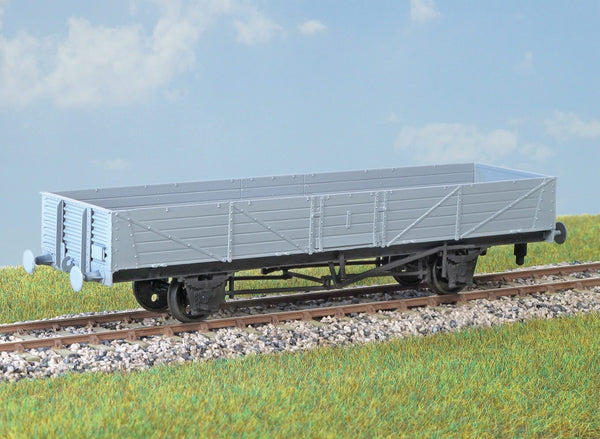
BR 22ton Tube Wagon
2350 of these wagons (diagram 1/448) were built between 1954 and 1961 to carry long tubes and bulky general merchandise. Most were withdrawn by the 1980s, but some survive in infrastructure use. These finely moulded plastic wagon kits come complete with pin point axle wheels and bearings. Glue and paint will be required, along with appropriate transfers. Additional parts to enable the vehicle to be modelled incorporating modifications made to the prototypes during their working life are included where appropriate.
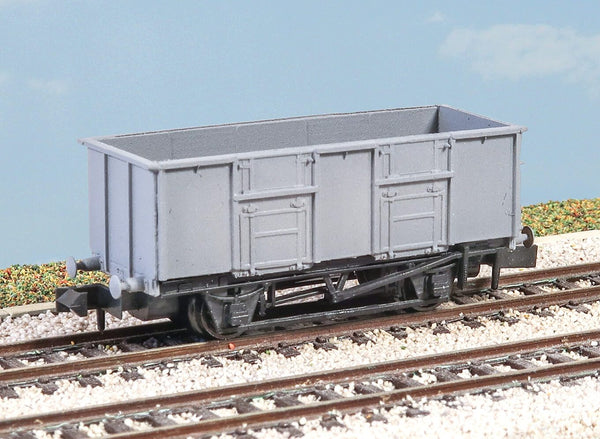
BR 24ton Mineral Wagon
Over 2000 of these wagons were built to carry coal to large concerns such as power stations and steel works. Period 1953-1982. These finely moulded plastic wagon kits come complete with pin point axle wheels. Glue and paint will be required, along with appropriate transfers .
BR 24¬? ton Coal Wagon
Over 2000 of these wagons (diagram 1/115) were built in 1953-1956 to carry coal to power stations and steel works. Withdrawn by 1982. These finely moulded plastic wagon kits come complete with pin point axle wheels and bearings. Glue and paint will be required, along with appropriate transfers. Additional parts to enable the vehicle to be modelled incorporating modifications made to the prototypes during their working life are included where appropriate.
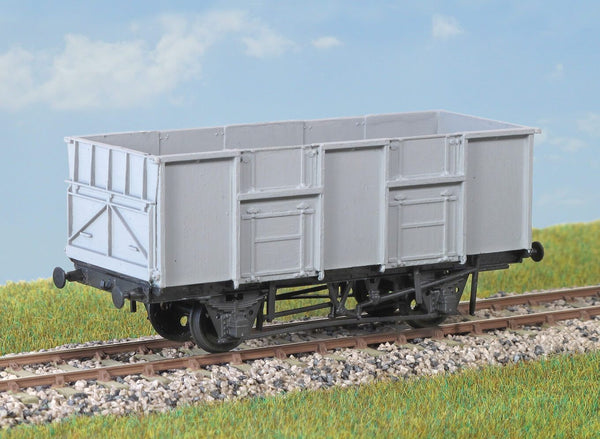
BR 27ton Iron Ore Tippler Wagon
These wagon kits include body components, chassis weight, disc wheels and couplings, and full instructions.
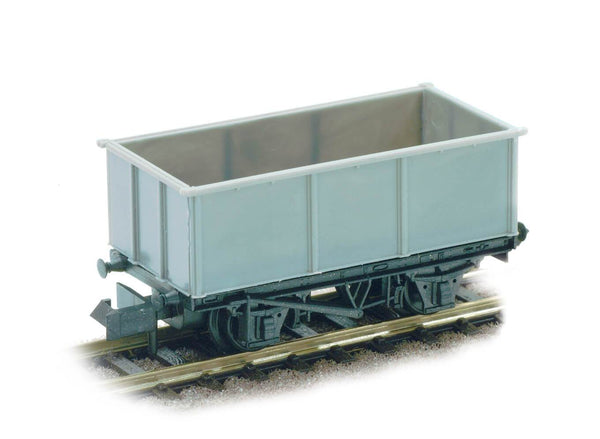
BR Ale Pallet Wagon
The mid 1960s saw a small fleet of these (diagram 1/028) rebuilt from tube wagons to carry beer casks between breweries and distribution depots. Traffic ended in the late 70s but some survived as barrier wagons. These finely moulded plastic wagon kits come complete with pin point axle wheels and bearings. Glue and paint will be required, along with appropriate transfers. Additional parts to enable the vehicle to be modelled incorporating modifications made to the prototypes during their working life are included where appropriate.
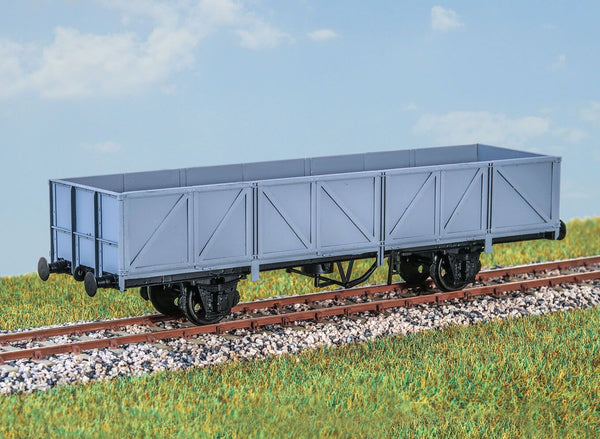
BR Banana Van
300 of these wagons were built between 1952 and 1954. They were originally fitted with steam heating, but this was later removed. Used mainly by the companies Geest and Fyffes, these vans could be part of a mixed train or a 'block load' on their way from the shipping dock. Transfers are included; glue and paints are required to complete this model.
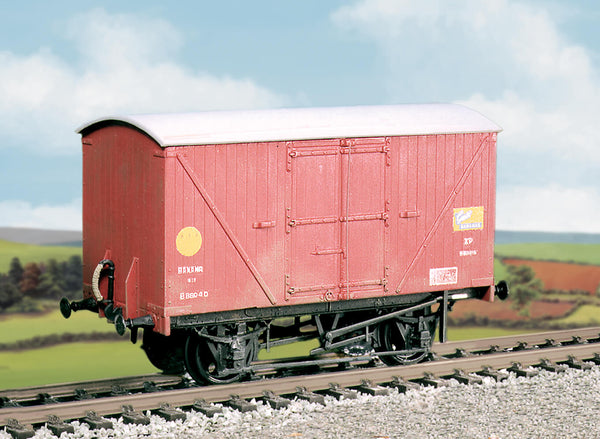
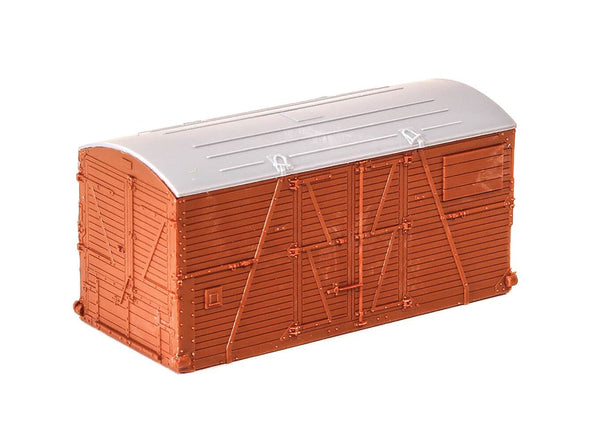
BR BD Container
Diagram 3/050; a Conflat wagon or road vehicle load. As supplied with Conflat A Container Wagon kit PC52.
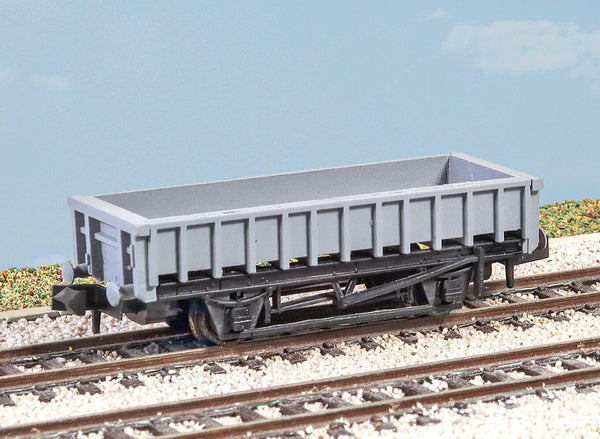
BR Clam 21ton Ballast Wagon
Built in 1989-1991 on ex hopper chassis, 400 clam wagons carry mainly waste ballast. These finely moulded plastic wagon kits come complete with pin point axle wheels. Glue and paint will be required, along with appropriate transfers .
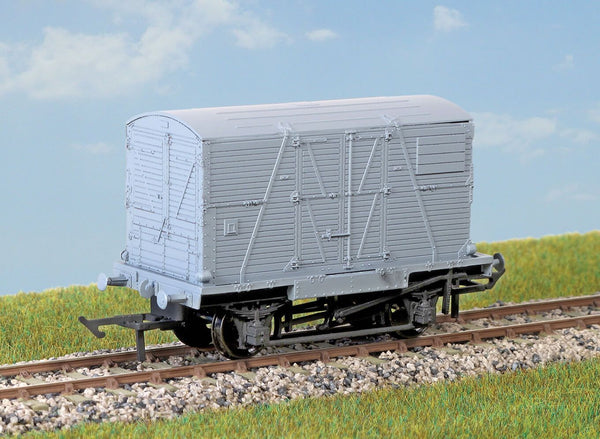
BR Conflat Container Wagon
4500 of these wagons (diagram 1/067) were built in 1955/56 purely to carry containers. The FM carried frozen meat and was widely used in the 1950s and 1960s. These finely moulded plastic wagon kits come complete with pin point axle wheels and bearings. Glue and paint will be required, along with appropriate transfers. Additional parts to enable the vehicle to be modelled incorporating modifications made to the prototypes during their working life are included where appropriate.
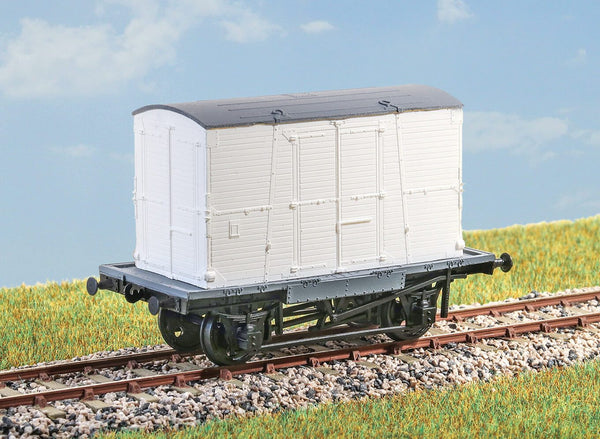
BR Conflat Container Wagon
‘Conflat A’ Container Wagon with BD container (diagram 3/050) 4500 were built in 1955/56 purely to carry containers. The BD was the most common general merchandise container on BR. Over 9000 were built to this diagram.
These finely moulded plastic wagon kits come complete with pin point axle wheels and bearings. Glue and paint will be required, along with appropriate transfers . Additional parts to enable the vehicle to be modelled incorporating modifications made to the prototypes during their working life are included where appropriate.
BR FM Container
Diagram 3/201; a Conflat wagon or road vehicle load. As supplied with Conflat A Container Wagon kit PC46.
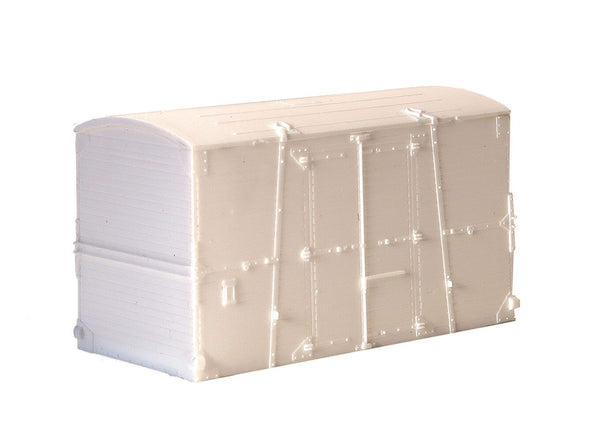
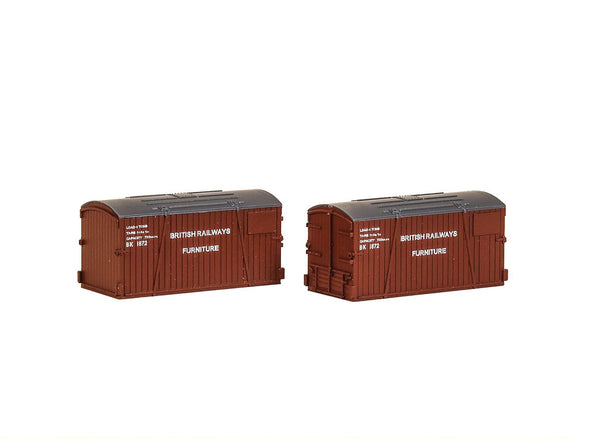
BR Furniture Removals (Pack of 2)
An ideal load for a conflat or haulage vehicle, or as an accessory in a station yard or factory. Once dubbed 'the suitcase of industry' these railway containers were the precursor of the modern container, allowing a contained load to be quickly unloaded or transhipped from rail to road transport. (Pack of 2).
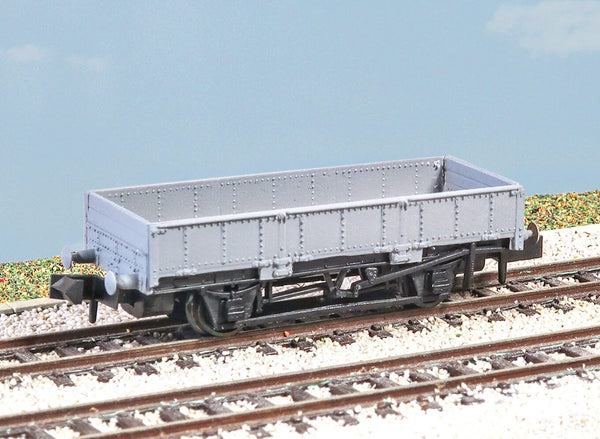
BR Grampus Engineers Ballast Wagon
Over 4000 of these wagons were built to carry sleepers and ballast for track maintenance. Period 1951 to present. These finely moulded plastic wagon kits come complete with pin point axle wheels. Glue and paint will be required, along with appropriate transfers .
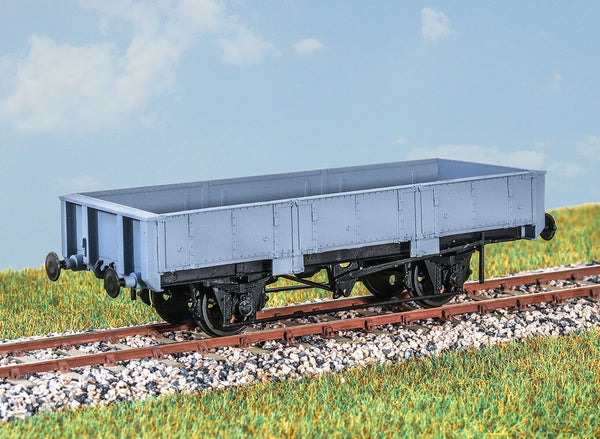
BR Grampus Engineers Wagon
Over 700 of these vacuum braked Grampus (diagram 1/572) were built around 1960 to carry track materials. This kit can also make the air braked Rudd, built from the early 1990s. These finely moulded plastic wagon kits come complete with pin point axle wheels and bearings. Glue and paint will be required, along with appropriate transfers. Additional parts to enable the vehicle to be modelled incorporating modifications made to the prototypes during their working life are included where appropriate.
BR Iron Ore Tippler, Civil Engineers "Dutch"
Built in the 1950's these 35t GLW (Gross Laden Weight) wagons served the railways for many years transporting iron ore from British iron ore mines for steel production. As that traffic ended, so the wagons found plenty of other uses especially with the BR Civil Engineers department and many lasted into the 1980's as a result. This bauxite liveried example represents the wagon in its original brake-fitted condition, as opposed to the unbraked grey livery version, although to be fair it would never have been so clean! An ideal weathering project for the modeller! 
Produced from new tooling, fine moulded detail, sharp printing, free running metal-tyred wheels and removable couplers are the key features of our new models. But best of all, they represent excellent value for money when compared to the competition, and all made in the UK.
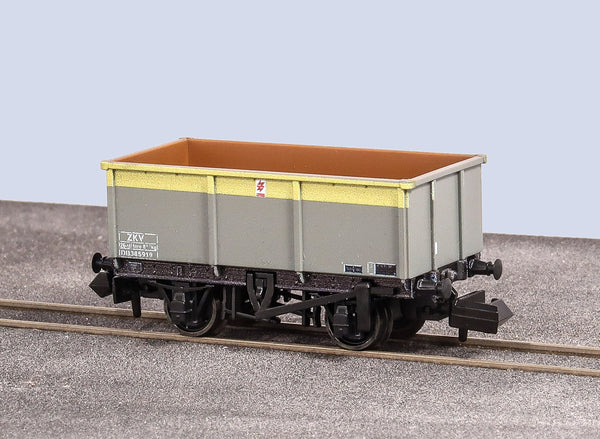
BR Iron Ore Tippler, Fitted, Bauxite
Built in the 1950's these 35t GLW (Gross Laden Weight) wagons served the railways for many years transporting iron ore from British iron ore mines for steel production. As that traffic ended, so the wagons found plenty of other uses especially with the BR Civil Engineers department and many lasted into the 1980's as a result. This bauxite liveried example represents the wagon in its original brake-fitted condition, as opposed to the unbraked grey livery version, although to be fair it would never have been so clean! An ideal weathering project for the modeller! 
Produced from new tooling, fine moulded detail, sharp printing, free running metal-tyred wheels and removable couplers are the key features of our new models. But best of all, they represent excellent value for money when compared to the competition, and all made in the UK.
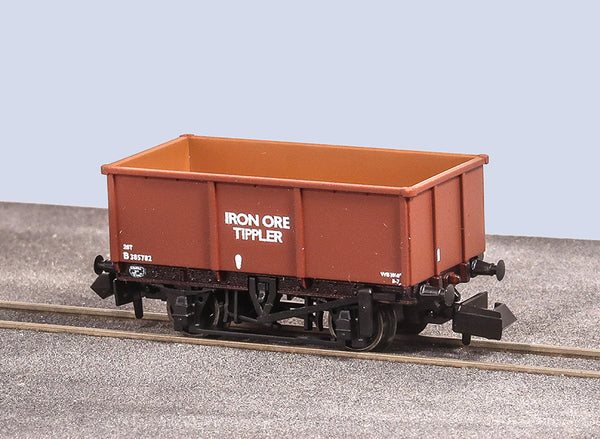
BR Iron Ore Tippler, Unfitted Grey
Built in the 1950's these 35t GLW (Gross Laden Weight) wagons served the railways for many years transporting iron ore from British iron ore mines for steel production. As that traffic ended, so the wagons found plenty of other uses especially with the BR Civil Engineers department and many lasted into the 1980's as a result. This bauxite liveried example represents the wagon in its original brake-fitted condition, as opposed to the unbraked grey livery version, although to be fair it would never have been so clean! An ideal weathering project for the modeller! 
Produced from new tooling, fine moulded detail, sharp printing, free running metal-tyred wheels and removable couplers are the key features of our new models. But best of all, they represent excellent value for money when compared to the competition, and all made in the UK.
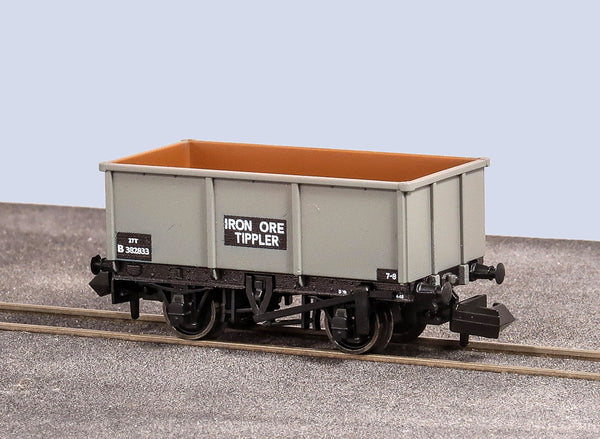
BR Pipe Wagon
Introduced in 1949 (diagram 1/462), and intended to carry cast iron pipes, but were also used widely for other loads. Examples survived into the 1980s. These finely moulded plastic wagon kits come complete with pin point axle wheels. Glue and paint will be required, along with appropriate transfers .

BR Removals Conflat Wagon with Container
Railway companies all had a stock of their own vehicles for carrying goods and merchandise around their network, and also onto other companies' routes as and when required. These were integrated into British Railways at Nationalisation; some of them to be once more re liveried under sectorisation as the network was prepared to be returned to private ownership. All Peco wagons feature free running wheels in pin point axles. The ELC coupling, whilst compatible with the standard N gauge couplings, keeps a realistic distance between the vehicles and enables the PL-25 electro magnetic decoupler to be used for remote uncoupling.

BR Rudd 21ton Ballast Wagon
Built on ex-hopper chassis, these wagons carry mainly waste ballast. Drop side doors are a feature of this design. These finely moulded plastic wagon kits come complete with pin point axle wheels and bearings. Glue and paint will be required, along with appropriate transfers. Additional parts to enable the vehicle to be modelled incorporating modifications made to the prototypes during their working life are included where appropriate.
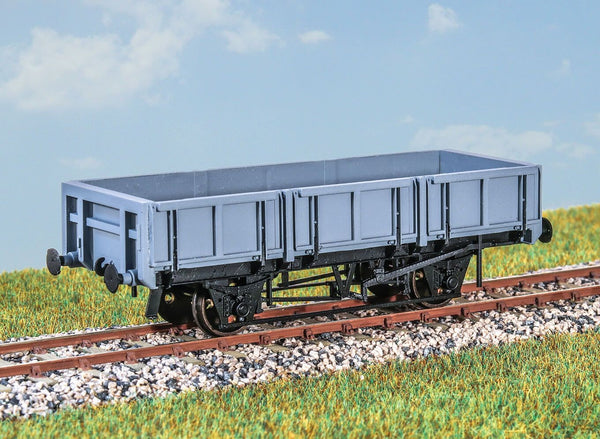
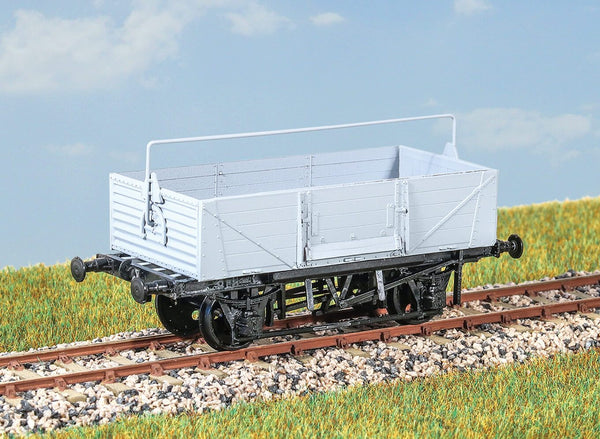
BR Shock Absorbing Open Wagon
Introduced 1955-1958, these wagons (diagram 1/050) carried fragile traffic from earthenware pipes to whisky barrels. Our model features adjustable body and tarpaulin rail. These finely moulded plastic wagon kits come complete with pin point axle wheels and bearings. Glue and paint will be required, along with appropriate transfers. Additional parts to enable the vehicle to be modelled incorporating modifications made to the prototypes during their working life are included where appropriate.
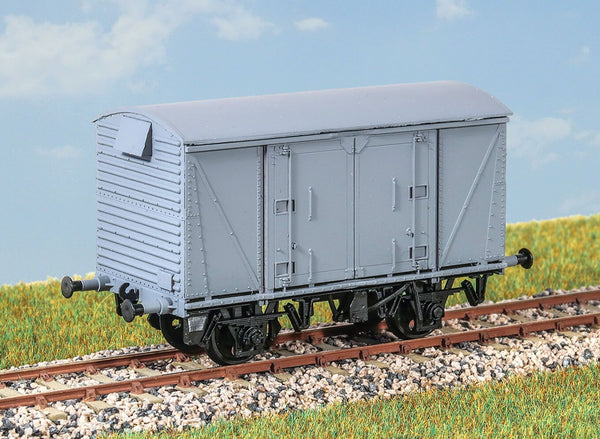
BR Shock Absorbing Wagon
Introduced 1953 - 1956, these vans (diagram 1/209) carried fragile traffics such as biscuits, whisky and china and lasted in service until the late 1970s. These finely moulded plastic wagon kits come complete with pin point axle wheels and bearings. Glue and paint will be required, along with appropriate transfers. Additional parts to enable the vehicle to be modelled incorporating modifications made to the prototypes during their working life are included where appropriate.
BR Van 'Vanwide' with Air Brake
VEA ex Vanwide (Air Brake and FAT19 Suspension) In the late 1970s several hundred Vanwides were upgraded with air brakes and improved suspension for use in Speedlink trains. Used into the 1990s. These finely moulded plastic wagon kits come complete with pin point axle wheels and bearings. Glue and paint will be required, along with appropriate transfers. Additional parts to enable the vehicle to be modelled incorporating modifications made to the prototypes during their working life are included where appropriate.
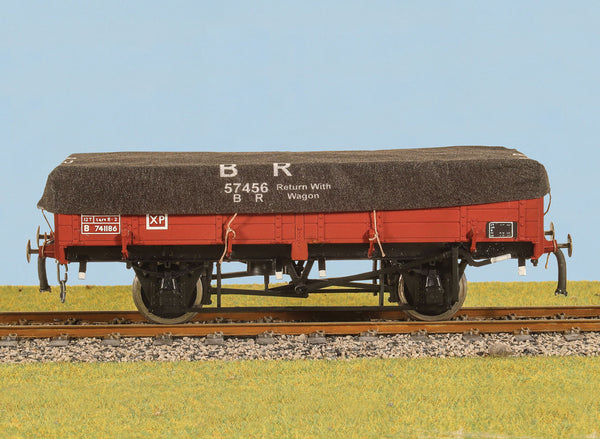
BR Wagon Tarpaulin
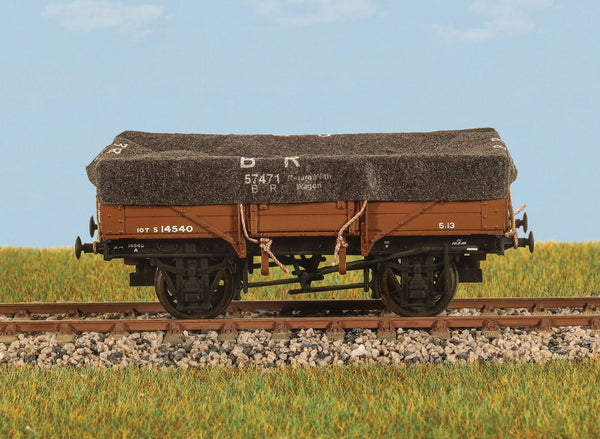
BR Wagon Tarpaulin
O Scale BR wagon tarpaulin, produced from a material that convincingly replicates the texture and look of canvas tarpaulins once commonly used on open wagons, to protect the contents underneath. Each product contains 3 tarpaulins.
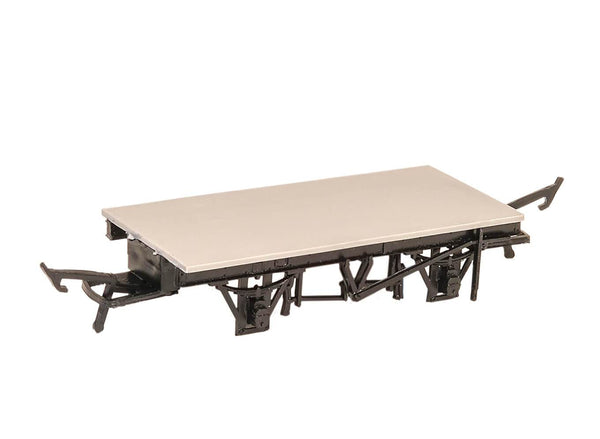
BR/RCH 9 foot Wagon Chassis kit (Unfitted) - Double Brake
Kit and scratch builders accessory; as included in the 16 ton Mineral Wagon kit PC22.
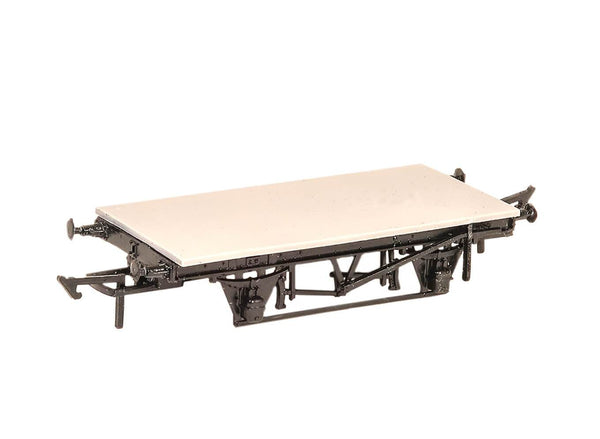
BR/RCH 9 foot Wagon Chassis kit (Unfitted) - Morton Brake
Kit and scratch builders accessory; as included in the 16 ton Mineral Wagon kit PC21.
Brake Van
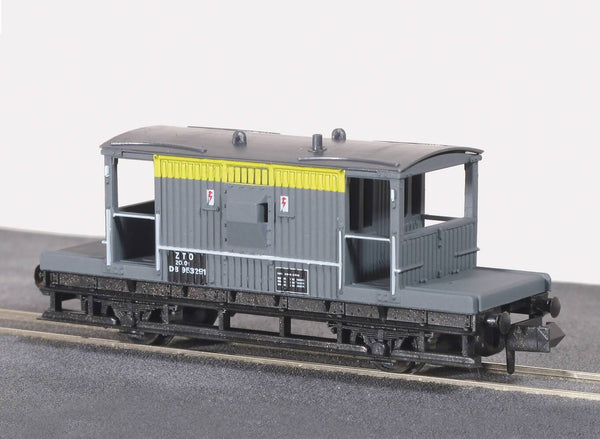
Railway companies all had a stock of their own vehicles for carrying goods and merchandise around their network, and also onto other companies' routes as and when required. These were integrated into British Railways at Nationalisation; some of them to be once more re liveried under sectorisation as the network was prepared to be returned to private ownership. All Peco wagons feature free running wheels in pin point axles. The ELC coupling, whilst compatible with the standard N gauge couplings, keeps a realistic distance between the vehicles and enables the PL-25 electro magnetic decoupler to be used for remote uncoupling.
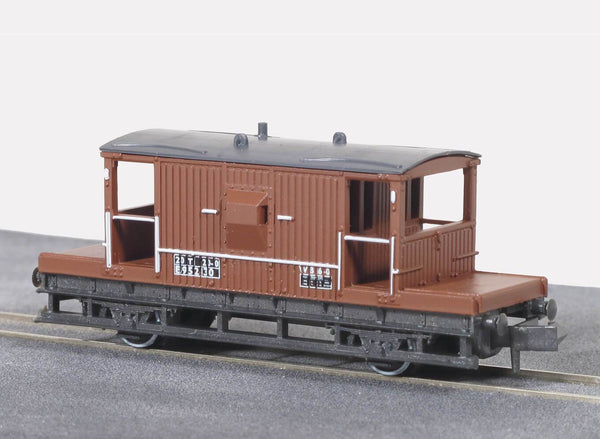
Brake Van
Railway companies all had a stock of their own vehicles for carrying goods and merchandise around their network, and also onto other companies' routes as and when required. These were integrated into British Railways at Nationalisation; some of them to be once more re liveried under sectorisation as the network was prepared to be returned to private ownership. All Peco wagons feature free running wheels in pin point axles. The ELC coupling, whilst compatible with the standard N gauge couplings, keeps a realistic distance between the vehicles and enables the PL-25 electro magnetic decoupler to be used for remote uncoupling.