


BROWSE PECO PRODUCTS
Browse through our complete product portfolio.
1529 Products Found
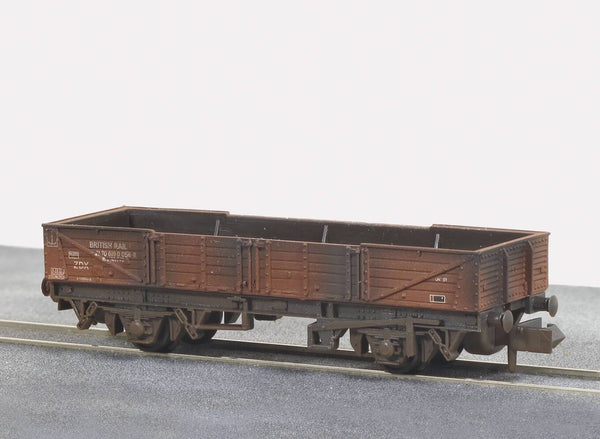
Ferry Tube Wagon
Railway companies all had a stock of their own vehicles for carrying goods and merchandise around their network, and also onto other companies' routes as and when required. These were integrated into British Railways at Nationalisation; some of them to be once more re liveried under sectorisation as the network was prepared to be returned to private ownership. All Peco wagons feature free running wheels in pin point axles. The ELC coupling, whilst compatible with the standard N gauge couplings, keeps a realistic distance between the vehicles and enables the PL-25 electro magnetic decoupler to be used for remote uncoupling.
Ferry Tube Wagon
Railway companies all had a stock of their own vehicles for carrying goods and merchandise around their network, and also onto other companies' routes as and when required. These were integrated into British Railways at Nationalisation; some of them to be once more re liveried under sectorisation as the network was prepared to be returned to private ownership. All Peco wagons feature free running wheels in pin point axles. The ELC coupling, whilst compatible with the standard N gauge couplings, keeps a realistic distance between the vehicles and enables the PL-25 electro magnetic decoupler to be used for remote uncoupling.
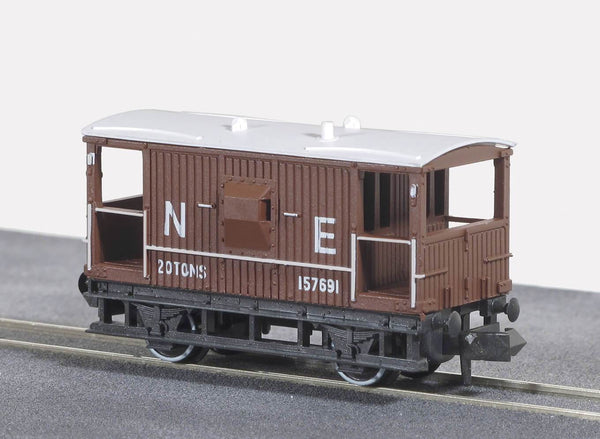
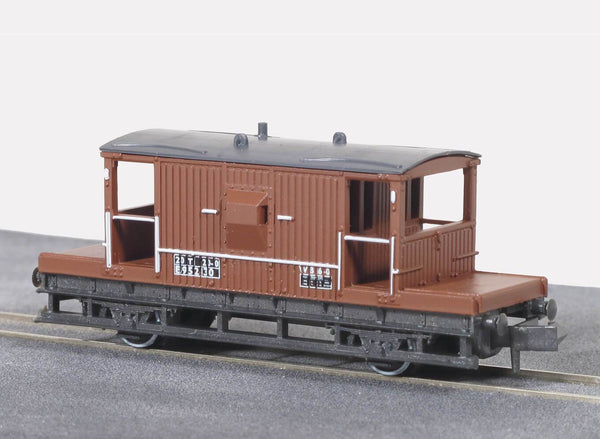
Brake Van
Railway companies all had a stock of their own vehicles for carrying goods and merchandise around their network, and also onto other companies' routes as and when required. These were integrated into British Railways at Nationalisation; some of them to be once more re liveried under sectorisation as the network was prepared to be returned to private ownership. All Peco wagons feature free running wheels in pin point axles. The ELC coupling, whilst compatible with the standard N gauge couplings, keeps a realistic distance between the vehicles and enables the PL-25 electro magnetic decoupler to be used for remote uncoupling.
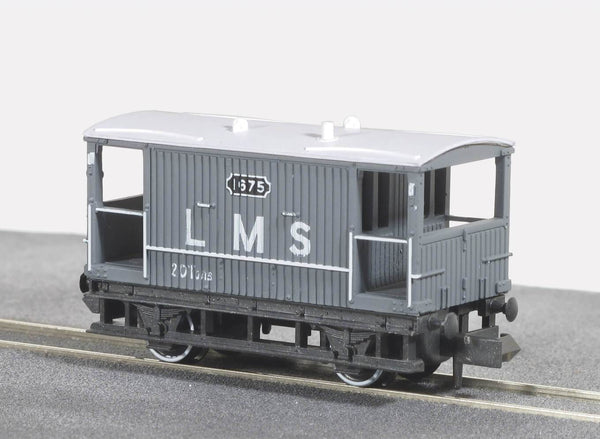
Brake Van
Railway companies all had a stock of their own vehicles for carrying goods and merchandise around their network, and also onto other companies' routes as and when required. These were integrated into British Railways at Nationalisation; some of them to be once more re liveried under sectorisation as the network was prepared to be returned to private ownership. All Peco wagons feature free running wheels in pin point axles. The ELC coupling, whilst compatible with the standard N gauge couplings, keeps a realistic distance between the vehicles and enables the PL-25 electro magnetic decoupler to be used for remote uncoupling.
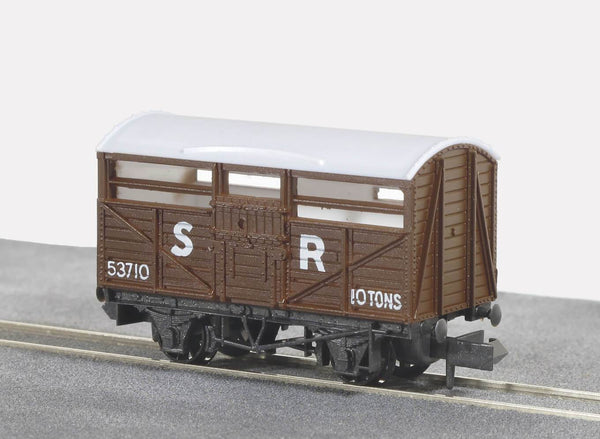
Cattle Wagon
Railway companies all had a stock of their own vehicles for carrying goods and merchandise around their network, and also onto other companies' routes as and when required. These were integrated into British Railways at Nationalisation; some of them to be once more re liveried under sectorisation as the network was prepared to be returned to private ownership. All Peco wagons feature free running wheels in pin point axles. The ELC coupling, whilst compatible with the standard N gauge couplings, keeps a realistic distance between the vehicles and enables the PL-25 electro magnetic decoupler to be used for remote uncoupling.
Cattle Wagon
Railway companies all had a stock of their own vehicles for carrying goods and merchandise around their network, and also onto other companies' routes as and when required. These were integrated into British Railways at Nationalisation; some of them to be once more re liveried under sectorisation as the network was prepared to be returned to private ownership. All Peco wagons feature free running wheels in pin point axles. The ELC coupling, whilst compatible with the standard N gauge couplings, keeps a realistic distance between the vehicles and enables the PL-25 electro magnetic decoupler to be used for remote uncoupling.
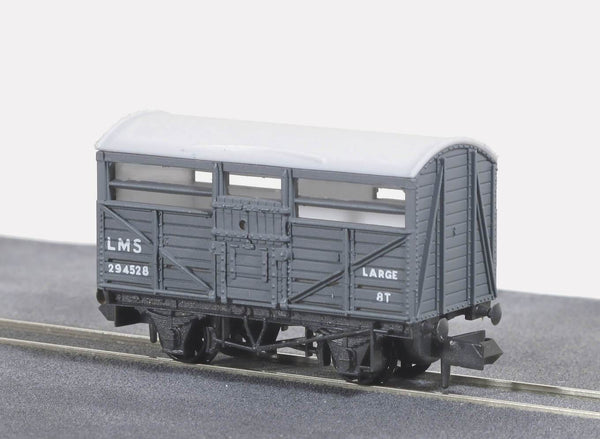
Cattle Wagon
Railway companies all had a stock of their own vehicles for carrying goods and merchandise around their network, and also onto other companies' routes as and when required. These were integrated into British Railways at Nationalisation; some of them to be once more re liveried under sectorisation as the network was prepared to be returned to private ownership. All Peco wagons feature free running wheels in pin point axles. The ELC coupling, whilst compatible with the standard N gauge couplings, keeps a realistic distance between the vehicles and enables the PL-25 electro magnetic decoupler to be used for remote uncoupling.
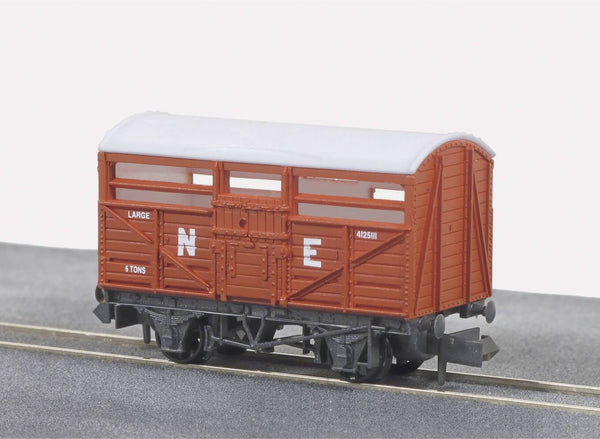
Butterley Steel Type Wagon
Railway companies all had a stock of their own vehicles for carrying goods and merchandise around their network, and also onto other companies' routes as and when required. These were integrated into British Railways at Nationalisation; some of them to be once more re liveried under sectorisation as the network was prepared to be returned to private ownership. All Peco wagons feature free running wheels in pin point axles. The ELC coupling, whilst compatible with the standard N gauge couplings, keeps a realistic distance between the vehicles and enables the PL-25 electro magnetic decoupler to be used for remote uncoupling.
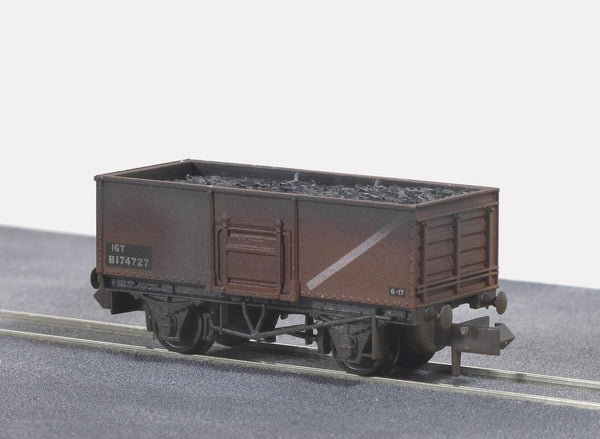
Butterley Steel Type Wagon
Railway companies all had a stock of their own vehicles for carrying goods and merchandise around their network, and also onto other companies' routes as and when required. These were integrated into British Railways at Nationalisation; some of them to be once more re liveried under sectorisation as the network was prepared to be returned to private ownership. All Peco wagons feature free running wheels in pin point axles. The ELC coupling, whilst compatible with the standard N gauge couplings, keeps a realistic distance between the vehicles and enables the PL-25 electro magnetic decoupler to be used for remote uncoupling.

Box Van
Railway companies all had a stock of their own vehicles for carrying goods and merchandise around their network, and also onto other companies' routes as and when required. These were integrated into British Railways at Nationalisation; some of them to be once more re liveried under sectorisation as the network was prepared to be returned to private ownership. All Peco wagons feature free running wheels in pin point axles. The ELC coupling, whilst compatible with the standard N gauge couplings, keeps a realistic distance between the vehicles and enables the PL-25 electro magnetic decoupler to be used for remote uncoupling.
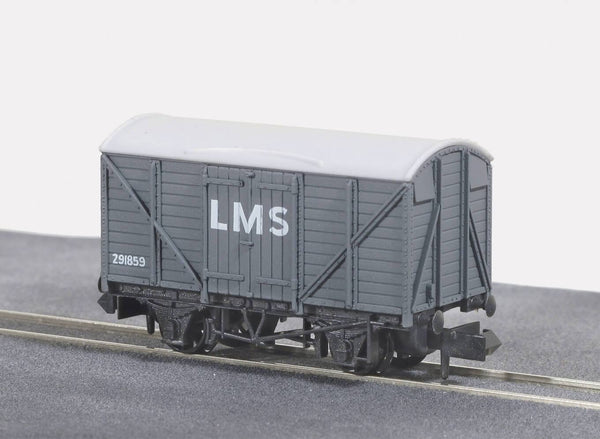
Box Van
Railway companies all had a stock of their own vehicles for carrying goods and merchandise around their network, and also onto other companies' routes as and when required. These were integrated into British Railways at Nationalisation; some of them to be once more re liveried under sectorisation as the network was prepared to be returned to private ownership. All Peco wagons feature free running wheels in pin point axles. The ELC coupling, whilst compatible with the standard N gauge couplings, keeps a realistic distance between the vehicles and enables the PL-25 electro magnetic decoupler to be used for remote uncoupling.
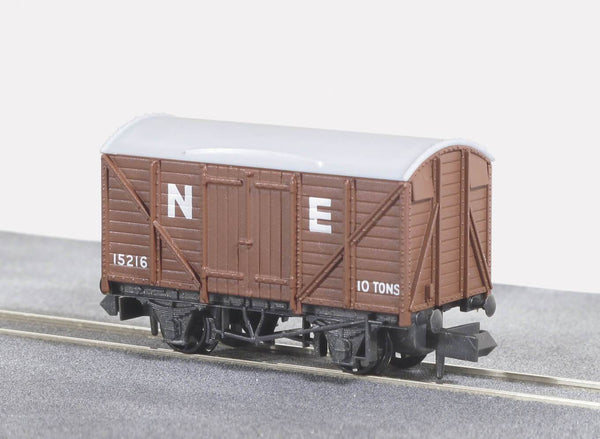
Box Van
Railway companies all had a stock of their own vehicles for carrying goods and merchandise around their network, and also onto other companies' routes as and when required. These were integrated into British Railways at Nationalisation; some of them to be once more re liveried under sectorisation as the network was prepared to be returned to private ownership. All Peco wagons feature free running wheels in pin point axles. The ELC coupling, whilst compatible with the standard N gauge couplings, keeps a realistic distance between the vehicles and enables the PL-25 electro magnetic decoupler to be used for remote uncoupling.
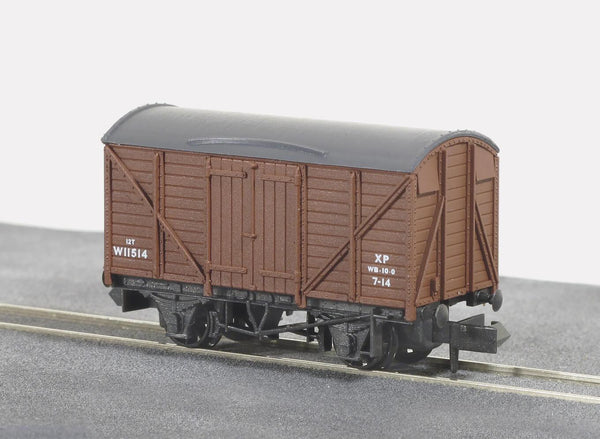
7 Plank Wagon
Railway companies all had a stock of their own vehicles for carrying goods and merchandise around their network, and also onto other companies' routes as and when required. These were integrated into British Railways at Nationalisation; some of them to be once more re liveried under sectorisation as the network was prepared to be returned to private ownership. All Peco wagons feature free running wheels in pin point axles. The ELC coupling, whilst compatible with the standard N gauge couplings, keeps a realistic distance between the vehicles and enables the PL-25 electro magnetic decoupler to be used for remote uncoupling.

7 Plank Wagon
Railway companies all had a stock of their own vehicles for carrying goods and merchandise around their network, and also onto other companies' routes as and when required. These were integrated into British Railways at Nationalisation; some of them to be once more re liveried under sectorisation as the network was prepared to be returned to private ownership. All Peco wagons feature free running wheels in pin point axles. The ELC coupling, whilst compatible with the standard N gauge couplings, keeps a realistic distance between the vehicles and enables the PL-25 electro magnetic decoupler to be used for remote uncoupling.

7 Plank Wagon
Railway companies all had a stock of their own vehicles for carrying goods and merchandise around their network, and also onto other companies' routes as and when required. These were integrated into British Railways at Nationalisation; some of them to be once more re liveried under sectorisation as the network was prepared to be returned to private ownership. All Peco wagons feature free running wheels in pin point axles. The ELC coupling, whilst compatible with the standard N gauge couplings, keeps a realistic distance between the vehicles and enables the PL-25 electro magnetic decoupler to be used for remote uncoupling.

5 Plank Wagon
Railway companies all had a stock of their own vehicles for carrying goods and merchandise around their network, and also onto other companies' routes as and when required. These were integrated into British Railways at Nationalisation; some of them to be once more re liveried under sectorisation as the network was prepared to be returned to private ownership. All Peco wagons feature free running wheels in pin point axles. The ELC coupling, whilst compatible with the standard N gauge couplings, keeps a realistic distance between the vehicles and enables the PL-25 electro magnetic decoupler to be used for remote uncoupling.
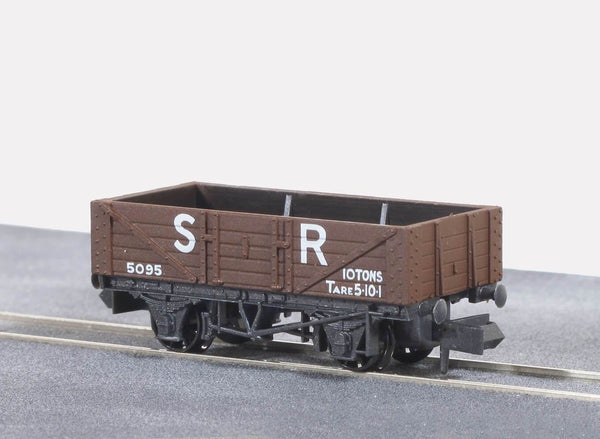
Bolster Wagon
Railway companies all had a stock of their own vehicles for carrying goods and merchandise around their network, and also onto other companies' routes as and when required. These were integrated into British Railways at Nationalisation; some of them to be once more re liveried under sectorisation as the network was prepared to be returned to private ownership. All Peco wagons feature free running wheels in pin point axles. The ELC coupling, whilst compatible with the standard N gauge couplings, keeps a realistic distance between the vehicles and enables the PL-25 electro magnetic decoupler to be used for remote uncoupling.
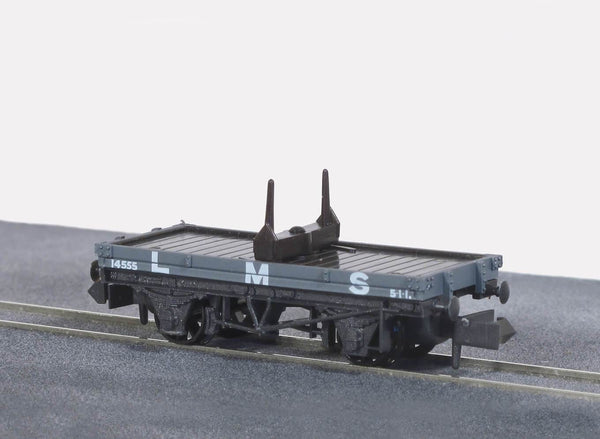
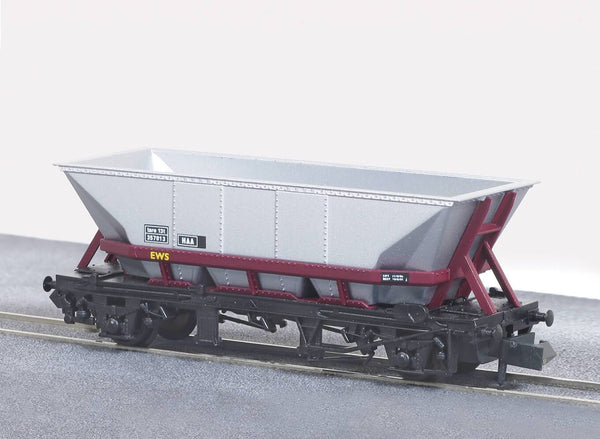
HAA - EWS Coal Hopper Wagon, Maroon
In August 2023 DB Cargo retired the last of the former BR/ECC china clay CDA hoppers after a service life of 35 years. These unique and distinctive wagons will be missed by enthusiasts but thanks to PECO, modellers can keep their legacy going in model form!
Note that the CDA wagons are now fitted with metal-tyred wheels as standard.
The CDA China Clay hopper, and the HAA Coal Hopper, are closely related, sharing the same design and operational principles, with bottom hopper doors opened to empty the contents, in the case of china clay, for loading into ships at Carne Point, near Fowey in Cornwall. As china clay must be kept dry special rolling tarpaulin covers protected the load, as featured on our models.
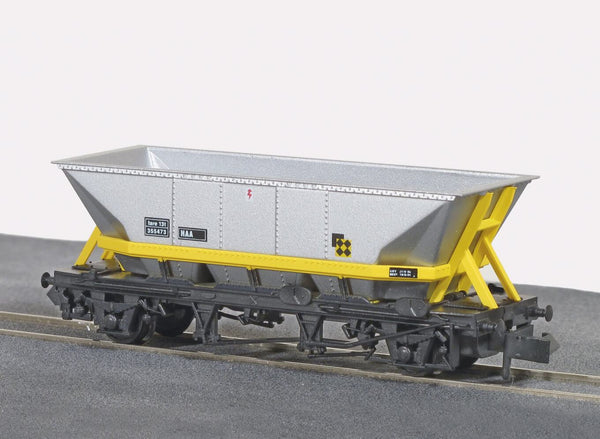
HAA BR Trainload Coal-Sector - Yellow Cradle
In August 2023 DB Cargo retired the last of the former BR/ECC china clay CDA hoppers after a service life of 35 years. These unique and distinctive wagons will be missed by enthusiasts but thanks to PECO, modellers can keep their legacy going in model form!
Note that the CDA wagons are now fitted with metal-tyred wheels as standard.
The CDA China Clay hopper, and the HAA Coal Hopper, are closely related, sharing the same design and operational principles, with bottom hopper doors opened to empty the contents, in the case of china clay, for loading into ships at Carne Point, near Fowey in Cornwall. As china clay must be kept dry special rolling tarpaulin covers protected the load, as featured on our models.
Brake Van
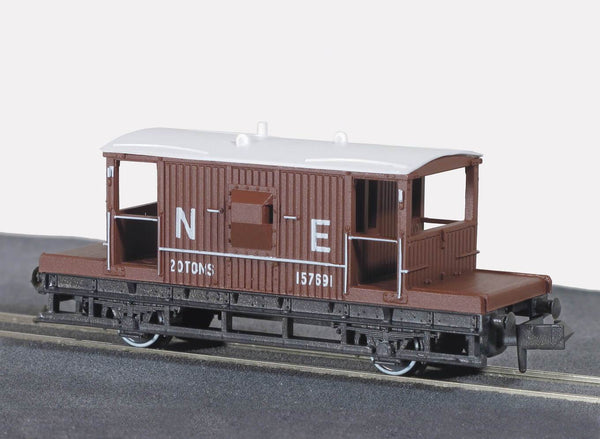
Railway companies all had a stock of their own vehicles for carrying goods and merchandise around their network, and also onto other companies' routes as and when required. These were integrated into British Railways at Nationalisation; some of them to be once more re liveried under sectorisation as the network was prepared to be returned to private ownership. All Peco wagons feature free running wheels in pin point axles. The ELC coupling, whilst compatible with the standard N gauge couplings, keeps a realistic distance between the vehicles and enables the PL-25 electro magnetic decoupler to be used for remote uncoupling.
Brake Van
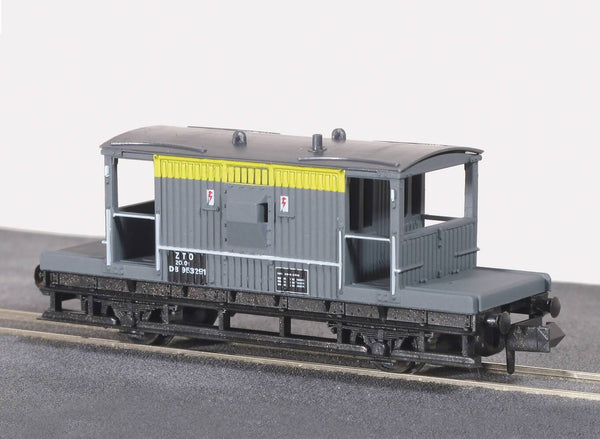
Railway companies all had a stock of their own vehicles for carrying goods and merchandise around their network, and also onto other companies' routes as and when required. These were integrated into British Railways at Nationalisation; some of them to be once more re liveried under sectorisation as the network was prepared to be returned to private ownership. All Peco wagons feature free running wheels in pin point axles. The ELC coupling, whilst compatible with the standard N gauge couplings, keeps a realistic distance between the vehicles and enables the PL-25 electro magnetic decoupler to be used for remote uncoupling.
Brake Van
Railway companies all had a stock of their own vehicles for carrying goods and merchandise around their network, and also onto other companies' routes as and when required. These were integrated into British Railways at Nationalisation; some of them to be once more re liveried under sectorisation as the network was prepared to be returned to private ownership. All Peco wagons feature free running wheels in pin point axles. The ELC coupling, whilst compatible with the standard N gauge couplings, keeps a realistic distance between the vehicles and enables the PL-25 electro magnetic decoupler to be used for remote uncoupling.
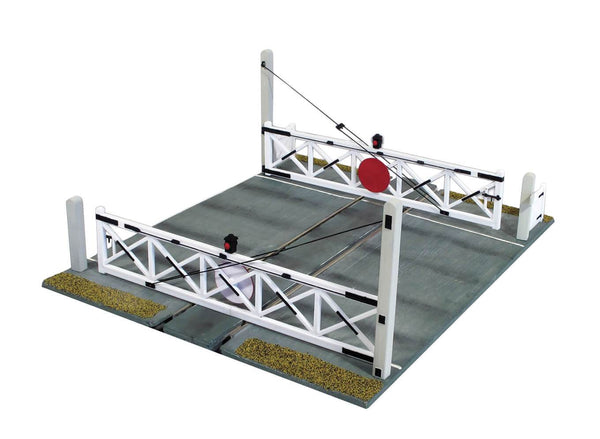
Level Crossing Gates
Traditional wooden type gates (complete with separate pedestrian access gates), giving double track spacing when closed across railway tracks.

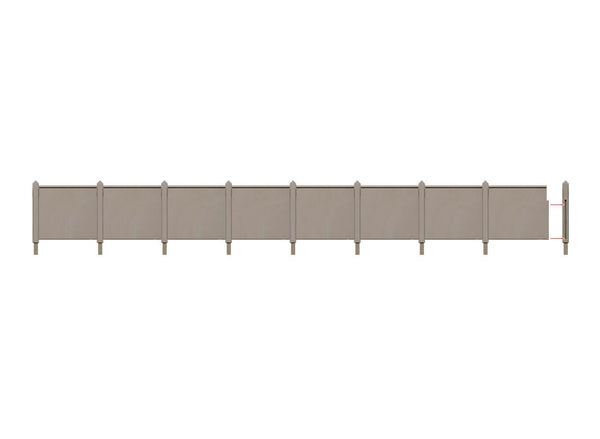
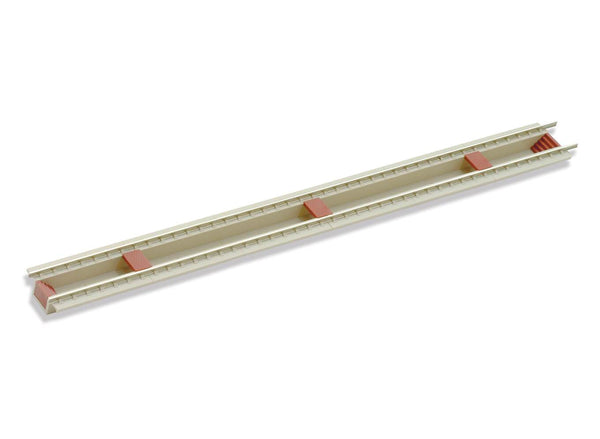
Inspection Pit
Modular design, makes it easy to assemble pits of any required length. A great addition to the LK-80 Modern Train Shed unit or create a modern diesel/EMU servicing shed using the Wills SSM300 Modern Industrial Building and SSM315 Extension kits.
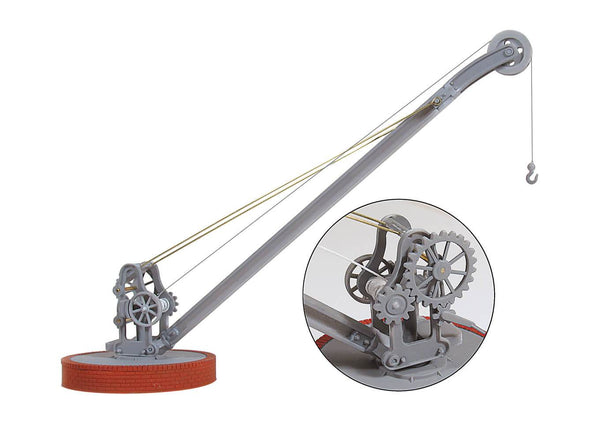
Yard Crane
Kit of a useful general purpose type crane, also often seen at canal basins etc.
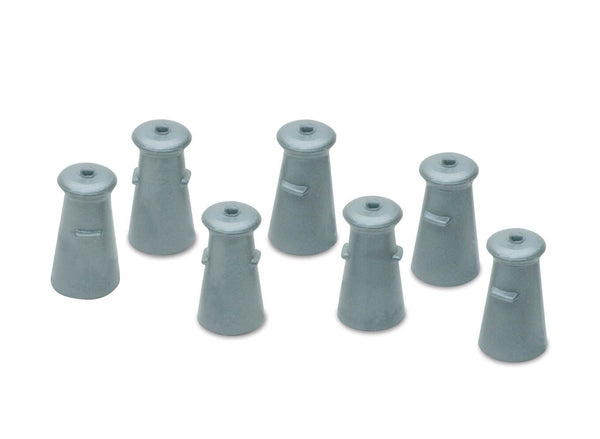
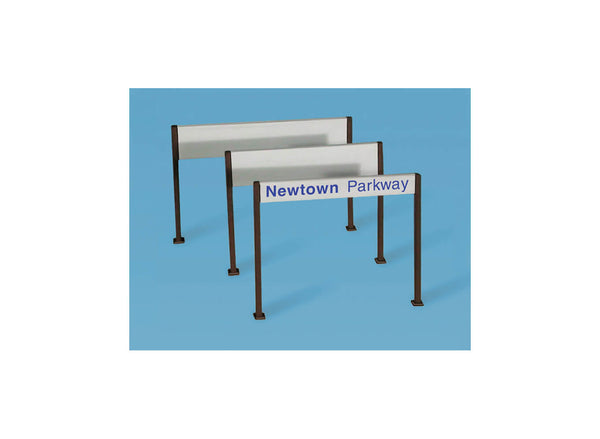
Station Nameboards
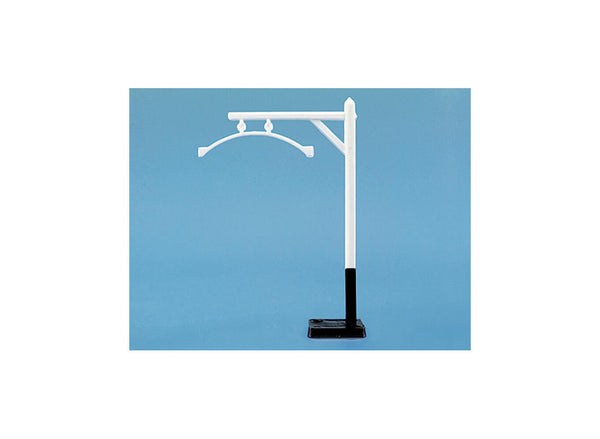
Pack contains 4 Station Nameboards and transfer lettering to make up the name of your choice.
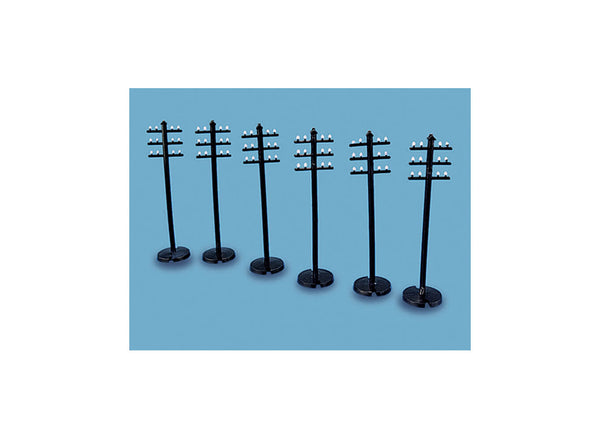
Telegraph Poles
Pack contains 6 Telegraph Poles, these also carried railway bell codes and phone connections between signal boxes and stations as well as GPO lines.
Loading Gauge
After loading, open wagons were checked for height using this simple gauge to ensure that loads did not hit bridges etc. and therefore were usually placed near the yard exit.
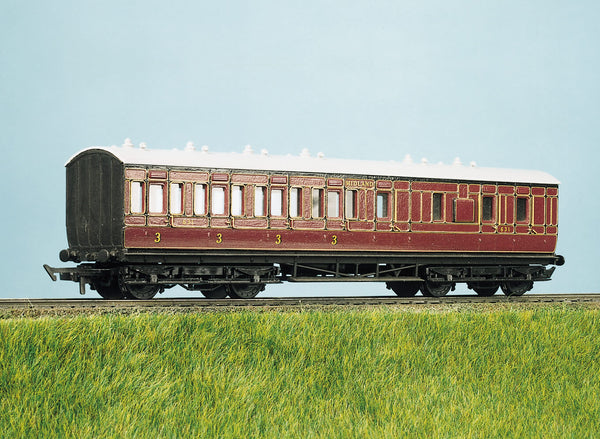
LMS 48 feet Suburban Coach Kit
These non-corridor coaches were built between 1903 and 1910 by the Midland Railway. They were used as close coupled sets for suburban services in the Manchester and Birmingham areas, remaining in service until the early 1950's. Glue, paint and transfers are required to complete this model.
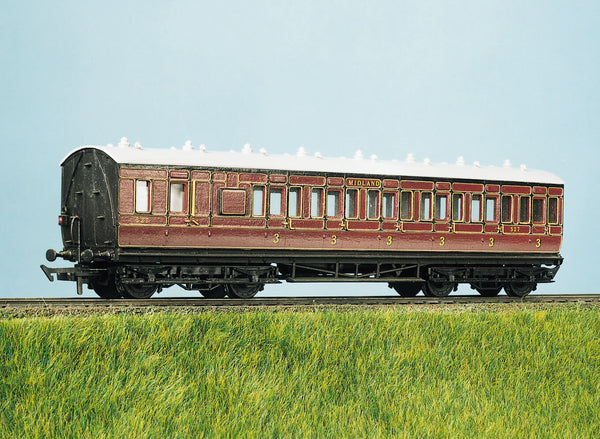
LMS 48 feet Suburban Coach Kit
These non-corridor coaches were built between 1903 and 1910 by the Midland Railway. They were used as close coupled sets for suburban services in the Manchester and Birmingham areas, remaining in service until the early 1950's. Glue, paint and transfers are required to complete this model.
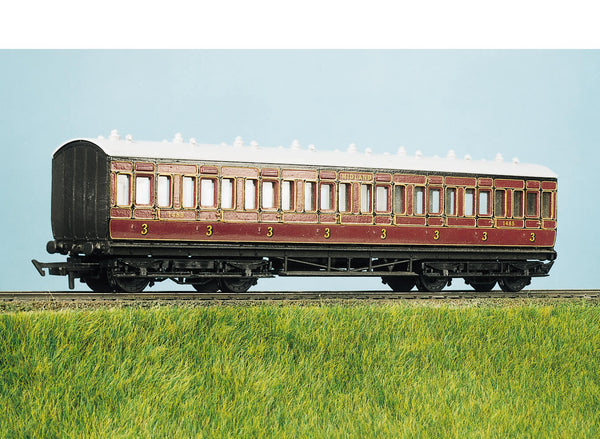
LMS 48 feet Suburban Coach Kit
These non-corridor coaches were built between 1903 and 1910 by the Midland Railway. They were used as close coupled sets for suburban services in the Manchester and Birmingham areas, remaining in service until the early 1950's. Glue, paint and transfers are required to complete this model.
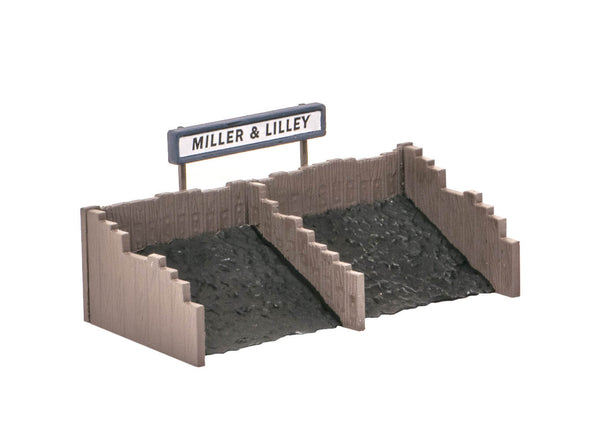
Coal Staithes
Suitable for extending the Coal Depot (Ref 532) or as a stand alone item. The Ratio 526 Coal Sacks kit and Peco Scene Real Coal Refs PS-330,1 and 2 can provide extra detailing. Glue and paints required to complete model. Footprint: 75mm x 32mm
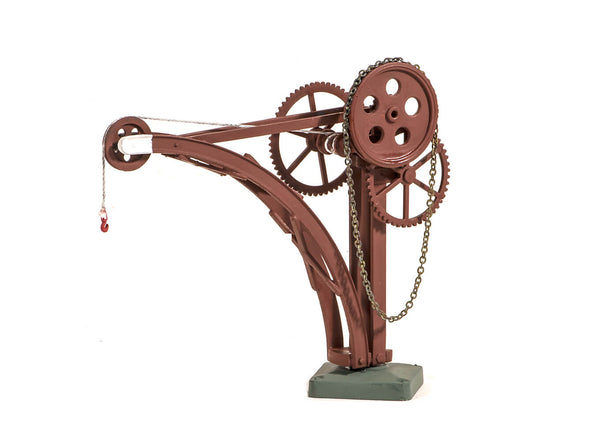
Yard Crane
Used for loading goods onto wagons, these cranes were to be found by bay platforms in small stations with no goods sheds or in the yard of larger stations. The kit includes fine chain for the operating drive wheels and cord for the jib. Supplied with pre-coloured parts although painting and/or weathering can add realism (See the Pecoscene Weathering Powder range PS-360 - 365); glue is required to complete this model.
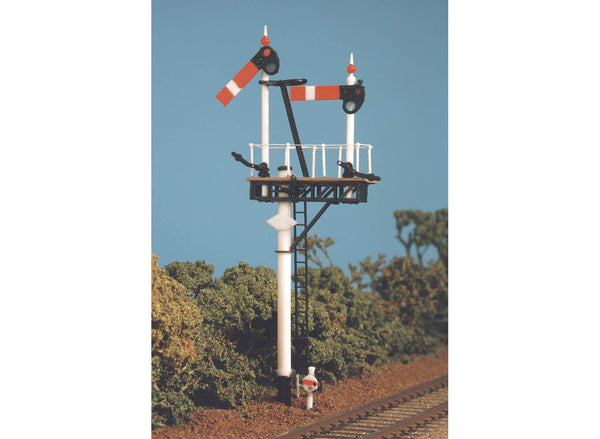
GWR Round Post Signal
Advanced Construction Signals. Aimed at modellers with more experience, these kits enable you to custom make specific configurations of signals to suit your track layout and train paths. This kit enables you to replicate a GWR Junction/Bracket Home signal. Glue and paints required to complete model.
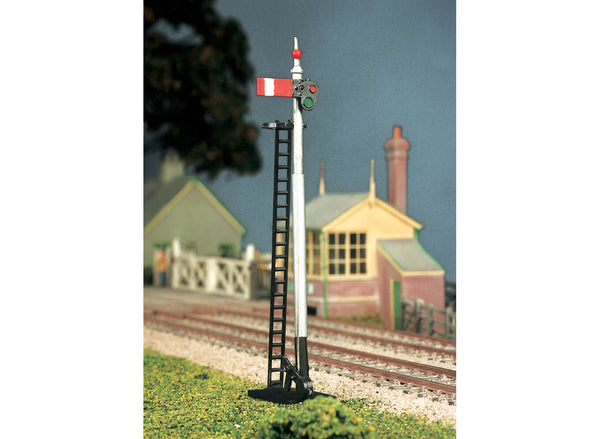
GWR Round Post Signal
Advanced Construction Signals. Aimed at modellers with more experience, these kits enable you to custom make specific configurations of signals to suit your track layout and train paths. This kit contains 2 posts, 2 Home arms and 1 Distant. It can also be used with the Pratt Truss Gantry kit (Ref 478) to provide over track signals. Glue and paints required to complete model.
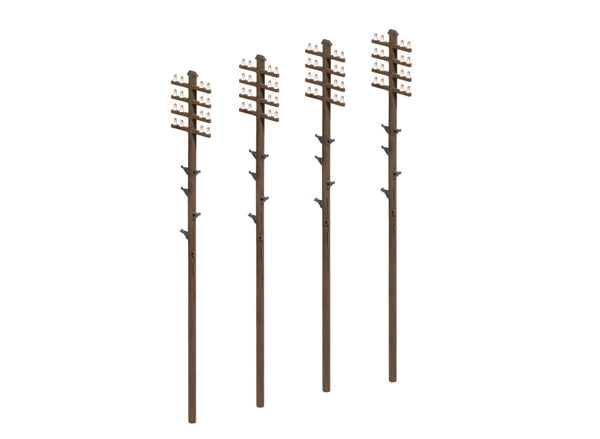
Telegraph Poles
16 Telegraph poles, these also carried railway bell codes and phone connections between signal boxes and stations as well as GPO lines. Height 100mm
Spear Fencing
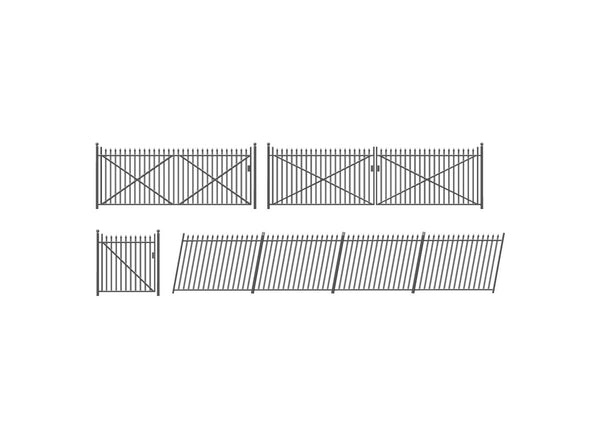
Classic style fencing modelled on a GWR design, but still seen also in many other places, around parks, public buildings, monuments etc. Supplied with pre-coloured parts although painting and/or weathering can add realism; glue is required to complete this model. This pack contains:
‚Ģ 2 x 100mm lengths of ramp fencing
‚Ģ 8 assorted gates
Spear Fencing
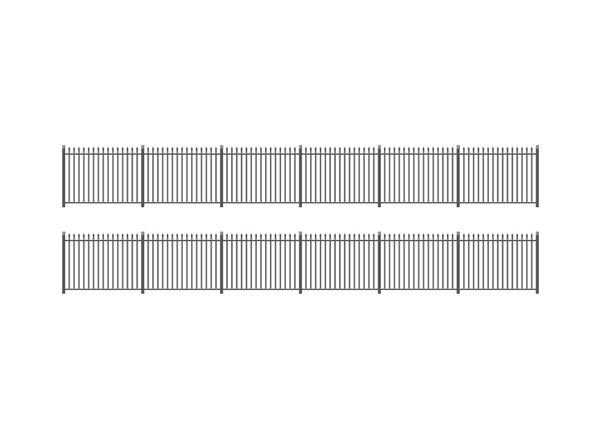
Classic style fencing modelled on a GWR design, but still seen also in many other places, around parks, public buildings, monuments etc. Supplied with pre-coloured parts although painting and/or weathering can add realism; glue is required to complete this model. This pack contains 700mm of fencing.
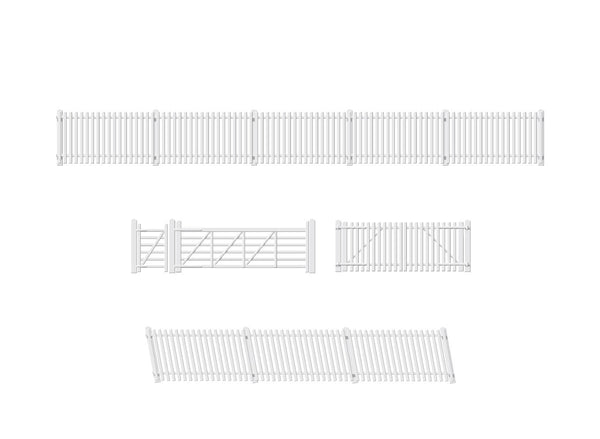
GWR Station Fencing, White
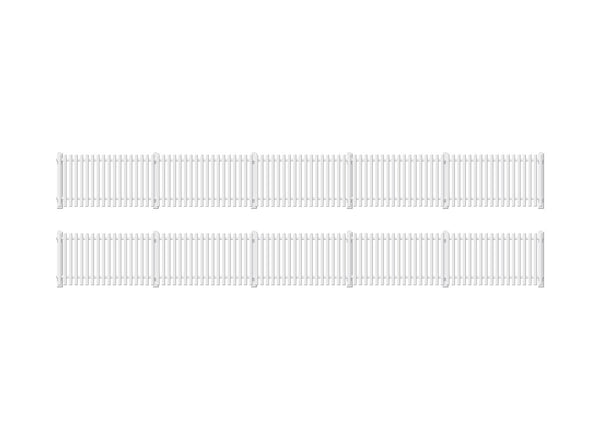
Supplied with pre-coloured parts although painting and/or weathering can add realism; glue is required to complete this model. This pack contains 680mm of fencing.
GWR Station Fencing, White
Supplied with pre-coloured parts although painting and/or weathering can add realism; glue is required to complete this model. This pack contains:
‚Ģ 340mm of Straight Fencing
‚Ģ 2 x 102mm lengths of Ramp Fencing
‚Ģ 1 Large and 1 Small Gate
‚Ģ 2 Ramp Gates
‚Ģ 1 Ticket Gate
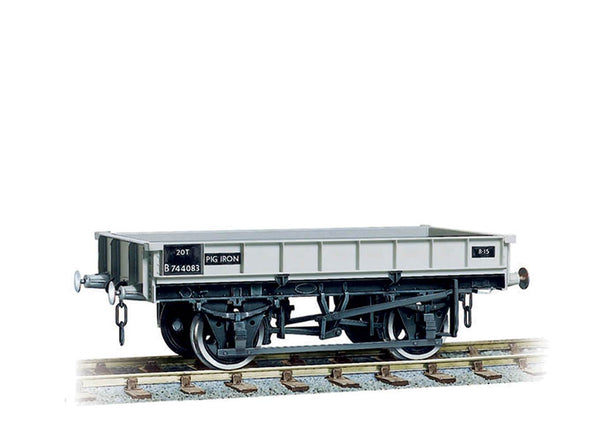
BR 20ton Pig Iron Wagon
These low sided wagons were used for carrying the heavy ingots of crude iron known as 'pigs' from the smelting furnace to the steelworks for refining into steel. Easy to assemble from the correctly coloured injection moulded components (no painting necessary). Kits include Transfers. Buffers are sprung and 3-link couplings are included on all models, while the BR wagons also feature working axlebox springs and moveable brake levers. Fine scale metal tyred wheels on pin-point axles supplied, spoked for the GWR wagons or 3-hole disc for the BR types. Fully illustrated instructions included.
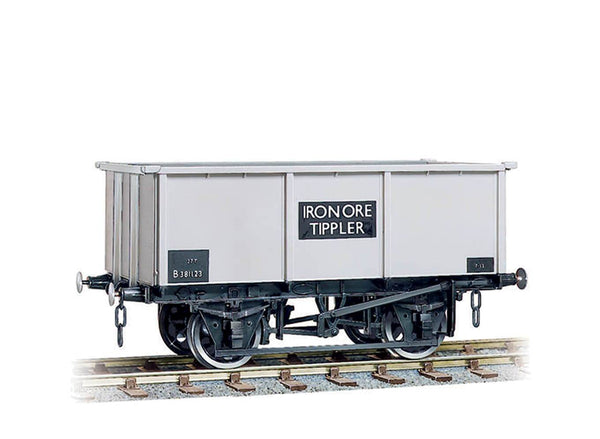
BR 27ton Welded Steel Iron Ore Tippler Wagon
Literally just a steel box on wheels, these wagons were designed to be emptied by turning them upside down in a 'tippler' mechanism, hence there are no side or end doors. Easy to assemble from the correctly coloured injection moulded components (no painting necessary). Kits include Transfers. Buffers are sprung and 3-link couplings are included on all models, while the BR wagons also feature working axlebox springs and moveable brake levers. Fine scale metal tyred wheels on pin-point axles supplied, spoked for the GWR wagons or 3-hole disc for the BR types. Fully illustrated instructions included.
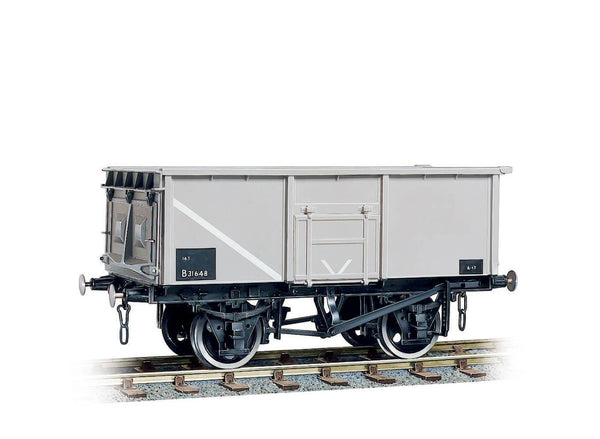
BR 16ton Welded Steel Mineral Wagon
Built in their hundreds of thousands and seen all over the rail system, these are the wagons which replaced pre war wooden private owner wagons. With side and end doors. Easy to assemble from the correctly coloured injection moulded components (no painting necessary). Kits include Transfers. Buffers are sprung and 3-link couplings are included on all models, while the BR wagons also feature working axlebox springs and moveable brake levers. Fine scale metal tyred wheels on pin-point axles supplied, spoked for the GWR wagons or 3-hole disc for the BR types. Fully illustrated instructions included.
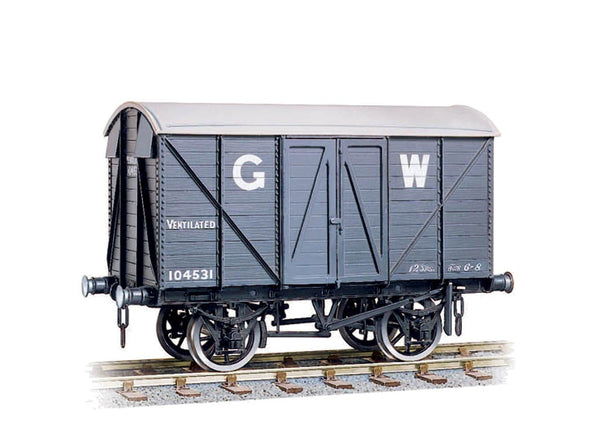
GWR 10ton Ventilated Box Van
These vans were in general use for transporting perishable traffic from 1925. Some were converted for banana traffic, others were designated exclusively for fish. Kit includes a choice of different ventilators to suit the different uses. Easy to assemble from the correctly coloured injection moulded components (no painting necessary). Kits include Transfers. Buffers are sprung and 3-link couplings are included on all models, while the BR wagons also feature working axlebox springs and moveable brake levers. Fine scale metal tyred wheels on pin-point axles supplied, spoked for the GWR wagons or 3-hole disc for the BR types. Fully illustrated instructions included.
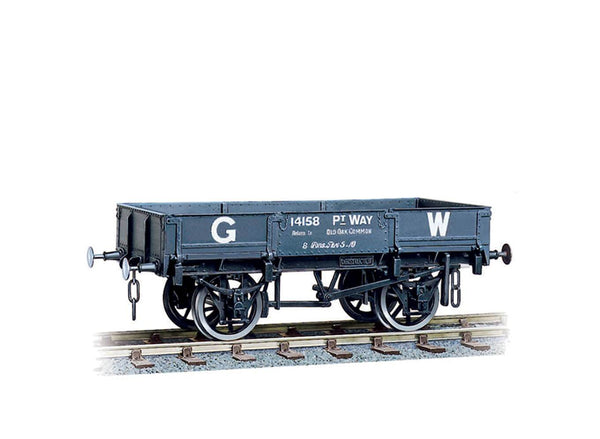
GWR 8ton Steel Permanent Way Wagon
These rugged wagons were used on track maintenance trains together with the Permanent Way Brake Van (W602). Kit features 4 working side-drop doors. Easy to assemble from the correctly coloured injection moulded components (no painting necessary). Kits include Transfers. Buffers are sprung and 3-link couplings are included on all models, while the BR wagons also feature working axlebox springs and moveable brake levers. Fine scale metal tyred wheels on pin-point axles supplied, spoked for the GWR wagons or 3-hole disc for the BR types. Fully illustrated instructions included.